

By Abdullahi Hamza
The news hit with a particular, hollow weight. Anthony Joshua, a man whose public life is defined by controlled power and triumphant survival within a ring, confronted with a loss so utterly beyond any opponent’s strength. A car accident. The end of a year. Two colleagues, gone. In the wake of such a thing, the world seems to tilt on its axis, and the quiet, grim opinion that surfaces is a familiar ghost: What is the point? Where is the meaning in a universe that can snuff out lives with such random, brutal indifference?
It’s in this very desolation, this feeling of life faltering, that the most human of all struggles takes root. Because the easy answer is to see death as the ultimate negation, the punchline to a cruel joke. But what if we’ve been reading it wrong?
To truly live, I mean, to feel the texture of your own existence with clarity, is to finally stop treating death as a foreign invader. It is not an enemy. Think of it instead as the dark backing to the mirror, without which you could see no reflection. It is the irrevocable proof that you were ever real at all. A thing that cannot end cannot truly be said to have been. Your mortality is the seal of authenticity on your life.
This is where the famous words of Nietzsche become not just a quote, but a lifeline: “He who has a why to live can bear almost any how.” In the suffocating silence after a loss, the “how” is unbearable; the how of the empty chairs, the unanswered messages, the future rewritten by absence. The only thing that can begin to lift that weight is the “why.” Why go on? The “why” is the architecture you build against the void.
And so we come to the great mystery. What is death? Perhaps it is merely a dreaming sleep from which we do not wake. Or, perhaps, it is the beginning of a greater truth we cannot now comprehend. “Either way, it’s nothing to fear.” Fear is for the known, for pain, for loss, for suffering. Death, in our experience, is not a known thing. It is the one guest we will never meet face-to-face.
“You never actually experience death. When it’s here you’re gone. When you’re here, it’s not.” All our terror is spent on a state of non-being. We are haunted by a ghost that cannot, by definition, inhabit the house of our living consciousness. This realisation isn’t meant to trivialise grief; it’s meant to quarantine fear. The loss is for the living. The dying, in the moment it occurs, have left the realm of experience.
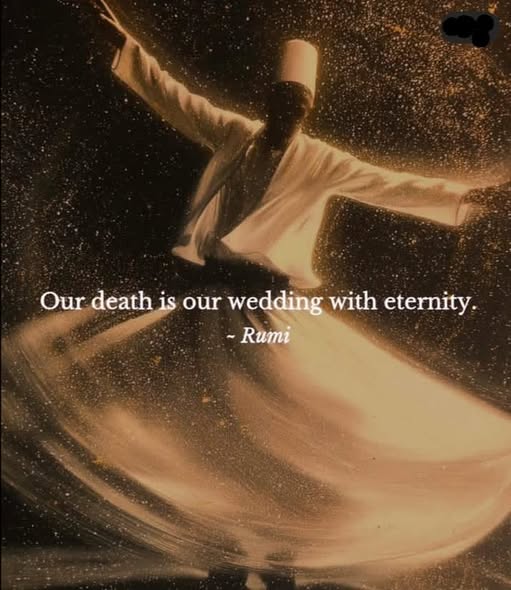
And here is the final, crucial turn of the knot. This very finitude, this closing bracket, is what makes the story matter. “Death gives life its shape.” Imagine a book with no final page, a song with no final note. It would be an endless, meaningless drone. Without the ending, there is no arc, no urgency, no preciousness to the moments. The fact that your time is limited, that the people you love are temporary miracles, is what injects every ordinary Tuesday with potential sacredness. It’s why a cup of coffee with a friend isn’t just a break, but a tiny sacrament. “Without an ending, nothing would ever matter.”
So, in the face of Joshua’s tragedy and the collective shudder it sends through us, the answer isn’t to deny the darkness or plaster it with cheap optimism. It is to stare directly into that night and understand: this shadow is what makes the light discernible. The ache of loss is the inverse measure of love’s value. The frantic search for a “why” in the aftermath is the very engine of meaning.
To live knowing you will die is the ultimate freedom. It means you can, if you find the courage, live without the illusions of forever. It means you can choose your “why” with deliberate hands, love with a little more courage, and see the brutal, beautiful truth: that our fragility is not our flaw, but the source of all our depth, our compassion, and our staggering, human will to make something matter before the curtain falls.
The grief is real, and it is deep. It is the price of admission to a meaningful life. And within that grief, if we listen closely, we can hear the faint, steady pulse of the very meaning we sought: the undeniable proof that what was lost was deeply, unbearably real. And so, therefore, are we. May the dearly departed rest in peace, and may those injured recover in earnest.


Leave a Reply