

Abdullahi Hamza
Christians tend to picture the early Church as a scattered network of persecuted zealots, huddled in catacombs, whispering about a returning Messiah. And they were. But that’s only the first chapter. What happened next was one of the most staggering organisational and technological feats in history; a deliberate, systematic campaign to conquer the Roman world not with legions, but with logistics, literacy, and a revolutionary information technology.
Forget the sword; their secret weapon was the codex.
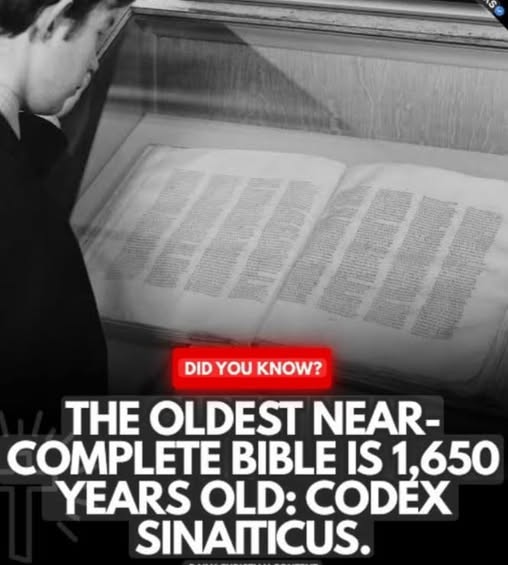
While the Roman world was still clinging to scrolls; cumbersome, sequential, and fragile, the early Christians were mass producing books. The codex, a bound sheaf of pages, was the ancient world’s equivalent of switching from cassette tapes to the smartphone. It was cheaper (writing on both sides of papyrus or parchment), more portable (a single codex could hold all four Gospels, a scroll could not), and offered random access (you could flip to Matthew 18 instead of unrolling an entire scroll to find one passage). This wasn’t a happy accident; the Church aggressively adopted and popularised this new technology because it was the perfect tool for missionaries, apologists, and clergy. They didn’t just spread a message; they optimised its delivery system.
But the innovation didn’t stop with the hardware. They revolutionised the software, too. To unify a sprawling, diverse movement, they had to standardise the text itself. This led to the creation of the canon, the official list of New Testament books, a process of brutal intellectual triage that involved debating, discarding, and validating hundreds of competing texts like the Gospel of Thomas or the Shepherd of Hermas. This was the first-ever attempt to create a unified, authoritative library for a global faith, a project of staggering ambition. Furthermore, they developed the first-ever tools for cross-referencing scripture. In the early 3rd century, the theologian Origen created the Hexapla, a mind-bending six-column parallel Bible comparing Greek and Hebrew versions line-by-line. This wasn’t just study; it was data analysis on a monumental scale.
And then came the infrastructure. To hold this all together, they built a clandestine administrative empire that mirrored Rome’s. A hierarchy of bishops, deacons, and presbyters governed a network that stretched from Britain to Persia, all connected by a sophisticated courier system moving letters, codices, and funds. This wasn’t just a church; it was a shadow state with its own laws, treasury, and diplomatic corps. When the Roman Empire finally crumbled, it was this ready made, highly adaptable infrastructure that stepped into the power vacuum, providing the only stability left in the West and ensuring the Church’s survival and dominance for a millennium.
The Bible is not just a holy book, it’s the end product of the world’s first great information technology revolution. See a marvel of ancient engineering, from the bound codex that made it portable to the canonical list that made it authoritative to the scholarly apparatus that made it intelligible. The early Church didn’t just survive persecution; they outmaneuvered, outthought, and outorganized the greatest empire on earth. They understood that to win souls, you first had to win the battle of the books



Leave a Reply