

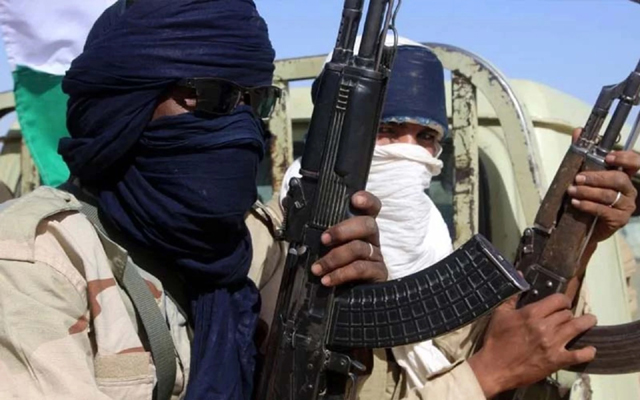
*From mimicking ISIS brutal style, practices, dressing style and insignia, Abubakar Shekau, the ruthless leader of Nigeria’s terrorist group, Boko Haram has finally turned the corner, pledging alliance to the leader of the Islamic State of Iraq and Syria, Abu Bakr al-Baghdadi.
What does the declaration mean for Nigeria and its allies who are putting together a regional force to rout this insurgency group with foothold in Nigeria?
TheNEWS pieces together some expert views on the issue:
1. Foreign powers can no longer ‘siddon look’: Boko Haram threat to global peace and security, as dangerous as ISIS
The declaration raises the possibility that Western powers, which have so far stayed out of direct military operations in northeast Nigeria, might be pulled into the conflict, which has left more than 13,000 people dead since 2009 but largely been seen as a “local” or regional issue.
“Operating as an IS proxy could draw Western efforts against its operations, particularly from France, which already runs a multi-country anti-terrorist campaign in the west and central African region,” said Ryan Cummings, from risk consultants Red24.
Extremists from Libya to Pakistan have previously pledged support or allegiance to IS leader Abu Bakr al-Baghdadi while the group itself last month expanded its reach into lawless Libya.
There have been growing indications that Boko Haram was looking to formally align itself with IS group, starting last year when Shekau declared the captured town of Gwoza, in Borno state, part of a caliphate.
That followed a similar declaration by Baghdadi while both groups have captured swathes of territory.
In recent weeks, previously poorly produced Boko Haram videos took on the look and feel of more polished IS propaganda and were posted directly online, guaranteeing a wider audience.
IS was also reported to have received pledges of allegiance from militants in Nigeria.
Max Abrahms, a specialist in extremist groups, said Boko Haram and IS, which has yet to respond to the pledge, were in many ways a perfect match.
“Neither group (IS and Boko Haram) is inhibited in terms of violence. They’re a natural ally,” said Abrahms, from Northeastern University in Boston, Massachusetts.
2. Signs of desperation
Experts said the pledge of allegiance to IS, which is also being forced on the defensive in Iraq, could be a result of the military pressure.
“We have got two organisations that have suffered several setbacks in the last few weeks or months,” said Yan St-Pierre, a counter-terrorism expert at the Modern Security Consulting Group in Berlin.
“This might be a way to send a message to the troops, to strengthen morale or attract more followers, particularly in Boko Haram’s case.”
St-Pierre suggested the pledge was linked to IS inroads in Libya, from where Boko Haram has been said to receive arms and ammunition via smuggling routes in the Sahel region.
“Most of the contact Boko Haram groups or factions have had with ISIS have been along that axis, and Sudan,” he added.

3. Instilling fear on civilians
If a formal alliance has been made, however, it would represent a new and dangerous turn for West Africa and the countries fighting Boko Haram. As The Daily Beast reported in February, a renewed push by troops from Chad, Cameroon and Niger have put pressure on Boko Haram, which previously had only to fight the poorly trained and equipped Nigerian army, which has proven itself incapable of an offensive strategy against the terror group.
Instead, the Chadian military has decades of hardened battlefield experience; Cameroon has deployed its Israeli-trained and -equipped rapid reaction force, considered one of the best military units in the region; and Niger’s forces has been a beneficiary of U.S. military assistance and Special Forces training.
In recent weeks, Boko Haram has lost control of a number of towns, so, today’s announcement of fealty to al-Baghdadi may be an attempt to regain the momentum in the propaganda war by instilling terror in the civilians in the areas the group retains.
4: Shekau’s allegiance to ISIS may open a floodgate of fanatical muslims in Nigeria to join ISIS war in Iraq:
Regardless of the facts and dynamic that drove Shekau’s decision to join forces with al-Baghdadi, on the ground in Nigeria, ISIS still retains a draw for some young Nigerian Muslim men.
For example: Young, vibrant and outspoken, Ibrahim Uwais could easily have added his voice to issues concerning Nigeria’s forthcoming general elections just like many young people in the country are doing, but instead he shocked the country by reportedly joining ISIS.
A son of a highly respected former Chief Justice of Nigeria, Muhammadu Lawal Uwais, who is known for his hard stance on the rule of law, it was reported last Tuesday that Ibrahim had left Nigeria for Syria few days back with his two wives and children to enlist and fight for ISIS. He is said to be a close friend of Umar Farouk Abdulmuttalab, the so-called “Underwear Bomber.”
Ibrahim could be the first confirmed case of a Nigerian joining ISIS, heightening fears the children of highly placed Nigerians were being recruited by ISIS.
“We are aware that recruiters for ISIS from South Africa are seeking to recruit young vulnerable Nigerians via the social media. This was why we alerted Nigerians last week of this development,” said Mike Omeri, Coordinator of the National Information Centre.
To stanch any flow of young me to ISIS before it starts, Omeri said government agencies were collaborating with organizations and aggressively educating Nigerian youths on the dangers of jihad and radicalism.
“As we speak, I am attending a program in Lagos where we are actively educating the youths on the dangers of radicalism and jihad in order to discourage them. We are also teaching them on how to safely use the social media in order to help them detect fraudulent intentions.”
Since ISIS declared its self-styled caliphate last June—which included Nigeria—countries around the world have been on high alert for foreign fighters trying to get to Iraq and Syria. New security measures have forced the extremists to adopt more-creative recruitment methods, but they have not hindered the militant group’s ability to reach a wide range of prospective recruits.
Intelligence and law-enforcement agencies have cracked down on the Islamic State group’s recruitment cells outside Iraq and Syria as well as on its sophisticated use of social media to attract and inculcate recruits while spreading its message. Despite the new measures, ISIS has managed to draw in 20,000 foreign fighters from more than 40 countries.
In a country where Boko Haram controls a large territory in the northeast and recruits soldiers with ease, an alliance with ISIS would almost certainly mean more young Nigerians heading to Syria.
*From the Daily Beast and AFP reports



Leave a Reply