

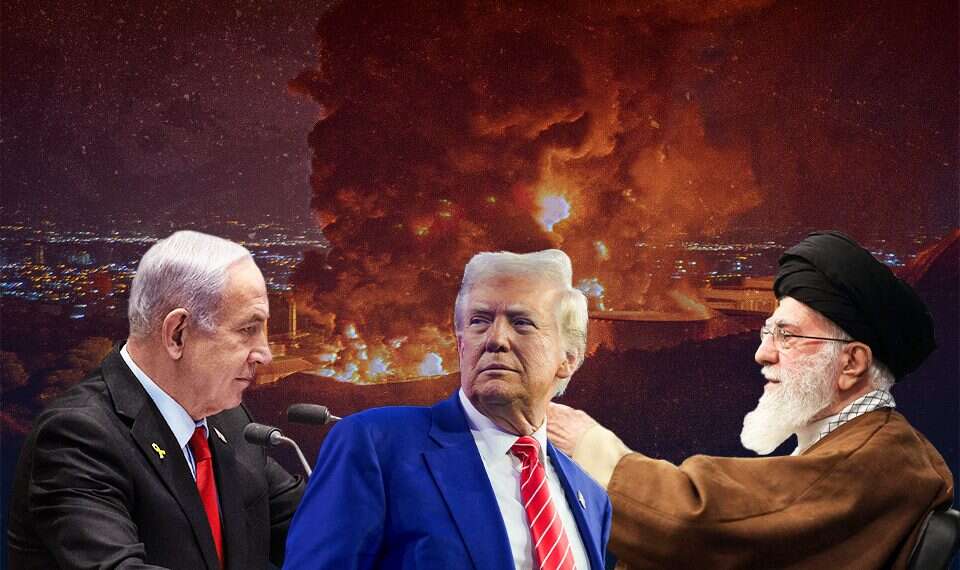
In the early hours of February 28, 2026, the US and Israel launched coordinated strikes on Iran. Explosions rippled across Tehran and other major Iranian cities, black smoke rising above government compounds and suspected military sites. Sirens wailed. Airspace was shut. Nations around the world, according to Le Monde.fr, held emergency meetings. And a long-simmering crisis suddenly boiled over.
This moment, dubbed Operation Lion’s Roar by Israeli officials, as Reuters put it, marked a seismic escalation after years of failed diplomacy, mutual animosity, and fears of nuclear proliferation. “By the end of the day, Iran vowed revenge, missiles flew back toward Israel and U.S. bases, and global aviation services suspended flights over the region.”
The Targets: What Was Hit and Where
Rather than a single aerial strike, the February 28 assault involved multiple bombardments across Iran, aimed at dismantling what the attackers described as imminent security threats. Explosions were reported not only in Tehran, the political heart of the country, but also in regions around Isfahan and Tabriz, both home to strategic military and infrastructure assets, according to Le Monde.fr.
It reported further that Iranian state media, and foreign correspondents on the ground, described blasts near government offices in Tehran, telephone and internet disruptions in the capital, and detonations well beyond city centers. Civil defense protocols and emergency alerts were activated in cities across the nation.
Independent analysis and earlier reporting on the conflicts between these states , including an intense 12-day confrontation in June 2025, indicate that prior U.S. and Israeli air power has struck Iran’s nuclear enrichment facilities at Natanz, Fordow, and Isfahan, as well as missile production sites.
Although casualty figures from the February 28 strikes remain unconfirmed at publication time, the pattern of targeting , military installations, air defense networks, and infrastructure linked to missiles, suggests a mission designed to degrade Iran’s capabilities rather than solely deliver symbolic blows.
According to multiple press outlets and local reporting, the first explosions in Tehran were heard around 09:40 am local time on Saturday, February 28, 2026 — catching many in Iran off guard on what had been a quiet weekend morning.
The strikes were not isolated; signals intelligence and public statements indicate that U.S. military forces participated alongside Israeli air and missile units, making this one of the most conspicuous joint operations since the end of the Iran-Israel war in 2025.
The operation’s timing — a weekend morning — was likely chosen to balance tactical surprise with the attempt to minimize civilian deaths while maximizing psychological and strategic impact.
“Imminent Threat”: Trump’s Justification
President Donald Trump, in a statement released shortly after the strikes began, framed the offensive as an act of self-defense and necessity. According to his remarks relayed in Western press reports, the goal was to “eliminate imminent threats from the Iranian regime” — threats he characterized as both direct and growing.
Trump’s message echoed long-standing concerns in Washington about Iran’s ballistic missile programs, support for non-state militant groups like Hezbollah and Hamas, and ambiguous nuclear enrichment activities. In his framing, the strikes were meant to “defend the American people” and prevent Iran from strengthening capabilities that might one day be turned against U.S. interests or allies.
Earlier, Trump had publicly linked military pressure with diplomatic negotiations. In the weeks leading up to the operation, talks between WASHINGTON and Tehran aimed to curb nuclear risks had stalled , failing to bridge gaps over inspection regimes, missile restrictions, and verification mechanisms. Trump described the progress as insufficient, stressing that “diplomacy has limits without enforcement.”
“Existential Threat”: Netanyahu’s Rationale
Israeli Prime Minister Benjamin Netanyahu was even more unequivocal. In his statement, he framed Iran not just as a regional problem but an existential threat to Israel itself — a nation that, in his view, could not afford to wait indefinitely while Tehran.as Le Monde.fr put it, enhanced its military and missile programs.
For Netanyahu, the logic was familiar: a combination of Iran’s strategic ambitions, its alliances with anti-Israel militias across the region, and its refusal to accept stringent, verifiable limits on its weapons programs created a “strategic imperative” for action. He suggested that joint strikes would “create conditions for the brave Iranian people to take their fate into their own hands,” implicitly encouraging internal opposition to the ruling regime.
Israeli officials have previously referred to Iran’s long-range missile development and enrichment facilities as “red lines” that could, as The Cable wrote, not be negotiated away through patience alone — referencing past rounds of diplomacy that yielded limited transparency from Tehran.
Failed Negotiations: From Geneva to White Noise
The offensive did not arise in a vacuum. In the weeks before February 28, U.S. and Iranian officials had engaged in indirect negotiations in Geneva, largely about reviving meaningful oversight of Tehran’s nuclear activities.
These discussions sought to reduce tensions by offering Tehran economic relief in exchange for limits on enrichment levels and acceptance of comprehensive inspections by the International Atomic Energy Agency (IAEA). But critical divisions emerged. Iran, as New York Times put it, insisted on lifting crippling sanctions before meaningful concessions, while the U.S. and its allies demanded verification first, especially access to enrichment sites that Iran had previously barred inspectors from after the June 2025 conflict.
That impasse helped fuel criticism in Washington and Jerusalem that diplomacy had stalled, allowing Tehran to continue advancing capabilities that could one day be militarized. Frustration with this diplomatic stalemate was one of the primary drivers cited by both leaders when justifying military action over further talks.
Iran’s Response: “Crushing, Retributive Justice”
Unsurprisingly, Tehran did not respond in silence. Within hours of the strikes, The Washington Post reported, Iranian leadership vowed a “crushing response” against what it described as blatant aggression and violation of sovereignty. State media and official channels broadcast warnings that both Israeli and U.S. military assets — including bases in the Middle East — would be considered legitimate targets if attacks continued.
The Iranian Revolutionary Guard Corps, the newspaper reported further, issued statements decrying the offensive and promising retaliation. Supreme Leader Ayatollah Ali Khamenei — often the voice of the Iranian establishment — reiterated that the nation would not bow to external pressure and emphasized that foreign military presences in the region would face significant consequences.
That rhetoric was backed by action: within hours, missiles and drones launched by Iranian forces headed toward Israel and U.S. installations in Gulf states, triggering air defenses and alerts across several countries. Sirens blared in Israel, and, according to Reuters, parts of civilian and commercial airspace were closed, prompting global flight diversions.
Internationally, Iran accused its adversaries of recklessly pushing the region toward all-out war. Moscow and other capitals condemned the joint strikes as “unprovoked acts of aggression,” criticizing the targeting of nuclear infrastructure and warning of “humanitarian, economic, and radiological consequences.”
The Broader Impact: Flights, Diplomacy, and the New Normal
The human and geopolitical repercussions are, in the view of Reuters, profound. Major airlines swiftly suspended flights over the Middle East, citing safety concerns and closed airspace — a tangible reminder of how war ripples into the everyday lives of ordinary people.
World powers convened emergency sessions of the United Nations, seeking ways to de-escalate and revive diplomatic channels before full-scale regional conflict erupted. While some nations backed Washington and Jerusalem’s security concerns, many others warned that military escalation would deepen instability, fuel extremism, and risk catastrophic miscalculations.
For Iran’s population — already subject to decades of economic hardship, sanctions, and regional isolation — the shadows of war return with frightening immediacy. Hospitals were put on high alert, communication networks reported intermittent outages, and civil defense warnings urged citizens to stay vigilant.
Looking Ahead: War or Negotiation?
Whether Operation Lion’s Roar marks the beginning of a new full-scale Middle Eastern war, or a calculated pressure point before renewed diplomacy, remains uncertain. What is clear is that years of mistrust, broken agreements, and missed diplomatic opportunities have left all sides believing force — rather than negotiation — offers the clearest path to security.
And that is a dangerous illusion.
*With reports from different wire services, local and foreign media


Leave a Reply