

By Abdullahi Hanza
In recent weeks, heated debates have erupted across social media and public discourse in Nigeria, often pitting secular pundits against religious adherents over the role of Wahhabism in shaping the country’s socio-religious fabric.
These discussions, fueled by Muslim commentators critiquing what they see as Wahhabism’s rigid doctrines, have escalated to the point where friendships have fractured, with blocks and vitriolic exchanges becoming commonplace. Yet, as academics and thoughtful observers, we must resist descending into such polarisation. Intelligent, respectful arguments can bridge divides, fostering understanding even among those initially resistant to dialogue.
It’s crucial to approach these topics with nuance, recognising that blanket condemnations often stem from misunderstandings, much like the broader insinuations from some Christian quarters that portray Islam itself as inherently violent, a stereotype that Muslims worldwide continually challenge through reasoned engagement.
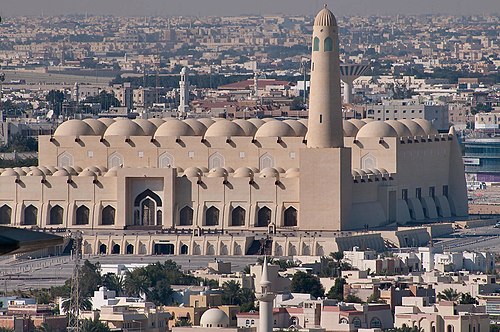
At its core, Wahhabism is a Sunni Islamic revivalist movement that emerged in the 18th century on the Arabian Peninsula, founded by Muhammad ibn Abd al-Wahhab. It emphasises a strict, puritanical adherence to Islamic law (Sharia), rejecting what it views as innovations (bid’ah) or deviations from the original teachings of the Quran and Hadith. This includes opposition to certain traditional practices like saint veneration or elaborate shrine rituals, aiming instead for a “purified” form of Islam.
The movement gained global traction in the 20th century, particularly through its alliance with the Saudi royal family, making it a dominant force in Saudi Arabia and influencing Islamic institutions worldwide via funding and scholarship. In Nigeria, especially in the northern regions, Wahhabism’s influence has been deep yet contentious. Introduced through educational exchanges, scholarships, and missionary efforts often backed by Saudi institutions, it has reshaped aspects of Islamic practice for some communities, promoting a more textualist approach to faith.
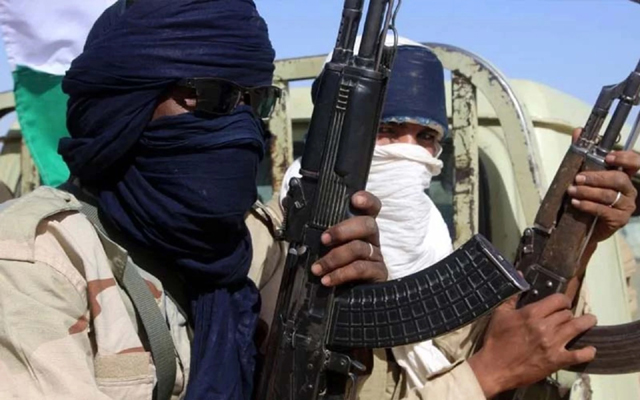
However, critics from other Islamic sects argue that this importation has been uncritical, lacking adaptation to local contexts, which they blame for fueling radical militant insurgencies like those associated with Boko Haram. This raises pivotal questions: Who truly defines Wahhabism? Is it the Saudi-backed scholars and institutions, or the diverse self-identified adherents interpreting it in varied ways? Does the ideology inherently endorse violence, or is the problem rooted in extremist fringes that twist its principles?
My insight here is that Wahhabism, like any religious doctrine, is not monolithic. While it’s often conflated with Salafism, a broader movement focused on emulating the “pious predecessors” (Salaf), distinctions exist.
For instance, Ahl al-Hadith emphasises rigorous study of prophetic traditions without necessarily aligning with Wahhabism’s political dimensions. On the darker side, Jihadi-Salafism represents a militant offshoot, linked to groups like Al-Qaeda and ISIS, which weaponise selective interpretations to justify violence
In Nigeria, this morphing into violent sects highlights a key danger; when doctrines are imported without “adequate sifting,” as some adherents put it, they can exacerbate divisions rather than unify. Yet, as the Nigerian proverb goes, “No body go say im mama soup no sweet”—meaning everyone defends their own traditions fiercely, but this shouldn’t blind us to the need for critical self-reflection.
Crucially, we must acknowledge that not everything in religious texts or historical doctrines can be applied literally by 8th-century standards in a 21st-century world. Times have evolved dramatically, and rigid literalism risks stifling progress while ignoring the spirit of Islamic jurisprudence, which has always allowed for ijtihad, independent reasoning, to adapt principles to contemporary realities. If we insisted on verbatim adherence to ancient practices, Muslims today would still rely on horses and donkeys for transport rather than embracing airplanes, cars, or modern infrastructure; all of which align with Islamic parameters of seeking knowledge, efficiency, and human welfare.
Similarly, Wahhabism’s core call for purity could be reinterpreted through modern lenses: promoting ethical governance, education, and social justice without descending into exclusionary extremism. This adaptive approach doesn’t dilute faith; it strengthens it, ensuring relevance in diverse societies like Nigeria’s, where interfaith harmony and national unity are paramount.


Leave a Reply