

By Aisha Yunusa
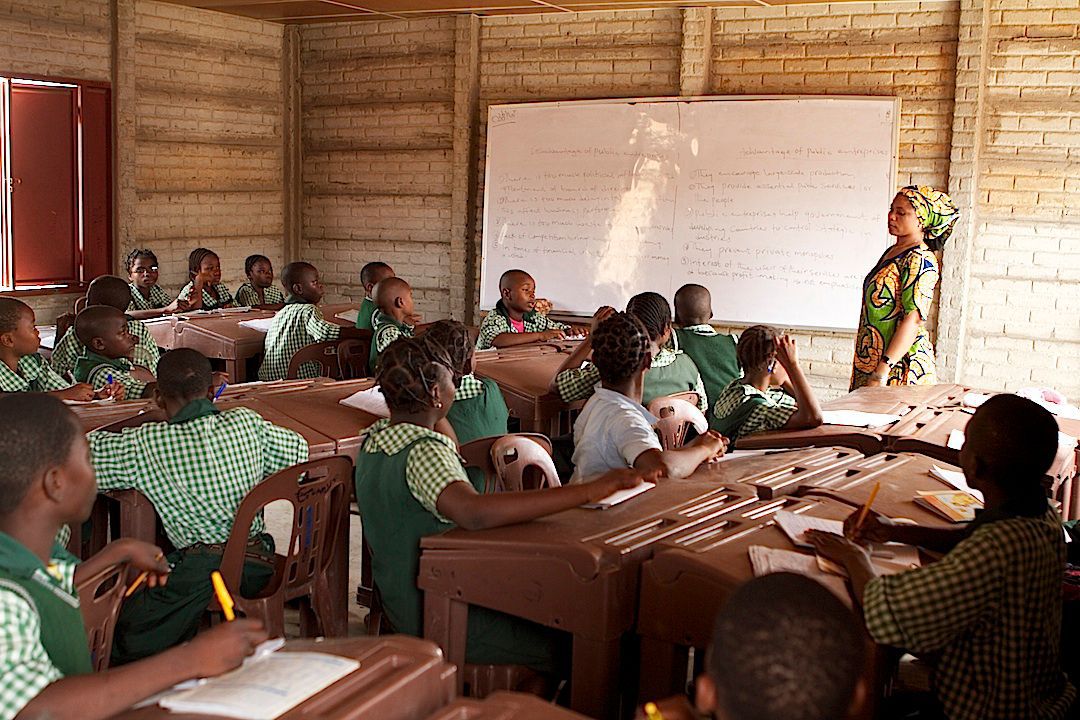
Education in Lagos State has changed over time and has been shaped by both events and the people who built the system. As part of the Nigerian education system, it faced many problems such as political instability, poor funding, and inconsistent policies from Nigeria’s independence in 1960 and after the state was created in 1967. In the 1960s and 1970s, schools in Lagos were mainly run by churches and the government. One major development during this period was the introduction of Universal Primary Education, which aimed to give every child six years of free primary education. 1970s to the 1990s saw urbanization, rapid population growth and some political problems in Lagos which really affected education. Although around this period, teachers were trained and educational infrastructures were not joked with.
There was a campaign for renewed hope by Governor Bola Ahmed Tinubu (1999-2007). His assiduous works made a positive effect on the Lagos’ educational system. His government focused on systemic reforms that gave strength to the framework of education, and also educational security in the state. This period saw the efforts to give strength to the blooming developments. The government of the day enhances recruitment, and increases the budget for education. Tinubu-led administration initiated free education and examination (paid WAEC/NECO fees) for secondary school students, enhanced teacher’s remuneration and welfare, while building schools, equipping vocational/technical institutions, and massively funding tertiary, too. His millennium project which saw the light of school rehabilitation, and his one-day governor idea keep being among his achievements.
2007-2015 marks another full democratic year for Lagosians, and the education of the state. Governor BabaTunde Raji Fashola follows closely the trail of the past government; for example, free foundational education from nursery to secondary school continues which later gets innovated. Many infrastructural projects get completed and initiated, especially in public schools. There is public-partnership across the development of education. Support Our Schools Initiative, the introduced Saturday extra-mural classes, especially the Mathematical tonic and English clinic, which were designed to help students improve in key subjects, among other initiatives were carried out by the government. One impactful gain, again, is the training of over 7000 in 2012, according to reports and news.
Lagos State experiences a full blown introduction to new age technology in the education sector with the election of Akinwunmi Ambode as Governor (2015-2019). The introduction of e-learning tools and modern teaching aids in schools really changes the face of the Lagos state education sector. Apart from this, he also initiated projects like “Ready-Set-Work” an initiative that’s is set to equip final year students in tertiary institutions with employability skills and entrepreneurship training, Implementation of the “3600 Education Policy,” “Lagos is Learning” (Èkó ńkẹ kòó) program aimed at combating illiteracy, and the massive distribution of educational kits to over 175,000 pupils across public schools. Intensive training for teachers.
On 29 May 2019, Babajide Sanwo-Olu, the current Lagos State governor resumed office and has been working to achieve educational security in the state. His “THEMES Plus” project among others stand out. There are more than a thousand school buildings that have been renovated by his government, and most children now have access to contemporary classrooms. Even so, the issue with out-of-school children still persists. Lagos state under Sanwo-Olu also initiated a program called EKOEXCEL, which provides teachers with tablets and digital tools to enable kids to learn more quickly and even learn computer coding. “Project Zero” is one of the governor’s projects which is a project that finds children who are not in school and assists them in getting the right education. The government aims at providing every child in Lagos with a better future by funding student exam fees and providing teachers with more effective training.
Lagos still battles with diverse educational challenges such as overcrowding, low remuneration due to inflation and economic challenges, shortage of ever-ready builders of the system who are also equipped with right skills especially in the public schools. Despite all these, among others, there are still some amazing individuals who are contributing their great quota to the educational system in Lagos, keeping it secure and safe. One of such individuals is Olubunmi Mercy Odiaka who with her works fills the gaps in classroom communication, the psychology of the children, interactive-creative learning style, teachers’ professional development, and learner-centred teaching methodology.
Olubunmi, although an indigene of Ijero, was born in Lagos State, Nigeria. She is an astute, and award-winning educationist, informed early years educator, child psychologist, and trained diction instructor. She holds a degree in Health Education from Ekiti State University, Masters in Early Childhood Education from Lagos State University, professional diploma in Special Needs Education from University of Lagos, and PhD in Early Childhood Education from Lagos State University (in view). Development in teaching early childhood, speaking, and effective classroom communication, especially have been her academic and professional focus. Olubunmi through the use of diverse organized conferences, seminars, workshops, among other means has trained many teachers, educationists, and parents. Her brainchild, and initiative, Teachers’ Leadership Conference (TLC), which she founded in 2023, has impacted over 1000 teachers in Lagos and beyond, with the inaugural having 400 in attendance. Apart from teachers, Olubunmi has trained over 100 teenagers skills in communication and confidence, and her online sessions have been helpful to parents, and educators.
Also, Orondaam Otto is another great individual contributing to education in Lagos. He supports children from slum communities using his non-profit organization, Slum2School Africa. Using scholarships, mentorship, digital tools, school materials like bags, books, among others, he makes the children have faith in themselves. The organization also runs virtual classrooms and diverse programmes for children. His main aim is to strongly advocate for children who are out of school.
The story of education in Lagos shows how much can change when leaders and citizens work together. From early struggles with funding to today’s digital tools like EKOEXCEL, each era has added something new to the system. While the government builds classrooms and pays exam fees, the heart of education is kept alive by passionate individuals. People like Olubunmi Mercy Odiaka, Orondaam Otto, and Tunde Onakoya are proving that learning goes beyond textbooks. Tunde’s use of chess to support children’s dreams in Lagos helps them believe that, “It is possible to do great things from a small place.” With all the challenges militating against education in Lagos, having builders like Olubunmi Mercy Odiaka, Otto, Tunde Onakoya, among others will enable dreams to become realities for most children in Lagos.

Leave a Reply