

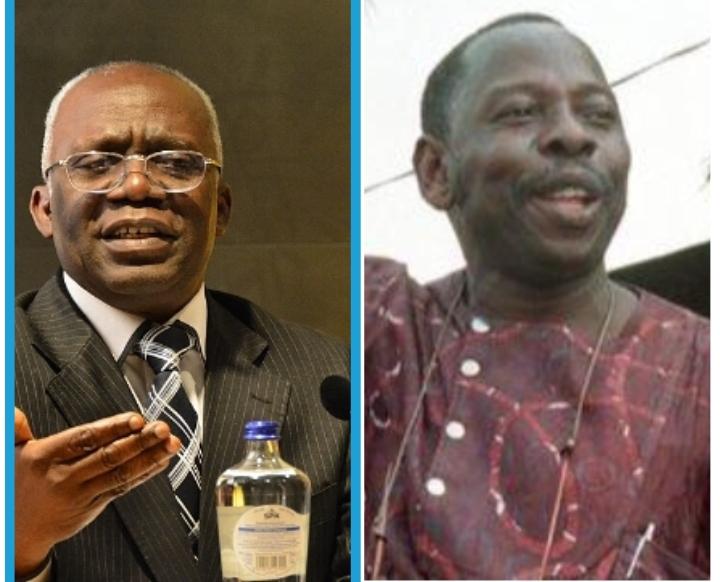
By Femi Falana
Introduction
It is indeed a profound honour to stand before you today at this historic gathering convened to commemorate thirty years since the judicial murder of Ken Saro-Wiwa and his eight compatriots men whose names have been permanently inscribed in the moral and political conscience of our nation. I wish to begin by extending heartfelt appreciation to the organizers of this memorial — particularly Comrade Celestine Akpobari and the entire committee for the diligence, passion, and moral clarity with which they have kept the memory and message of Ken Saro-Wiwa alive in our collective consciousness.
Let me also acknowledge the Ogoni people, whose endurance and steadfastness in the face of relentless persecution remind us that the struggle for justice is not a sprint but a relay — passed from one generation to another. Today’s event is not merely a ceremony of remembrance; it is a solemn reaffirmation of our shared responsibility to continue the unfinished work for which Saro-Wiwa lived, fought, and ultimately gave his life.
We gather here — activists, lawyers, students, journalists, scholars, and citizens — bound by the conviction that truth, justice, and environmental sanity remain non-negotiable in any society that claims to be free. It is a moment of collective reflection on the moral courage of one man, who, armed only with his pen and an unyielding conscience, confronted both state repression and corporate impunity in defence of his people and their land.
I also wish to recognize the presence of human rights defenders and environmental justice advocates who have, over the past three decades, carried the torch that Saro-Wiwa lit — often in the face of intimidation and sacrifice. Their continued efforts, both in the Niger Delta and across Nigeria, are living proof that Ken Saro-Wiwa did not die in vain.
As we mark what would have been Ken Saro-Wiwa’s 84th birthday on October 10, let us remember that we are not merely mourning a tragic loss, but celebrating a life that transformed how we think about justice, citizenship, and responsibility. The very fact that, three decades after his death, the name Ken Saro-Wiwa still resonates across the world from Ogoniland to Geneva, from Port Harcourt to The Hague is testament to the power of moral conviction and the endurance of truth.
In accepting to deliver this keynote lecture, I do so not just as a human rights lawyer or activist, but as one who, like many of you, was profoundly shaped by the ideals and sacrifices of Ken Saro-Wiwa. His courage challenged us to question the complicity of silence. His vision inspired us to understand that the struggle for human rights and environmental justice are inseparable, and that freedom without justice is an illusion.
Therefore, today’s gathering is a call — a reminder that memory must translate into movement, and remembrance must give rise to renewed resistance against every form of oppression, whether by the state or by powerful economic interests. So, as we begin this memorial lecture themed “Ken Saro-Wiwa: The Man, His Legacies, Struggles and Challenges,” let us approach it with reflection and purpose — to celebrate the man, to honour his legacies, to confront the enduring struggles he began, and to interrogate the challenges that still confront our nation and our environment three decades later.
Remembering Ken Saro-Wiwa at 84
Thirty years ago, on a dark November morning in 1995, the Nigerian state, under the military dictatorship of General Sani Abacha, carried out one of the most infamous judicial executions in our nation’s history. Kenule Beeson Saro-Wiwa — a writer, environmentalist, and moral visionary — was hanged alongside eight others: Baribor Bera, Saturday Dobee, Nordu Eawo, Daniel Gbokoo, Paul Levura, Felix Nuate, Barinem Kiobel, and John Kpuinen. Together, they became immortalized as the “Ogoni Nine.”
Their deaths were not just personal tragedies; they represented a national moral failure — a moment when the machinery of the state was turned against conscience, when justice was perverted to serve corporate greed and authoritarian power. But as history has shown time and again, tyrants may silence the voice of a man, but they cannot bury his ideas. The rope that took Saro-Wiwa’s life only tightened the global commitment to the cause he championed — justice for his people, and dignity for the environment.
Today, as we mark what would have been Ken Saro-Wiwa’s 84th birthday, we are reminded that the measure of a man’s life is not how long he lived, but how profoundly he transformed the moral landscape of his society. His life was short, yet full of meaning; his words were few, yet eternal. He lived for truth and died for justice and in that paradox of sacrifice, his spirit continues to live on among us.
Ken Saro-Wiwa was, in every sense, a man ahead of his time. Long before the world began to speak of climate justice, sustainable development, and environmental governance, he had already warned us of the ecological catastrophe consuming the Niger Delta — a catastrophe caused by reckless oil extraction, environmental neglect, and the subjugation of indigenous communities. He spoke truth to both power and profit, insisting that human rights could never be divorced from the right to a clean, safe, and dignified environment.
To remember Saro-Wiwa at 84 is therefore to engage not in sentimental nostalgia, but in critical reflection. It is to confront the uncomfortable truth that many of the injustices he fought against still persist — oil spills still poison farmlands, gas flares still darken the sky, and impunity still defines the relationship between power and the people. The Niger Delta remains a symbol of resource wealth and human poverty, a paradox that Saro-Wiwa’s prophetic writings and activism sought to expose. This memorial is thus a moment of reckoning — a chance to measure how far we have come and how far we have fallen short of the ideals he stood for. It is an invitation to rediscover our collective moral compass and to renew the spirit of civic courage that defined Saro-Wiwa’s life.
As we reflect on his journey, three intertwined strands emerge — the man, his struggles, and his legacies — all of which are embedded in the challenges we continue to face as a nation striving for justice and accountability. His story is not merely about the Ogoni people; it is about the soul of Nigeria — about how we treat our citizens, our land, and our truth-tellers. It is also an occasion to recognize the continuing relevance of his ideas in our present democratic era. Saro-Wiwa believed that true democracy could not exist without social justice, and that development without human rights is merely oppression by another name. His vision was moral, political, and ecological — a vision that called on every Nigerian to understand that silence in the face of injustice is complicity.
Therefore, as we remember him today — 30 years after his death, and 84 years after his birth — let us commit not only to celebrating his memory but to reviving his mission. Let us recommit to the principles that defined his life: truth, justice, non-violence, and the sanctity of human dignity. Ken Saro-Wiwa may have been executed, but he was never defeated. His pen, his words, and his courage continue to challenge us to build a Nigeria — and indeed, an Africa — where no one is persecuted for speaking the truth, where no community is sacrificed for profit, and where the environment is protected as the common heritage of all.
The Man: Ken Saro-Wiwa’s Life and Convictions
To understand the power and enduring resonance of Ken Saro-Wiwa’s message, we must first understand the man behind the movement — a man whose life was a tapestry of intellect, creativity, conviction, and unyielding courage. Born on October 10, 1941, in Bori, Ogoniland, in the present-day Rivers State, Kenule Beeson Saro-Wiwa emerged from humble beginnings to become one of Nigeria’s most fearless moral voices. From his earliest years, he embodied an uncommon blend of brilliance and empathy — qualities that would later define both his literary genius and his moral activism.
After completing his early education in Ogoniland, Saro-Wiwa attended Government College, Umuahia, an elite institution that produced some of Nigeria’s finest intellectuals, including Chinua Achebe and Christopher Okigbo. There, he cultivated a lifelong passion for writing and public service. He later studied English at the University of Ibadan, where he further honed his literary skills and began to develop a deep awareness of Nigeria’s complex social and political contradictions.
Ken Saro-Wiwa’s early career was marked by versatility and vision. He served as a university lecturer, administrator, businessman, and government official — at one point as the Regional Commissioner for Education in Rivers State during the civil war era. Yet, even while he worked within the machinery of the state, he never lost sight of his moral compass. He was deeply troubled by the growing inequality, corruption, and environmental devastation he witnessed, particularly in the Niger Delta.
Beyond the public sphere, Saro-Wiwa was a man of letters — a writer of great wit, clarity, and social purpose. Through his novels and television works such as Sozaboy and Basi & Company, he used humor and satire to critique Nigeria’s moral decay, the absurdities of power, and the struggles of the common man. His literary genius was inseparable from his activism; he understood, as few others did, that the pen could be as powerful as protest — that words could awaken consciences even where bullets failed. But what truly set Ken Saro-Wiwa apart was not just his intellect, but his moral conviction — his unwavering belief that justice is the first condition of humanity. He was a man who refused to separate private morality from public duty. His faith in truth was not rhetorical; it was existential. He lived it, breathed it, and ultimately died for it.
At a time when the Niger Delta was being ravaged by unregulated oil exploitation, when the land was bleeding and the people were silenced, Saro-Wiwa found his calling not in comfort but in confrontation. He once declared: “I have devoted my intellectual and material resources to a cause that I consider just, noble, and patriotic — the cause of the Ogoni people.”
This statement captures the essence of who he was, a man whose conscience would not allow him to look away while his people suffered ecological and economic annihilation. He possessed what Albert Camus called “the courage to stand alone,” a moral audacity that refused to compromise truth for convenience. Saro-Wiwa’s convictions were deeply humanist. He believed that development divorced from justice was violence in disguise, and that progress which destroyed communities was no progress at all. His vision transcended ethnic or regional boundaries — it was a call for ecological justice, participatory democracy, and moral accountability across all of Nigeria. To him, the degradation of the environment was both a physical and spiritual assault on humanity.
As a leader, he rejected violence and consistently advocated for peaceful and lawful resistance. His leadership of the Movement for the Survival of the Ogoni People (MOSOP) was guided by the principle that “we are going to win through the power of ideas, not through the force of arms.” In this, he demonstrated not only courage but strategic wisdom — an understanding that moral authority, not violence, is the most enduring weapon of change. His personal discipline also spoke volumes. Despite his fame, he lived simply. Despite threats, he remained fearless. Despite isolation, he remained hopeful. He once said, on the eve of his execution:
“I have no doubt at all about the ultimate success of my cause, no matter the trials and tribulations which I and those who believe with me may encounter on our journey. Neither imprisonment nor death can stop our ultimate victory.”
Those were not the words of a desperate man — they were the words of a believer, a visionary, a man whose conviction was anchored not in power but in principle. Ken Saro-Wiwa was, in every sense, a moral revolutionary — one who redefined what it means to live a meaningful life. In a society often crippled by fear and silence, he chose truth. In a system corrupted by greed, he chose sacrifice. And in a world indifferent to suffering, he chose empathy.
As we reflect on the man, we must understand that his greatness was not born of privilege, but of principle. He demonstrated that true leadership is not a matter of titles or wealth, but of moral clarity, integrity, and courage in the face of tyranny.
In remembering him today, we are called to reexamine our own lives: What do we stand for? What price are we willing to pay for justice? And what legacy will we leave behind for the generations that follow?
The Struggle for Environmental Justice and Minority Rights
To speak of Ken Saro-Wiwa’s struggles is to enter the heart of his life’s mission — the moral, political, and ecological battle he waged on behalf of his people and, by extension, on behalf of all oppressed communities across Nigeria and the African continent. His struggle was not merely against pollution or poverty; it was a struggle against injustice in all its forms — environmental, economic, political, and spiritual.
In 1990, in the small but resolute community of Ogoniland, Ken Saro-Wiwa led the formation of the Movement for the Survival of the Ogoni People (MOSOP) — a peaceful, non-violent organization committed to defending the rights of the Ogoni people against the devastating environmental and social consequences of oil exploration. That same year, MOSOP presented to the Nigerian nation and to the world the Ogoni Bill of Rights, a historic document that articulated the grievances, aspirations, and demands of the Ogoni nation. The Bill of Rights was not a call for secession or rebellion; it was a plea for justice and equity. It demanded:
- The right to political control of Ogoni affairs by the Ogoni people themselves;
- The right to control and use a fair proportion of Ogoni economic resources for their development;
- Adequate compensation for decades of environmental destruction caused by oil companies; and
- The right to protect the Ogoni environment and culture from further degradation.
These demands were rooted in constitutional and moral legitimacy — echoing the principles of self-determination, equality, and environmental justice enshrined in both the Nigerian Constitution and international human rights instruments such as the African Charter on Human and Peoples’ Rights, particularly Article 24, which guarantees every people “the right to a general satisfactory environment favourable to their development.”
The Niger Delta: From Wealth to Wasteland
Saro-Wiwa’s activism emerged from a reality of staggering paradox. The Niger Delta — the region that feeds Nigeria’s economy — has been described as a rich land inhabited by poor people. For over six decades, oil extraction by multinational corporations, most notably Shell Petroleum Development Company (SPDC), turned once-fertile farmlands into toxic wastelands. Rivers became slick with crude oil; mangroves died; fish and crops disappeared; and livelihoods were destroyed.
Yet, while billions of dollars flowed into government coffers, the communities that bore the environmental burden were left impoverished, marginalized, and voiceless. Saro-Wiwa recognized this not just as an ecological disaster, but as a systemic injustice — a violation of both human and environmental rights. He declared boldly that “the Ogoni people are the guinea pigs of the multinational oil industry in Nigeria.”
Non-Violent Resistance and State Repression
Guided by the principles of non-violence and moral persuasion, MOSOP mobilized the Ogoni people in one of the most remarkable grassroots movements in Nigerian history. On January 4, 1993, an estimated 300,000 Ogoni men, women, and youths marched peacefully in the streets to protest the environmental devastation of their land. It was a demonstration of unity, courage, and defiance — a clear message to both the Nigerian state and the oil corporations that the era of silent suffering was over.
But the state responded not with dialogue, but with repression. The peaceful demands of the Ogoni people were met with military brutality, arbitrary arrests, and systematic intimidation. Villages were raided, men and women were assaulted, and lives were lost. Ken Saro-Wiwa and several leaders of MOSOP were repeatedly detained under false and politically motivated charges.
The regime of General Sani Abacha, in collusion with corporate interests, sought to crush the movement through fear and violence. In a deeply flawed trial before a Special Military Tribunal, Ken Saro-Wiwa and eight others were convicted on trumped-up charges of murder — a process condemned globally as a miscarriage of justice. Despite appeals from the United Nations, the Commonwealth, and human rights organizations around the world, they were executed on November 10, 1995.
The African Commission on Human and Peoples Rights found that the trial of the Ogoni 9 as well as the conviction and death sentences passed on them were faulty as they breached even the provisions of the Civil Disturbances Decree under which they were tried. As the Sani Abacha military junta could not justify its actions, the execution of the Ogoni 9 was declared illegal by the Commission on the ground that it violated several provisions of the African Charter on Human and Peoples Rights.
In 1999, the Olusegun Obasanjo administration set up the Chukwudifu Oputa Commission to investigate allegations of human rights abuse under the defunct military junta. We submitted a comprehensive petition on behalf of MOSOP. During the hearing of the petition in Port Harcourt, we produced documentary evidence and led oral testimony to prove before the panel that the Ogoni 4 and Ogoni 9 were killed by the Sani Abacha military junta. The panel found merit in our submissions and recommended that justice be done in the case of the Ogoni 13. In October 2025, the Bola Tinubu administration rightly granted posthumous pardon to the Ogoni 4 and conferred national honours on the Ogoni 13.
A Struggle Beyond Ogoniland
Ken Saro-Wiwa’s struggle was never parochial. Although it was rooted in Ogoni soil, its moral reach was national and global. He exposed the wider structural injustice of Nigeria’s political economy — a system in which wealth was extracted from the periphery to enrich a corrupt center. His activism highlighted how resource control, environmental degradation, and minority exclusion were interconnected dimensions of Nigeria’s unresolved national question.
He understood that the Ogoni struggle was a metaphor for the struggle of all marginalized peoples — from the Niger Delta to the Middle Belt, from the slums of Lagos to the deserts of the North. His message was clear: until the least among us is free, none of us is truly free.
The Moral Vision of the Struggle
At its core, Saro-Wiwa’s struggle was driven by a moral vision of justice — the belief that the dignity of human life and the sanctity of the environment are inseparable. He rejected the false dichotomy between human development and environmental protection. To him, both were part of the same moral equation: one could not speak of progress in a society that destroyed the natural foundations of life. His philosophy of “justice without violence” drew from both Gandhian and African traditions of peaceful resistance. He believed that moral courage, not violence, was the most powerful weapon against tyranny. His life proved that the pursuit of justice, when anchored in truth and integrity, can transcend fear and even death.
In the end, Ken Saro-Wiwa’s struggle was not lost on the gallows. It awakened a global consciousness. It forced the world to confront the moral costs of profit-driven exploitation. And it challenged Nigerians to rethink the meaning of nationhood — to ask whether a state that destroys its people’s land and silences their voices can ever claim legitimacy. As we reflect on his struggles today, we must recognize that the battle he began is far from over. The environment still bleeds. The people still suffer. But his example reminds us that resistance is not futile, and that the human spirit, once awakened, can never again be enslaved by fear.
The Legacies: Enduring Impact and Global Recognition
When a man dies for a cause greater than himself, his body may perish, but his spirit becomes immortal. Ken Saro-Wiwa’s execution on November 10, 1995, was intended to silence a dissenting voice, to extinguish a conscience too bright for the comfort of tyranny. Yet, as history has proven, his death achieved the very opposite. It amplified his voice, globalized his message, and transformed his name into a timeless symbol of courage, resistance, and moral conviction.
The brutal hanging of Ken Saro-Wiwa and the Ogoni Eight sent shockwaves far beyond Nigeria’s borders. The world was horrified — not merely by the act of execution, but by the profound injustice that led to it. The Commonwealth of Nations, appalled by the regime’s disregard for human rights, promptly suspended Nigeria from membership. Governments, civil society groups, and human rights organizations across the world condemned the killings, calling them a judicial murder orchestrated to suppress legitimate dissent.
In that tragic moment, Ken Saro-Wiwa became more than a Nigerian activist; he became a global conscience. His name joined the pantheon of moral visionaries — Nelson Mandela, Martin Luther King Jr., Mahatma Gandhi — men who stood on the side of justice against oppressive power, and whose deaths inspired generations to rise in defiance of tyranny.
The Legacy of Environmental Justice
Perhaps the most enduring legacy of Ken Saro-Wiwa is his pioneering role in the global environmental justice movement. Long before terms like “climate change,” “sustainability,” or “environmental rights” entered mainstream discourse, Saro-Wiwa recognized that environmental destruction was not merely an ecological issue — it was a human rights crisis. He forced the world to see what many preferred to ignore: that corporate exploitation of natural resources often comes at the cost of human lives and communities. His writings, speeches, and activism laid the intellectual and moral foundation for a new global understanding — that the fight to protect the environment is inseparable from the fight for human dignity.
In recognition of this vision, the United Nations Environment Programme (UNEP), decades after his death, initiated a historic environmental assessment of Ogoniland, culminating in the UNEP Report of 2011. That report confirmed what Saro-Wiwa had long proclaimed — that Ogoniland had suffered extensive and life-threatening pollution due to decades of oil exploitation. It recommended a comprehensive cleanup process that, if faithfully implemented, would stand as one of the world’s largest environmental restoration efforts. Though progress remains slow, the very existence of the UNEP project is itself a tribute to Saro-Wiwa’s foresight and the righteousness of his struggle.
The Moral and Political Awakening in Nigeria
Domestically, Saro-Wiwa’s martyrdom helped ignite a broader movement for democracy, accountability, and human rights in Nigeria. His execution exposed the moral bankruptcy of military rule and galvanized both local and international pressure that ultimately led to Nigeria’s return to civil democracy in 1999. His courage also inspired a generation of Nigerian activists, lawyers, and journalists who continue to speak truth to power despite threats and intimidation. In the Niger Delta, his legacy gave rise to new advocacy movements for resource control, environmental protection, and equitable development.
Though some of these movements later diverged into militancy, the moral template that Saro-Wiwa provided — peaceful, intellectual, and justice-driven resistance — remains the gold standard for legitimate struggle. Today, every Nigerian who raises their voice against oppression, corruption, or ecological injustice does so, knowingly or not, in the long shadow of Ken Saro-Wiwa’s sacrifice.
Institutional and Legal Legacies
Saro-Wiwa’s struggle also found reflection in the evolution of law and policy. His activism helped push the boundaries of legal discourse in Nigeria and beyond. Court and scholars began to interrogate the relationship between human rights and environmental rights, culminating in judicial recognitions that link the right to life (under Section 33 of the Nigerian Constitution) with the right to a healthy environment.
Moreover, the African Charter on Human and Peoples’ Rights, domesticated in Nigeria as Cap A9, Laws of the Federation 2004, provided legal grounding for Saro-Wiwa’s philosophy. Article 24 of the Charter — guaranteeing every people “the right to a general satisfactory environment favourable to their development” — remains a powerful tool for environmental litigation and advocacy across Africa. In this way, his ideas found life not only in memory but also in law.
Cultural and Educational Legacy
Saro-Wiwa’s influence extends into culture, literature, and education. His books and essays continue to be studied across the world — not merely as works of art, but as documents of conscience. His novels, such as Sozaboy: A Novel in Rotten English, and his short stories, such as A Forest of Flowers, remain required reading in African literature and postcolonial studies. His creative works revealed the humanity of the marginalized and gave literary dignity to the voiceless. Through satire, he exposed the hypocrisy of leadership and the complicity of elites. Through humor, he made the truth bearable and irresistible.
Many universities — from Port Harcourt to Oxford, from Lagos to Toronto — have established lectureships, fellowships, and research programs in his name, ensuring that future generations continue to engage with his ideas and ideals. In particular, the newly established Federal University of Environment & Technology located in the heart of Ogoniland will address oil pollution and environmental degradation in the Niger Delta region.
The Spiritual and Symbolic Legacy
Beyond politics and policy, Ken Saro-Wiwa left a spiritual legacy — one rooted in hope, courage, and moral transcendence. His life reminds us that resistance is a form of faith, that truth is sacred, and that the human spirit, once awakened, cannot be broken by fear. To the oppressed, he offered dignity. To the powerful, he offered a mirror. To the world, he offered a moral challenge — to live not by lies, but by conscience.
Today, the name Ken Saro-Wiwa adorns streets, schools, environmental centers, and activist networks across continents. From the Ken Saro-Wiwa Memorial Centre in Bori to the Ken Saro-Wiwa Foundation in London, his ideals continue to inspire new generations of Africans and global citizens to act with integrity and courage.
The Continuing Relevance of His Legacy
Thirty years after his death, Nigeria still grapples with the same issues that Saro-Wiwa confronted — environmental degradation, inequality, corruption, and the abuse of power. Yet, his legacy serves as both a compass and a challenge: a compass to guide us toward justice, and a challenge to confront our own moral apathy.
His life teaches us that no struggle is in vain if it is anchored in truth. His words, written from prison, still ring true today: “The writer cannot be a mere storyteller; he cannot be a mere teacher; he cannot merely document history; he must be actively involved in shaping his society.” That statement, perhaps more than any other, defines the enduring essence of Ken Saro-Wiwa’s legacy. He was not merely a chronicler of Nigeria’s tragedy; he was a reformer of its conscience.
The Challenges: Nigeria 30 Years After
Thirty years have passed since the gallows at Port Harcourt silenced the voice of Ken Saro-Wiwa. Yet, if we listen closely to the rhythm of Nigeria today — the cries of polluted communities, the despair of unemployed youth, the cynicism toward governance, and the widening gulf between the powerful and the powerless, we realize that the fundamental questions Saro-Wiwa raised remain tragically unresolved. His struggle was not simply against Shell or the military junta; it was against a deeper culture of impunity, injustice, and moral decay that continues to plague Nigeria’s political and economic life.
One of the central planks of Saro-Wiwa’s struggle was environmental justice — the right of communities to live in clean, safe, and sustainable environments. Yet three decades later, the environmental situation in the Niger Delta remains a moral indictment of our collective failure. Despite the 2011 UNEP Report on Ogoniland, which recommended urgent cleanup and restoration, progress has been painfully slow. Oil spills continue, gas flaring persists, and the waters that once sustained life remain poisoned.
The Hydrocarbon Pollution Remediation Project (HYPREP), established to implement the UNEP report, has become a bureaucratic labyrinth beset with allegations of mismanagement, corruption, and inefficiency. Billions of naira have been appropriated, yet the people of Ogoniland still cannot drink their water or farm their land. If Saro-Wiwa were alive today, he would have asked: What does development mean if it destroys the people it claims to serve?
Environmental justice cannot exist where there is no accountability, and accountability cannot exist where profit is placed above people. The greatest challenge of our time is therefore to complete the unfinished environmental revolution that Saro-Wiwa began — to cleanse not only the oil-stained creeks of Ogoni but the moral conscience of our nation.
Governance, Corruption, and the Betrayal of Ideals
Ken Saro-Wiwa believed that Nigeria could be great — but only if leadership was anchored on justice, integrity, and service. Sadly, the past three decades have witnessed a deepening crisis of governance. Corruption has become institutionalized. Public office is often treated as an avenue for personal enrichment rather than public trust. The Niger Delta, despite contributing the bulk of Nigeria’s wealth, remains impoverished, underdeveloped, and ecologically devastated. The Niger Delta Development Commission (NDDC), envisioned as a vehicle of progress, has too often become a theatre of patronage and scandal.
The tragedy of Nigeria today is not the absence of resources, but the absence of moral leadership. Saro-Wiwa’s execution was meant to preserve the power of the few; the persistence of corruption today serves the same purpose — the preservation of privilege over principle. The challenge, therefore, is not just political but ethical. We must rekindle what Saro-Wiwa called the “democratic spirit” — a spirit that insists that leadership is a trust, that justice is non-negotiable, and that the wealth of Nigeria belongs to all Nigerians, not to a cabal of profiteers.
Human Rights and the Shrinking Civic Space
Saro-Wiwa’s life was a testimony to the power of speech — and to the danger of silence. He was executed not for bearing arms, but for bearing witness. Today, thirty years later, Nigerians still face intimidation for doing the same. Journalists are detained for exposing corruption; activists are harassed for organizing protests; and security agencies often act as instruments of repression rather than protectors of liberty.
The civic space in Nigeria has been shrinking steadily. Laws designed to ensure order are increasingly used to suppress dissent. The same state that once silenced Saro-Wiwa now seeks to silence those who invoke his name. This contradiction is the greatest affront to his memory. True democracy cannot exist where the press is muzzled, where protesters are brutalized, or where citizens are afraid to question power. The challenge before us is therefore to defend the right to dissent, to ensure that the words “Never Again” are not mere rhetoric, but a living commitment to freedom.
Economic Inequality and the New Exploitation
When Ken Saro-Wiwa spoke of the “economic genocide” in Ogoniland, he was describing a system where wealth is extracted from the poor to enrich the powerful. That system, tragically, endures — only now it wears new clothes. Today, Nigeria faces unprecedented levels of poverty, youth unemployment, and social inequality. While the elite thrive on oil rents and political patronage, millions struggle to survive amid inflation, joblessness, and economic exclusion.
The resource curse that Saro-Wiwa fought against has deepened into a governance curse. Instead of development, we have dependency; instead of shared prosperity, we have despair. Yet, the challenge is not insurmountable. If we embrace transparency in resource management, reform our extractive institutions, and invest in human capital — education, healthcare, and social infrastructure — we can begin to redeem the promise of the struggles that Saro-Wiwa waged.
No doubt, MOSOP has won many of the battles. One of the gains of the struggle is the derivation fund provided under Section 162(2) of the 1999 Constitution which mandates that 13 percent of revenue from natural resources be returned to states from where such resources are produced. Between January and May 2025, the nine oil-producing states received total of N620.23 billion from the Federation Account as 13 per cent derivation. Since the humongous sums have not impeoved the lives of the people in the Niger Delta region, MOSOP shoul lead a campaign for the allocation of not less that 5 percent to the oil producing community in every oil producing state.
I am not unaware the section 257 (2) of the PIA which stipulates that oil and gas companies shall remit three percent (3%) of their annual operational expenditure to affected host communities. The Chief Executive of the National Upstream Commission, Mr. Gbenga disclosed that the Host Community Development Trusts have remitted N122.34 billion and $168.91million to the host communities as of October 2025. This translates to a combined remittance of over N358.67 billion based on the prevalent exchange rate in enthroning a conducive host environment in Nigeria. He further stated that “the NUPRC is overseeing at least 536 projects at various stages of completion including schools, health centres, roads and vocational centres. They are being funded by the trust fund. The achievement has tremendously curbed crude oil theft.”
Ethnic Tensions, Injustice, and the Quest for Federal Equity
Saro-Wiwa’s struggle was, at its core, a plea for justice within the Nigerian Federation — justice for minority communities, justice in resource allocation, and justice in representation. Thirty years later, the same fault lines remain. The structural imbalance in Nigeria’s political system continues to fuel alienation and conflict. The Niger Delta’s cries for fairness echo similar grievances from the Middle Belt, the North-East, and the South-East. The challenge, therefore, is to reimagine Nigeria’s federalism — not as a hierarchy of domination but as a partnership of equals. Only when every ethnic group, however small, feels secure in its identity and represented in governance can the dream of unity and justice be realized.
Perhaps the most subtle yet profound challenge is the challenge of memory. Nations that forget their heroes are condemned to repeat their tragedies. In Nigeria, we often celebrate the dead but betray their ideals in life. Statues and anniversaries mean little if they are not accompanied by moral continuity. To remember Ken Saro-Wiwa is to confront the uncomfortable truths he revealed — about greed, about neglect, about silence in the face of oppression.
The true memorial to Saro-Wiwa will not be built in marble or bronze; it will be built in the hearts of citizens who refuse to be indifferent. It will be found in the courage of young Nigerians who still believe that justice is worth dying for, and in the conscience of leaders who finally choose service over self. As we commemorate thirty years since his death, we must ask ourselves: What would Ken Saro-Wiwa have us do today?
He would urge us to speak truth, to organize peacefully, to hold leaders accountable, and to never surrender to despair. He would remind us that freedom is not a gift from the powerful but a prize won by the persistent. The challenge before Nigeria is not only to remember Ken Saro-Wiwa but to continue his unfinished struggle — to make this nation a place where no one is executed for speaking the truth, where the land is healed, and where justice flows like a river. As he wrote from his prison cell before his execution: “The struggle is long, but it will not last forever. The moment will come when the people will win.”
That moment — the triumph of truth over tyranny — is what we must all work to bring to life.
Conclusion: Reclaiming the Vision and Continuing the Struggle
Thirty years after the cold morning when Ken Saro-Wiwa and his eight comrades were executed by a junta that mistook brutality for strength, we gather not to mourn, but to remember, to reflect, and to recommit. We gather to affirm that though they were hanged by the neck until dead, their spirits remain alive — in the mangroves of Ogoniland, in the classrooms of our youth, in the conscience of every Nigerian who still believes that truth is sacred and justice is non-negotiable.
History has vindicated Ken Saro-Wiwa. His executioners are forgotten, but his words endure. His jailers are gone, but his message still echoes in every demand for accountability, in every cry against pollution, in every protest against oppression.
He told us that “the writer cannot be a mere storyteller; he must be actively involved in shaping his society.” And so must we. For the story of Nigeria cannot continue to be written in the ink of injustice and corruption, but in the bold strokes of truth and conscience.
Today, our challenge is not merely to recall the heroism of Ken Saro-Wiwa but to live it. His courage was not for exhibition; it was a call to duty. He did not die so that we may speak his name in memorial halls; he died so that we may speak truth in our generation — without fear, without compromise, without surrender.
We must therefore demand that the clean-up of Ogoniland be completed; that environmental justice becomes constitutional justice; that the wealth of Nigeria serves the people, not the powerful; and that no citizen, from Ogoni to Ogbomosho, is denied the dignity that democracy promises. If Ken Saro-Wiwa could face the hangman and still declare, “Lord take my soul, but the struggle continues,” then surely, we who are alive have no excuse for silence.
And so, in the spirit of Kenule Beeson Saro-Wiwa — the man, the teacher, the poet, the prophet — let us rise from this memorial not with tears, but with purpose. Let us go forth to defend the environment, to challenge injustice, and to speak truth to power. For as he taught us, and as I have learned in my own journey through the courts and streets of this nation: there is no power greater than a people who refuse to be silenced.
Ken Saro-Wiwa lives —in our conscience, in our courage, and in our continuing struggle for a just society.
*Being the 30th anniversary memorial lecture in honour of Ken Saro-Wiwa delivered in Port Harcourt, Rivers State on October 10, 2025


Leave a Reply