

By Abdullahi Hamza
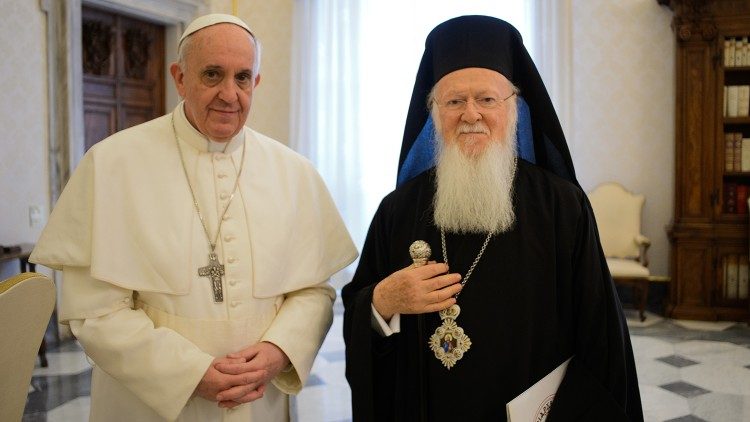
We are taught that the Great Schism of 1054 was a dramatic, single-event divorce between the Pope in Rome and the Patriarch in Constantinople. The truth is far more consequential: it was the slow-motion rupture of a civilisation, triggered by a single Latin word—Filioque—whose geopolitical aftershocks would redraw the map of the world, empower the rise of Russia, and set the stage for a millennium of conflict between East and West.
The theological dispute was deceptively simple: Does the Holy Spirit proceed from the Father alone (the Orthodox position), or from the Father and the Son (Filioque meaning “and from the Son,” the Latin addition)? To the West, this safeguarded the Son’s divinity. To the East, it was a unilateral, illegal alteration of the universal Creed, undermining the monarchy of the Father and making the Spirit a subordinate. This was not academic hair splitting; it was a battle over the fundamental architecture of God. The Pope’s crowning of Charlemagne as “Holy Roman Emperor” in 800 CE—a direct challenge to the Byzantine Emperor in Constantinople—proved this was also a brutal power struggle, with theology as its language.
The true catastrophe, however, was the Fourth Crusade of 1204. When Crusader armies, ostensibly en route to Jerusalem, instead sacked Christian Constantinople, desecrating the Hagia Sophia and overthrowing the Byzantine Emperor, it burned the schism into the Eastern psyche with an indelible scar of betrayal. This was not a misunderstanding; it was proof that the West was a hostile, barbaric force. The fragile reunions attempted at councils like Lyons (1274) and Ferrara-Florence (1439) collapsed under the weight of this inherited trauma and popular outrage in the East.
When you read of tensions between Moscow and the Vatican, you are witnessing the unfinished business of 1054. That single word, Filioque, did more than split a church. It shattered a united Christo-Roman world, empowered the Slavic East, and created a diplomatic and spiritual fault line that has shaped a thousand years of war, empire, and identity
The most profound consequence was the vacuum this created. With Constantinople weakened and isolated from the West, it fell to the Ottoman Turks in 1453. In its wake, a new power arose in the North: Moscow. The Russian Grand Dukes, having inherited Orthodoxy from Byzantine missionaries, proclaimed their capital the “Third Rome”—the final heir to Rome and Constantinople. This “Moscow as Third Rome” doctrine transformed Russia from a Mongol occupied territory into a global Orthodox empire, framing its czars as the protectors of the true faith against a corrupted West and, later, a Muslim Ottoman Empire. This ideological mantle directly fueled Russian expansionism, the Cold War, and even today’s rhetoric of defending “Holy Russia” against a decadent West.
When you read of tensions between Moscow and the Vatican, you are witnessing the unfinished business of 1054. That single word, Filioque, did more than split a church. It shattered a united Christo-Roman world, empowered the Slavic East, and created a diplomatic and spiritual fault line that has shaped a thousand years of war, empire, and identity. The Schism was never just about theology; it was the day the map of Eurasia was fundamentally, and permanently, cracked.
Leave a Reply