

Richard Elesho
There is an urgent need to halt the rate at which health care professionals travel abroad in search of greener pastures and ban medical tourism among the political or wealthy class for Nigeria to get its bearings in health care delivery.
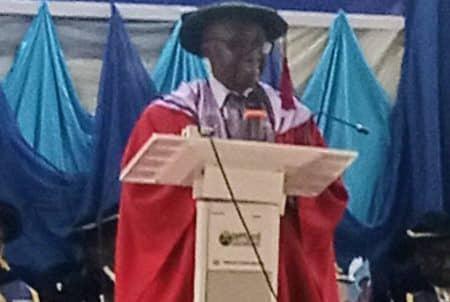
These were part of the recommendations at the 32nd inaugural lecture of the Federal University Lokoja, Kogi State, delivered on Wednesday by Prof. Michael Ozovehe Ogirima, the Dean of the College of Medical Sciences of the institution.
In the lecture, the renowned academic considered the theme “Improvising to greatness: The surgeon’s sojourn.” He took his listeners through gripping details of how he singularly or as part of a team improvised to resolve health conditions when conventional methods or materials were unavailable.
“Brain drain is a phenomenal problem of the decade. Medical academics are leaving the country in droves. This is not limited to young ones but also to old and experienced hands. It is costing the country a huge amount of money. This cohabits with a high rate of medical tourism…
“Good remuneration packages should be introduced for serious academic activities to minimize brain drain and attract more medical teachers to the classrooms…”
Earlier, Ogirima identified other challenges to medical practice in Nigeria and proffered the way forward. He commended governments at all levels for recent improvements in funding for health research and the establishment of molecular/ stimulation laboratories in selected universities.
He, however, pointed out that the cumulative investment in education and health is still far from the expected UNICEF and WHO/AU benchmarks of 26% and 15% of annual budgets, respectively.
“I advocate for more investments by individuals and corporate organisations in medical education and research. Targeted grants to some projects in the university should be encouraged. Grants like fellowships, hands-on workshops, and clinical attachments can be institutionalized by philanthropists and private firms through the endowment of academic chairs.
“More philanthropists like Pa Afe Babalola, SAN of Ado Ekiti, should be encouraged to set up private medical schools to shore up the quantity and quality of medical and allied health professionals. The more the market is saturated with more doctors with attractive incentives, the more it defeats the brain drain (JAPA syndrome). Equally, there is an urgent need to support the private sector in orthopaedic care to be more responsive and complementary.
“Health insurance and highly subsidized services will need to be more robust and expanded to guarantee access to care in joint replacements and spine deformity corrections; and encouragement of public-private partnership to reduce medical tourism to overseas and capital flights.
The TETFUND should be extended to the Teaching hospital, as these are the training and research centres for medical students and postgraduate students. However, if this is not possible, special medical education trust funds should be put in place to take care of our poorly equipped health centres. There is a need to enforce various existing policies on health insurance and social welfare schemes for the institutions and the vulnerable.”
Vice Chancellor of the University, Professor Olayemi Akinwumi, commended the inaugural speaker for a well-delivered lecture, describing him as a pillar of medicine. He said the lecture showed what it means to adapt or innovate and that excellence is not always achieved under perfect conditions.



Leave a Reply