

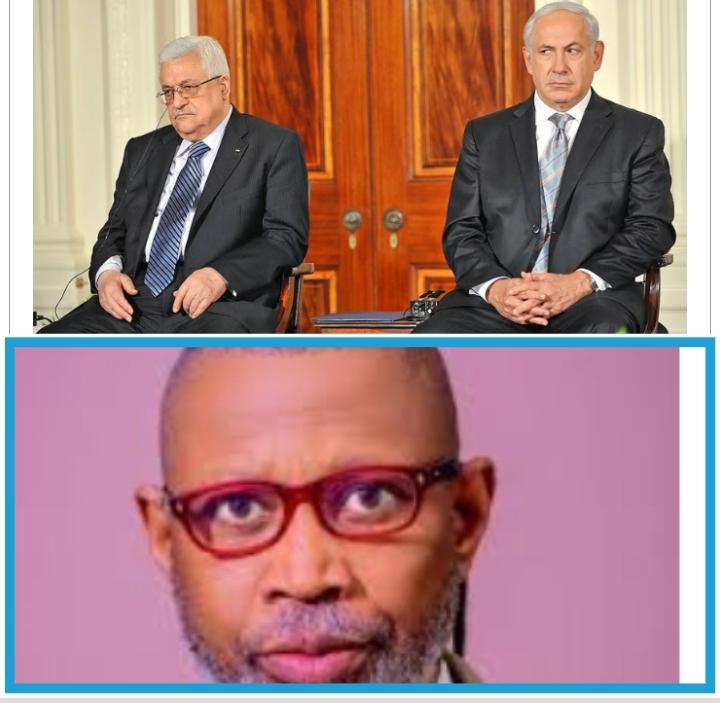
Femi Mimiko, mni
It should be evident by now that the Israeli-Palestinian conflict is not so much about religion, but basically a clash of two nationalisms, one Arab, the other Jewish. As we noted in a 2021 paper, “Xenophobia as bogeyman: The post-apartheid State in South Africa” (https://npsang.org/publications/journals/xenophobia_as_bogeyman_for_npsa/), the most appropriate theoretical framework for robustly analysing such a conflict is, ‘new nationalism’ – predicated on the demonisation of the ‘other’ and its casting as an existential threat to the ‘self.’ This gives a conflict of this nature, a zero-sum game flavour, whereby your adversary’s gain is your loss; with no grey areas allowed and allowable. No conflict of this nature has lent itself to easy resolution in all of history.
I was tapped by the Nigerian Political Science Association (NPSA) to appear on its 16th Platform, November 21, 2023, barely one month after the outbreak of the ongoing war in Gaza between Israel and Hamas, to make a presentation, explicating the critical issues at stake in practically the world’s most intractable conflict.
I had noted in the presentation that the Israeli Defence Forces’ campaign in Gaza was atrocious; but had, as at that date, not measured up to genocide, when appropriately conceptualised as ‘an act predicated upon the intent to destroy or exterminate an ethnic, racial, national, or religious group, either in whole or in part.’ What, in my opinion, Israel was onto in the war – its strategic, if hidden goal – at the time, was the expulsion of inhabitants of Gaza from the northern part of the Strip, with a view to making the territory available for permanent occupation. While the latter part of my prognosis has proven to be valid, the former, on genocide, may now be a bit too difficult to sustain, in light of developments in the theatre of war since then, including the virtual destruction of all of Gaza, and sustained pressure on the remaining population there to leave.
Of critical relevance here also is Prime Minister Benjamin Netanyahu’s reported likening of Palestinian Arabs to the biblical Amalekites, whose complete extermination was ordered by God, in a clear directive to Saul, the first king of Israel. This is a very troubling imagery! There is also the weaponization of hunger in Gaza, epitomised by the recent formal proclamation of famine in the territory; and of course, the very latest in the string of abuses – the Israeli government’s announced commitment to formally annexe a chunk of Gaza, evidently to erase the agitation for the two-State solution, which remains the only rational way out of the lingering conflict.
For the two-State solution to come to fruition, however, a number of guiding principles must be accepted as sacrosanct by all the critical stakeholders. The first relates to the need to forget trying to establish the original and/or legitimate owner of the contentious land of Palestine. Such an effort, at this point, is made unnecessary, by the little prospects it holds for the cause of peace, either way. It must also be acknowledged that in this conflict, no party – neither Israel nor Hamas – is an angel.
There are enough blames to go round in the way the latest phase of the conflict has unfolded. Thirdly, it must be accepted that the State of Israel is not going to be let off the stranglehold of Zionists for a long time to come; and no solution should be predicated upon that possibility. Zionism remains a political cum ideological movement that is committed to the idea of a Greater Israel; implying that Jews have a divine right to solely inhabit the entire Palestine, including what it references as Judea and Samaria (i.e., West Bank). It is thus, understandable that not all Jews are Zionists, but the latter have completely dominated the political landscape since 1948; and that hold is not ending soon.
Fourthly, the world must find a way to persuade Israel to accept the principle of inadmissibility of land through military conquest, and thus, a return to the pre-1967 War borders. This is to make way for the establishment of a Palestinian State, as complement to recognition of the right of Israel to exist within secured borders – as laid out in UNSC Resolution 242, of November 22, 1967. Fifthly, it should go without saying that thereafter, neighbouring oil-rich Arab States would have to lead the fund drive to give effect to the proper functioning of the new Palestinian State.
In the context of prevailing circumstances, either of two pathways leads to the two-State solution. The first is to secure the buy-in of the US – undoubtedly Israel’s most important and consistent ally, and by far the single largest and most potent global power. While this has proven quite difficult to achieve over the years, a well calibrated leveraging of the transactional proclivity of US President Donald Trump may become quite useful in pulling this through at this time. This would be made easier if the commitment of the Arab oil-rich nations to fund the project could be obtained.
The second option is some form of eye-ball-to-eye-ball diplomacy, which I had hinted at, in a piece published by, among others, Thisday newspaper, December 11, 2023 (https://www.thisdaylive.com/2023/12/11/now-that-the-draft-unsc-resolution-on-humanitarian-ceasefire-in-gaza-has-collapsed/), and Premium Times, December 12, 2023 (https://www.premiumtimesng.com/opinion/650946-failure-of-the-unsc-ceasefire-and-ending-the-crisis-in-gaza-by-femi-mimiko.html?tztc=1). This is a situation in which any great power, with enough clout and consequence, and the right level of indignation about Israel’s unending Gaza campaign, issues a firm demand that the war be stopped forthwith by the State of Israel, with the threat of some excruciating sanctions accompanying possible non-compliance.
In focus here is the type of ultimatum on Britain, France and Israel, issued by former Soviet leader, Nikita Khrushchev, over the 1956 Suez Canal War; and the one by his successor, Leonid Brezhnev on the US and Israel, on October 24, 1973, in the wake of the Yom Kippur War. Both accomplished the purpose for which they were issued – immediate halt to a destructive armed campaign.
Nothing, outside of these two propositions, has any prospect of facilitating the two-State solution today. Europe, in the manner of its diplomatic fawning over Trump on Ukraine, has demonstrated its ineffectuality without US leadership. This is why French promise of recognition of Palestine, come September 2025, and the associated flurry of announcements of same by other European countries are, in the words of US Secretary of State, Marco Rubio, meaningless in practical terms, outside of US support. It is also the case that Israeli military dominance of the Middle East is no more in doubt, not with the vanquishing of Hezbollah; virtual destruction of Gaza, and decapitation (if not defeat) of Hamas. Also important in the equation is Israel/US recent 12-Day war with Iran.
Quite intriguing, but also relevant to all of these, is the demonstrable powerlessness of the entire Arab world in this whole business. These are mostly illegitimate and ineffectual regimes that have become completely irrelevant in the evolving power game. The candle of State-centric resistance in the Arab world, would seem to have practically burned out. But a more intriguing trend here is the total quietude of the Arab populations, made more so by the stark contrast it evokes in comparison with massive street demonstrations in faraway climes in Europe, North America, and practically all around the world, against ongoing carnage in Gaza. One would have thought that the Arab Spring of 2011, and the massive change it unleashed in the region, was indicative of revolutionary maturity on the part of Arab civil society; but it would now seem, all of that was a fluke.
Meanwhile, a UNSC Resolution 678 type, through which Iraqi occupation of Kuwait was terminated, is not feasible in today’s UN badly fractured Security Council, even in the face of Israel’s unveiling of its new game plan on West Bank (E1) and Gaza City annexation – to all intents and purposes, practical ways of frustrating the two-State solution initiative, and making a future Palestinian State incongruous and impracticable. Add to this, Netanyahu’s determination to sustain the war, as a diversionary measure away from his having to answer to corruption allegations against him; the failure of intelligence in the October 7, 2023, Hamas breach of Israeli security, which took place on his watch; and the desire to keep in place, the most far-right government in Israeli history, at all cost, including through bursting of opportunities for ending the war and bringing the remaining Israeli hostages home, as seen in the manner his government bucked the March 2025 ceasefire deal, when it was about to enter its second and more consequential phase.
The foregoing summarises our presentation, as one of three guest speakers, at the Academy of International Affairs’ (AIA) virtual seminar, hosted by the doyen of International Relations scholarship in Nigeria, Professor A. Bolaji Akinyemi, on August 23, 2025, on the theme: ‘Breaking the Stalemate: Fresh Perspectives on the Israeli-Palestinian Conflict.’
*Professor Femi Mimiko, former Vice Chancellor, Adekunle Ajasin University, Akungba Akoko, Ondo State, teaches Political Science at Obafemi Awolowo University, Ile Ife



Leave a Reply