

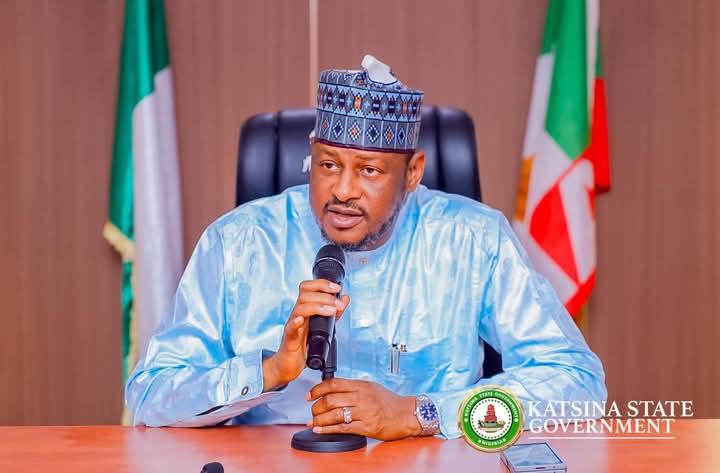
*Governor Radda tells NCTC: We must tackle poverty to end insecurity
By Maduabuchi Nmeribeh/Katsina
Katsina state Governor, Dikko Umaru Radda, has made a strong case for state police as the only panacea to combat insecurity in the state, and ensure the attraction of investors and the growth of MSMEs.
He said his government is determined to secure Katsina to create wealth through the attraction of Investment and absolute support for MSMEs.
Governor Radda reaffirmed his administration’s unwavering commitment to tackling insecurity and creating a safer environment for farmers, entrepreneurs, and investors.
Speaking during a live interview on Channels Television’s Sunrise Daily, Governor Radda shared key updates on Katsina’s evolving security strategy and made a compelling case for the establishment of state police as a lasting solution to grassroots insecurity.
Responding to questions on how insecurity threatens investment, Governor Radda said that from day one, his government understood the gravity of the challenge and quickly established the Katsina Community Watch Corps to provide local intelligence and complement federal security agencies.
“When we assumed office, about 24 of our local government areas were affected by insecurity
So, we created a state-led security outfit, equipped them within the limits of the law, and deployed them in collaboration with the military and police. These officers are from the same communities under attack, and they know the terrain better than anyone,” he said.
Governor Radda noted that while insecurity hasn’t been completely eradicated, its scale has reduced drastically. Most incidents are now limited to border areas near the forests.
According to him, “the stories being told outside sometimes exaggerate the true situation,” he added. “Come to Katsina, talk to our people—you’ll see that things have changed. There’s still work to do, but we’ve come a long way.”
He stressed that the fight against banditry must involve the communities themselves.
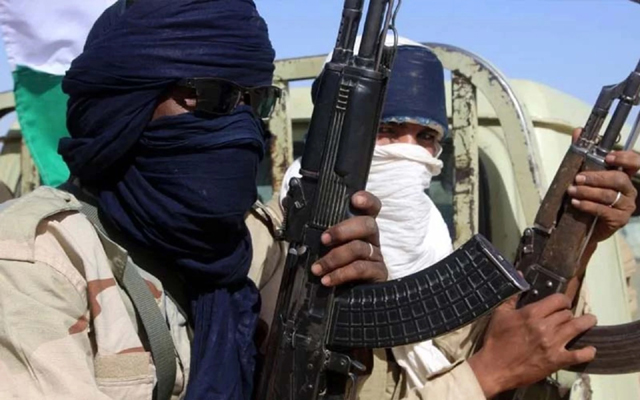
“Over 90% of these criminals are not strangers. They’re from our communities. We know their fathers and grandfathers. That’s why local intelligence is key. We’ve also been able to identify and remove informants and those offering logistics support to bandits.
“This grassroots approach has begun to yield results. Some bandits have even approached local authorities seeking peace deals. But he made it clear that his administration does not negotiate from a position of weakness.
“When I assumed office, I said I would never negotiate with bandits. Now that we have pushed them back, peace accords are emerging organically in some areas. In several local governments, there hasn’t been a single attack in over three or four months,” Governor Radda said.
On the issue of state policing, Governor Radda did not mince words: “We support the establishment of state police. Fully. Without it, we cannot equip our officers adequately to fight bandits using AK-47s while we’re limited to pump-action rifles. If we had state police two years ago, this issue would likely be history.”
He acknowledged that, “like many Nigerians, I once feared that state police could be politicised. But my time in office changed that belief.
“People worry governors will misuse state police. But even federal agencies haven’t guaranteed power—some sitting Presidents lost elections. Nigeria’s democracy is growing, and we must build institutions that work. Let’s stop clinging to outdated fears.”
Governor Radda also emphasised that true security must begin at the grassroots and that local forces accountable to local leadership are better suited to deal with community-specific threats.
“We’re not asking to control the military.
We’re asking for a policing system that understands our local reality and reports to those closest to the people,” he said.
Governor Radda to NCTC: We must tackle poverty to end insecurity
Katsina State Governor, Malam Dikko Umaru Radda, has reiterated that poverty and unemployment remain the root causes of insurgency and rising criminality in Nigeria.
The Governor made this known while receiving a high-level delegation from the National Counter Terrorism Centre (NCTC), under the Office of the National Security Adviser (NSA), and the International Institute of Tropical Agriculture (IITA) at the Government House, Katsina.
The delegation was in the state to present the “Sustainable Rehabilitation and Reintegration Project for Improved Livelihood and National Security,” a joint initiative targeting conflict-affected communities.
The project, which already has a signed Memorandum of Understanding (MoU) since May this year, aims to promote economic empowerment using climate-smart integrated agriculture.
Governor Radda emphasised that: “Insurgency thrives where economic hardship exists. If we must win the insecurity war, we must combine kinetic and non-kinetic approaches — and that begins with tackling poverty.”
While commending the partnership, the Governor pledged the full support of the state government and directed the Ministry for Internal Security and Home Affairs, the Ministry of Agriculture, and the Agricultural Development Unit to lead the state’s collaboration efforts.
In his remarks, Mr. Denis Ozioko, who led the delegation from the NCTC, said the visit was to formally present the project to the Governor following his absence during the MoU signing.
Ozioko also noted that many other northern states have since shown interest in the project, which is expected to transform lives and improve community resilience.
On his part, Mr. Prakash Kantsilwal of IITA highlighted the project’s core vision — restoring hope through sustainable farming, trade, and peaceful living for every family in Katsina State. He stressed the importance of food security, livelihood restoration, and social cohesion.
Also present at the event were the Speaker of the Katsina State House of Assembly, Hon. Nasir Yahaya Daura; Executive Director, Finance and Admin of Sokoto Rima River Basin Development Authority, Alhaji Abubakar Ibrahim Dutsinma and senior management staff of the Government House.

Leave a Reply