

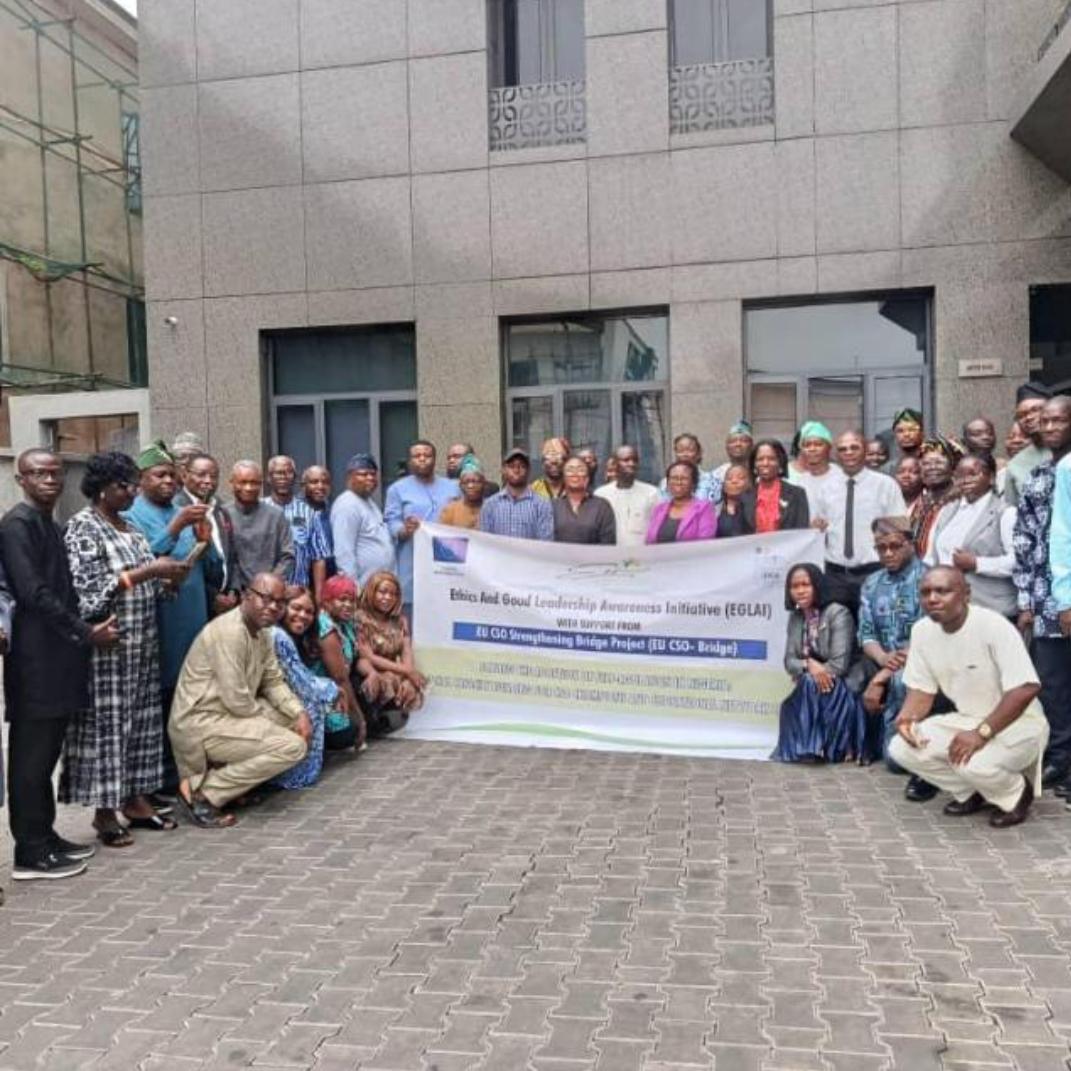
Civil Society Organisations (CSOs) in South-West Nigeria, in collaboration with the Ethics and Good Leadership Awareness Initiative (EGLAI), have taken steps to strengthen accountability within the civic space by organizing a two-day training programme for CSO South-West Champions and Sub-National Network Leads.
The workshop, held in Lagos, brought together a full delegation of participants from Ogun, Lagos, Osun, Ekiti, Ondo and Oyo states. The event marked a significant milestone in the nationwide rollout of the Approved Hybrid CSO Self-Regulation (SR) Modalities.
The initiative seeks to shift the narrative from external government control to a voluntary system of internal accountability among civil society organisations.
Speaking during the opening session titled “Bridging the Gap in Governance,” the team lead, Mr. Harry Udo, emphasized that while governments often struggle to address all societal challenges, CSOs exist to bridge those gaps and reach underserved communities. However, he noted that the rapid proliferation of organisations also necessitates strong internal discipline.
According to him, “Self-regulation is about holding ourselves accountable. It is about demonstrating to both the public and government that CSOs operate with integrity, thereby reducing the justification for restrictive external regulations.”
He further stressed that CSO constitutions must incorporate mechanisms for self-regulation, ensuring that accountability is embedded in the foundational documents of every sub-national network.
During another session, Shinwua Mnenga, a facilitator at the workshop, highlighted the importance of establishing Minimum Standards of Operation for CSOs. He explained that these standards form the backbone of any credible organisation and cover 12 critical areas, including governance and transparency, financial integrity, annual budgeting, legal compliance, and ethical fundraising, among others.
“Minimum standards of operation are the backbone of credible CSOs,” he said. “They safeguard accountability and turn good intentions into measurable impact.”
Peer Leadership and the Road Ahead
The workshop was not merely theoretical. Participants and media representatives engaged in deep deliberations on the Hybrid Self-Regulation Modalities, which include self-assessment tools, a unified Code of Conduct, and the establishment of self-regulatory mechanisms.
One key outcome of the meeting was the decision to utilize existing working-group platforms to monitor compliance and share best practices among member organisations.
Chairman of the committee, Mr. Kasali Babatunde Pelewura, closed the session by highlighting the strong link between leadership and self-regulation. He urged the newly appointed State Champions to serve as multipliers of ethical standards within their respective thematic areas.
Key Takeaways
- Capacity Building: CSOs were equipped with practical self-assessment tools.
- Trust Building: Enhanced public and donor confidence in the civil society sector.
- Policy Influence: Increased recognition of the role of civil society in national development.
- Safety: A more protected civic space with reduced reliance on external government regulation.



Leave a Reply