

Abiodun Fagbohun
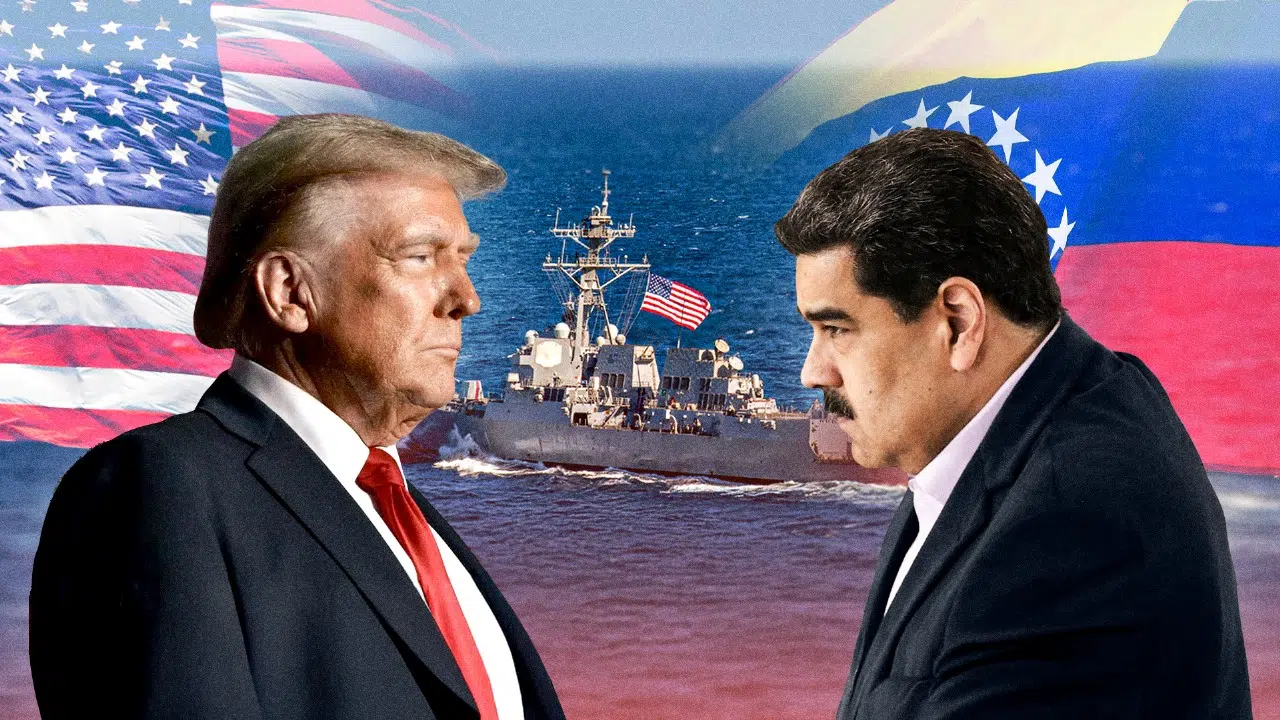
Once again, global attention has swung toward Venezuela. And once again, the heavy shadow of American influence stretches across Latin America. But what is unfolding in Caracas today is far more than a diplomatic standoff or a regional quarrel. It is a sobering reminder of what happens when a nation becomes so weakened from within that outsiders begin to determine its fate.
Venezuela’s collapse did not begin with sanctions, nor did it originate in Washington. Its tragedy started quietly, long before foreign pressure intensified at the moment when oil wealth replaced economic planning, when politics stood in for performance, and when institutions decayed behind a façade of prosperity. For decades, crude oil revenues masked inefficiency, paid the bills, and held together a system that lacked real foundations. Once global oil prices fell, the illusion shattered. A deeply divided and financially crippled state was exposed.
Henry Kissinger once remarked that “the absence of alternatives clears the mind marvelously.” For Venezuela, the absence of economic diversity, political consensus, and credible institutions narrowed its choices so drastically that external interference became not only possible but almost unavoidable.
Nigeria is not Venezuela. But the parallels are uncomfortable enough to demand reflection.
As Africa’s largest democracy and one of the continent’s most influential states, Nigeria still stands tall. Yet its economy remains dangerously dependent on oil; inflation and unemployment weigh heavily on households; and insecurity continues to test the limits of state capacity. The lesson from Venezuela is as direct as it is unforgiving: oil wealth does not safeguard national sovereignty strong institutions do.
Francis Fukuyama once warned that democracy cannot survive without an effective state beneath it. When institutions weaken, democracy becomes a hollow ritual. And hollow institutions crumble easily.
One of Nigeria’s gravest vulnerabilities today is the slow but steady erosion of its institutions. When court cases stretch for years, when regulations are applied selectively, and when public office becomes more reward than responsibility, the authority of the state diminishes. A nation may still conduct elections and raise its flag, but real power quietly leaks away through dysfunction.
This institutional rot is compounded by what many now describe as unprecedented levels of corruption. Corruption in Nigeria does more than drain resources ,it drains legitimacy. It creates a small island of comfort for the powerful, surrounded by a sea of discontent. Venezuela travelled down this same path: a political elite living well while the state itself fell apart.
Barack Obama captured this danger with clarity when he warned that “corruption erodes the state from the inside out, hollowing out its institutions.” Once that hollowing reaches a critical point, foreign pressure becomes easier to justify and harder to resist.
Nigeria’s elections, rather than strengthening the nation’s foundation, have increasingly become flashpoints for tension. When substantial parts of the population distrust electoral outcomes, governments lose the moral authority required to mobilise citizens for reform or sacrifice. A state that cannot convincingly speak for its people becomes vulnerable to external influence.
Added to this is Nigeria’s persistent fault line: ethnic and religious division. When politics devolves into a contest of identities rather than a competition of ideas, national unity unravels. Venezuela was polarised politically, not ethnically but the result was the same. Politics became a zero-sum battle that made compromise impossible. Nigeria’s divisions are even deeper and more complex and therefore more dangerous.
Chinua Achebe’s enduring verdict remains painfully relevant: “The trouble with Nigeria is simply and squarely a failure of leadership.” Today, that failure manifests most starkly in the experience of young Nigerians.
Youth unemployment may be Nigeria’s most explosive challenge. A generation unable to find work, dignity, or hope becomes vulnerable to crime, extremism, and despair. Venezuela witnessed this drift. Nigeria is witnessing it too, as more young people believe their future lies outside the country.
This mass migration, the silent evacuation of talent weakens a nation long before any foreign actor intervenes. A country that trains its youth only to watch them leave is slowly exporting its future.
Meanwhile, the ostentatious lifestyles of some political elites amid widespread hardship send a damaging message: that the system is not only inefficient but fundamentally unjust. In Venezuela, this moral fracture accelerated the breakdown. Nigeria is showing the same warning signs.
Even more concerning is the growing alienation among communities that feel excluded from power, opportunity, and national protection. When citizens no longer see the state as their own, loyalty fades and the national fabric begins to tear.
Education, once Nigeria’s great ladder to opportunity is weakening. Underfunded schools, frequent strikes, and declining standards are producing a generation less prepared for an increasingly competitive world. Venezuela experienced a similar erosion of human capital long before its political collapse became obvious.
Nigeria still has time to change course. But Venezuela’s story stands as a stark warning: no nation, no matter how rich in resources, is immune to collapse when its institutions fail.
| Indicator | Nigeria | Venezuela | Historical Context | Geo-Political Implication |
| Proven Oil Reserves (bn barrels) | ≈37.5 | ≈303 | Both major oil states | Attracts strategic foreign interest |
| Average Oil Production (mbpd) | ≈1.3–1.5 | ≈0.7–0.9 | Venezuela collapsed post-2014 | Weak revenue base |
| Inflation Experience | High inflation | Hyperinflation | Economic collapse | Social unrest risk |
| Political Legitimacy | Contested elections | Authoritarian rule | Erosion over time | External leverage |
| Youth Migration | Rising emigration | Mass exodus | Human capital loss | State fragility |
| Education Quality | Declining standards | Systemic decay | Long-term erosion | Future vulnerability |
Seen together, the parallels are not identical, but they are disturbing enough to deserve serious attention.
Security adds another dangerous layer to this picture. No state that cannot guarantee basic safety can claim full sovereignty. Venezuela’s breakdown was preceded by a long period in which the state gradually lost control over crime, borders, and armed groups. Nigeria’s struggle with insurgency, banditry, and communal violence follows an uncomfortably similar pattern.
Foreign powers do not intervene where states are strong. They intervene where states are weak, divided, and morally discredited.
This is not a conspiracy theory; it is how power has always worked in international politics. As Thucydides wrote over two thousand years ago, “The strong do what they can, and the weak suffer what they must.”
The real lesson of Venezuela is not about America. It is about vulnerability. A country that allows its institutions to rot, its politics to polarize, its economy to depend on one commodity, and its people to lose hope is slowly writing an invitation for outside pressure whether it wants to or not.
Nigeria still has time. But time is not infinite. The warning signs are already here: weakening institutions, corrosive corruption, elections that divide instead of uniting, identity politics, unemployed youth, fleeing talent, declining schools, and a widening gulf between rulers and ruled.
Venezuela shows where this road can lead. As Edmund Burke once warned, “All that is necessary for the triumph of evil is for good men to do nothing.” For Nigeria, doing nothing is no longer an option.
By : Abiodun Fagbohun, PhD
Business & Communication Expert
Leave a Reply