

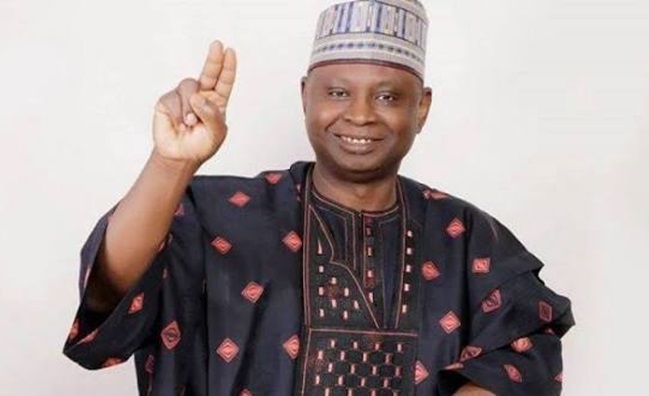
Richard Elesho
The weekend of Friday, 18th to Sunday, 20th September 2025, was politically temperate for a good number of communities in Kogi Central. For two days, the otherwise sleepy communities witnessed a sizable convoy of vehicles, including some state-of-the-art SUVs, snaking around and stopping intermittently to assess the details of ongoing state government projects. The group was led by an international development consultant, Momoh Y. Obaro, and guided by officials from the Kogi State Ministry of Works and other government functionaries.
It was a minuscule throwback to August 2020, when Femi Fani-Kayode, a lawyer and former Minister of Aviation, embarked on a media tour of projects in some South-South states. The tour was peculiar because the erstwhile minister was not a citizen of the region and did not hold any public office.
Obaro’s initiative could be justified as a sort of homecoming. The Kogi-born data scientist is the secretary of the All Progressives Congress (APC) in the United Kingdom. He said his visit was partly to assess the condition of infrastructure in the zone, familiarise himself with the achievements of the state governor, Ahmed Usman Ododo, and drum up support for his administration.
He did not stop there. Obaro, who held a series of consultations with critical stakeholders, used the visit for political sensitisation. He urged people to come out in their numbers to participate in the continuous voter registration exercise by the Independent National Electoral Commission (INEC). He called on people who had just turned 18 to guard against self-disenfranchisement by performing their civic duties. He noted that voting was the only legitimate tool through which a citizen could either retain a desirable leadership or change an underperforming administration.
Obaro commended the APC-led government in the state and at the federal level. He singled out the road networks—running to more than 250 kilometres—embarked upon by the Ododo administration in Kogi Central, and the gradual recovery of the Nigerian economy under President Bola Tinubu, as feats worthy of support and continuity.
Since the visit, speculations have been rife about the political future of the UK-based economist. Observers point to his silence but steady interventions in promoting living standards in the region as being outstanding. For instance, Obaro solved a 50-year-old water problem in Ogaminana when he single-handedly provided the community with a borehole in June 2023.
His other community services include empowerment programmes, an enduring educational support scheme for indigent students at all levels of learning, facilitating access to potable water in several places, and settling medical and other bills for some of his less fortunate kinsmen. He also extends patronage to communities outside his immediate senatorial zone.
In all his recent public outings, the APC stalwart has left people guessing his intentions. He explained that, as a stakeholder in the APC project, his desire was to see those elected on its platform succeed where others had failed. Even at that, Obaro has been named among those nursing ambitions ahead of the 2027 election. In fact, a campaign committee was recently formed to advance his interest, without specifying the preferred role for which he is being groomed.
Should he heed the pressure to seek election, Obaro would be on familiar turf. His first attempt at elective office was more than two decades ago when he contested for the People’s Democratic Party (PDP) ticket in the 2002 governorship primary of the then ruling party. The former numero uno of Ebira politics, the late Senator Ahmed Tijani Ahmed, was also in contention for the ticket.
Although Obaro did not win the poll, his participation redefined politics in the state. Arguably the youngest in the contest, and coming from an ethnic group not considered a majority in Kogi’s political geography, his campaigns were issues-based and daring.
It was somehow fortuitous that his fellow Ebira man, Yahaya Bello, would ascend to the coveted Lugard House seat of power some thirteen years after Obaro’s exemplary attempt. Without a shred of doubt, the latter political generation benefitted from the pioneering efforts of the former. It is instructive that both Obaro and Bello maintain a healthy political relationship.
Indeed, an innate gift for keeping friendships across all classes of persons runs through Obaro’s decades-old political career. He has associates across parties and other divisive lines in the state and beyond.
After losing the bid to govern the Confluence State, he returned to the Wadata Plaza PDP Secretariat, where he served as the party’s Director of Finance. Realignments in the nation’s political space eventually saw him port to the APC as a founding member. Since joining the party, he has been privileged to serve in the presidential campaign committee during the Buhari era and, more recently, as a member of the APC Primary Election Committee for the just-concluded governorship election in Anambra State.
His recent activities have triggered the question: what does Obaro want? Perhaps things will become clearer in the coming days, weeks, or months. Time will tell.
Leave a Reply