

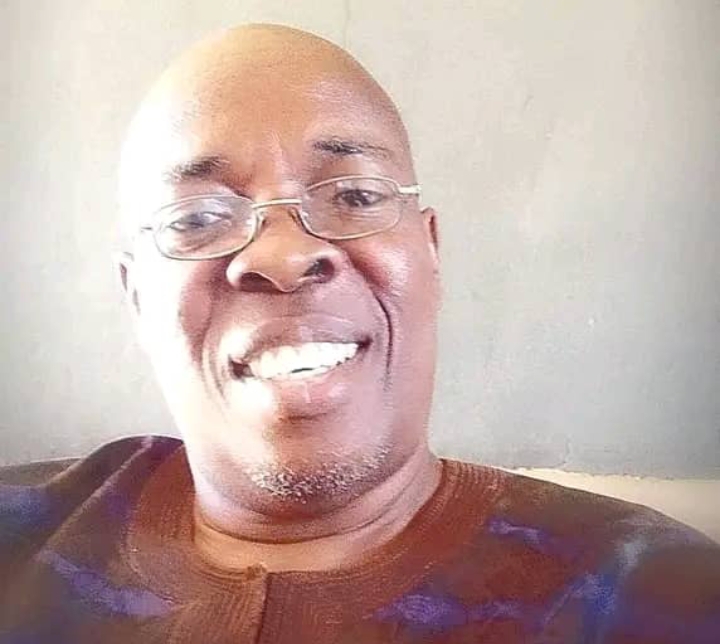
By Niyi Fagbuaro
I will not be in Ado-Ekiti today. My place this Teacher’s Day will be in the quieter but no less profound classroom of the church, where I will be standing before valuable souls, opening the Scriptures and teaching them how to reconcile with the First Teacher of all. The Lord Jesus Christ.
Yet, whether in the chalk-dusted classrooms of our schools or under the florescent glow of a church pulpit, the call is the same, teaching, molding, and shaping destinies.
This does not mean I fail to appreciate the efforts of the government of the day.
I cannot but acknowledge Governor Biodun Abayomi Oyebanji, who has, within a year, granted teachers in Ekiti two promotions and has remained steady in pursuing the welfare of those in our noble profession.
In a land where teachers were once written off as forgotten laborers in dusty staffrooms, his actions deserve both commendation and prayer. I don’t flatter people and I am not a politician.
I salute him today, praying that he overcomes every distraction that may threaten his good intentions for education in Ekiti State. Believing though, that he can do more, God helping him.
Today is larger than politics.
It is larger than policy.
It is about identity.
It is about the worth of the teacher.
For too long, others have spoken about us, today, I want us to remind ourselves what we truly are.
People may sometimes undervalue us, but the greatest tragedy is not when society looks down on us, it is when we ourselves begin to undervalue who we are, when we forget that in our hands lies the shaping of nations, the stirring of civilizations, the nurturing of visionaries who will write tomorrow’s history.
Teachers are the unseen architects of every society.
Every profession traces its birth back to a classroom.
The doctor who saves lives was once guided by a teacher who taught him to read.
The engineer who designs bridges once stumbled through arithmetic under a patient instructor.
The lawyer, the poet, the governor, the priest, all of them first carried a satchel and sat before a teacher.
Our fingerprints are everywhere, though history books rarely record them.
So the age long slogan:
”If you can write your name, thank your teacher!”
But teaching is not merely the transfer of knowledge from head to head.
It is the molding of character, the transmission of culture, the handing over of memory, values, and vision.
When we teach, we do not just shape the future of individual children, we secure the soul of a people.
We preserve the rhythms of their tongue, the dignity of their customs, the balance of their worldview.
In a land like ours, where modernization threatens to wipe out not just languages but entire ways of being, teachers remain the last persons standing, the custodians of who we are as a people.
Yet how easily we forget this.
In those days when landlords in Nigerian towns boldly scrawled warnings on their walls, “House to let, not for teachers”, society declared in cruel handwriting that the teacher was a beggarly soul, a poor cousin of progress. My parents, Olabisi Mary Fagbuaro and John Ige Fagbuaro, Lé Professeur, were renowned teachers in their days, and I witnessed firsthand the sacrifice, the quiet nobility, and the pain of being so easily dismissed by society.
I carry their legacy.
I know what it means to wear the label of “teacher” in Ekiti, and in Nigeria.
I have taught all my life, in the formal classroom, raising nations, on football pitches training underages, and in the church, building souls.
I have seen the lean years when salaries were delayed, when teachers get foods on credit to survive, and yet salary is not sufficient to pay at the end of the month, when bright students mocked their mentors because poverty clothed them too plainly.
And yet, I have also lived to see change.
Things are better today than they were yesterday.
Many teachers now live in their own houses. The days when one’s calling automatically meant poverty and disdain are slowly giving way to days of dignity.
Our reward is now surfacing on earth, and not in heaven alone, as it used to be in years yonder.
The shift is not complete, but it has begun. Teachers are learning to own their worth, to claim their rightful place in society, not with arrogance, but with the quiet pride of men and women who know that without their service, no nation can endure.
Our value is not measured in salaries alone.
It is measured in the resilience we inspire in students who dare to dream beyond their conditions.
It is measured in the culture we preserve when we insist on teaching in Yoruba as well as in English, so that our children remain rooted in who they are even as they stretch to embrace the world.
It is measured in the discipline we instill, not just through punishment, but through the consistency of our example, the power of our words, and the integrity of our actions.
A student who sees a teacher rise each day, prepared to instruct regardless of hardship, learns more than arithmetic or grammar; he learns perseverance, faithfulness, endurance, and resilience.
This is why I return to the spiritual dimension of teaching.
Teaching, in its purest form, is divine.
The Scriptures portray God Himself as the first Teacher, shaping Adam with words, instructing prophets, writing on stone tablets, inscribing wisdom into human hearts.
To teach is to echo the divine act of creation, to bring order into chaos, and bring clarity into ignorance.
That is why, even as I write about teachers in classrooms across Nigeria today, I also write from the place of one who teaches in the Church.
Whether we stand before children in uniform or before men and women seeking God, the act is the same.
It is the sowing of seed.
It is the lighting of a lamp.
It is the building of souls.
And so I celebrate teachers today, not just with applause but with a reminder.
We must not undervalue ourselves.
We must resist the temptation to see our work as drudgery, to bow our heads as though we are lesser than others.
Every profession waits upon our work.
Every leader once sat before us.
We cannot, therefore, allow fatigue, cynicism, or neglect to rob us of our dignity.
I write also to urge the society, government, parents, communities, and our past students, now bigger than us, not to forget us.
The progress of a nation is not built by oil wells, skyscrapers, or highways, it is built in classrooms, where dreams are nurtured and minds are formed.
To neglect teachers is to mortgage the future. To invest in teachers is to secure generations.
Chose, therefore.
And chose wisely.
Let us also be honest, teaching in Nigeria is not yet what it should be.
Many schools are overcrowded, with failing infrastructures, many teachers are underpaid, the teaching resources are inadequate.
But we must not allow these challenges to define us.
We must insist on our worth, both in the way we carry ourselves and in the way we advocate for better conditions within the ambit of the law, operating in the utmost civility that defined our profession.
We must continue to demand policies that honor the dignity of teaching, while also cultivating within ourselves the excellence that commands respect.
One day, fate will place us in our rightful niche in the anthropology of human value.
Until then, let us keep teaching.
Let us keep believing.
Let us keep building, one child at a time, one class at a time, one life at a time.
I close as both a teacher and the son of teachers, a man who has lived this story and inherited its heritage.
From the dust of the chalkboard to the glow of the lantern, from the staffroom gossip to the church pulpit, I have known the struggles and the splendor of this calling.
And so, with all my heart, I lift my voice to say: Happy Teacher’s Day.
May the world learn to honor us, and may we never forget to honor ourselves.
Amen.
*Niyi Fagbuaro writes for teachers._

Leave a Reply