

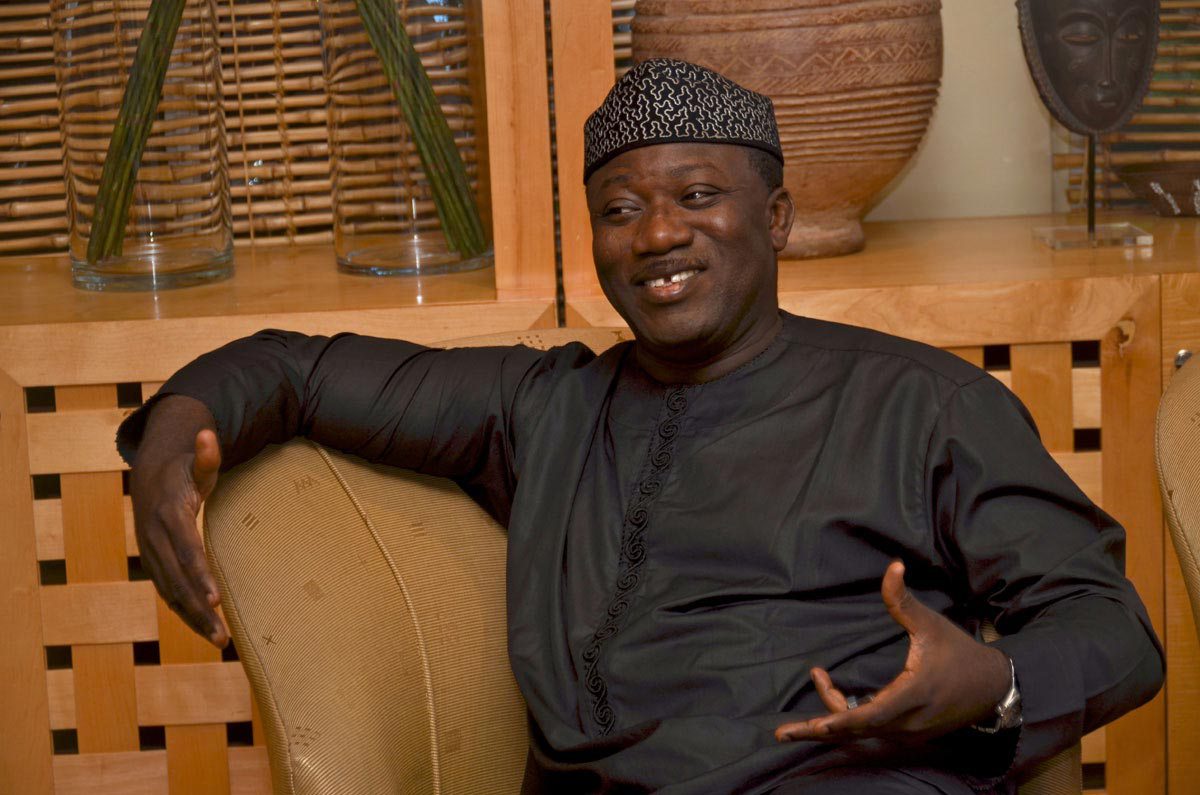
By Babafemi Ojudu
I was horrified watching a video in which Dr. Kayode Fayemi, standing before former President Goodluck Jonathan and a captive audience, described the nationwide protest against subsidy removal by Jonathan’s administration as a “game” — as mere “politics.”
Mr. Governor, I beg to differ. If it was a game for you, it was not for many of us. Some of us knew, with absolute clarity, how devastating it would be for the masses of our people — as it has now proven to be.
For three and a half years, I committed my time, personal resources, and energy alongside you, risking everything to ensure you became Governor so that together we could change the fortunes of our people in Ekiti. And now, to hear that you saw that struggle as a political game? What a painful realisation — and what a deep regret for all we endured at the time.
Some of us take politics far more seriously. We never set out to deceive our people. At that very period you now recall with a grin and laughter in that video, I mobilized my Senate colleagues — marooned in Lagos due to the nationwide flight lockdown — to embark on a dangerous road trip to Abuja so we could raise critical motions on the issue.
We narrowly escaped rioters in Lagos. In Ibadan, we were not so fortunate — missiles were hurled at us, and attempts were made to set us ablaze. By sheer providence, we made it back to Lagos alive. Senators Remi Tinubu and Gbenga Ashafa were with me. Had anything happened to them, that weight would have been on my conscience forever. So, dear brother, that could never have been a game.
Game? Do you know the meaning of game? To amuse. To deceive. To con.
That is the part I find most offensive. So, in the end, it wasn’t about the people? Not about good governance, justice, or service — but simply “about politics”?
But what, truly, is politics?
In its noblest sense, politics is the art of managing human affairs for the common good. It is the pursuit of justice through the organization of power, the elevation of public interest above private gain, and the service of society through principled leadership and responsible stewardship. It is not a mere game, nor should it be reduced to a contest of tricks, wits, or raw ambition.
Chief Obafemi Awolowo once warned: “Politics is not an enterprise for the gratification of the vanity of the idle or the pursuit of personal profit. It is the most serious business in the life of the citizen, and the greatest instrument for the improvement of his welfare.”
The greatest leaders of history understood this. For Nelson Mandela, politics was about the dignity of his people, not the size of his political winnings. For Abraham Lincoln, it was about preserving a fragile union and freeing the oppressed, not about scoring points against rivals. For Lee Kuan Yew, it was the relentless pursuit of prosperity and order for his small nation, not the pursuit of personal comfort.
If you, like many in our class, see politics only as a game — where the people are pawns and power the prize — then it explains why our politics is barren, our governance sterile, and our people perpetually betrayed. And if such thinking persists, the game will end the same way all rigged games do: with the players exposed, and the people walking away in disgust.

Leave a Reply