

By Babafemi Ojudu
From Lagos to Los Angeles, the story repeats: great art is rarely born from tidy minds. Here’s why society both worships and resents its brightest lights.
One humid morning in 1977, a lanky musician in a robe of fury arrived at Dodan Barracks, Nigeria’s seat of power, with a coffin. Fela Anikulapo Kuti placed it at the gates in defiance of the military rulers he held responsible for his mother’s death. It was part grief, part theatre, part rage — and entirely Fela.
Such moments capture the paradox of the flawed genius: brilliance and controversy woven into the same human fabric. They give us anthems, paintings, performances, and words that change the way we see the world — and then they do something that makes us gasp, roll our eyes, or recoil in shock.
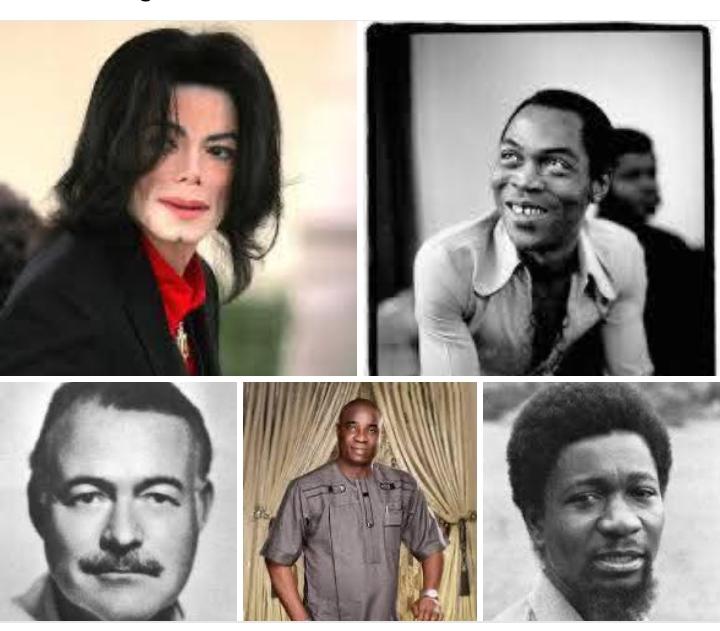
From Lagos to Los Angeles, the pattern is familiar. Michael Jackson, arguably the most famous entertainer of the 20th century, built an amusement park in his backyard, spoke in a voice that seemed frozen in boyhood, surrounded himself with the trappings of a fantasy world, and faced scandals that shadowed his genius.
Fela, never one for half-measures, once packed human waste into a bucket and delivered it to a record company that owed him money. Before he became Africa’s first Nobel laureate in literature, Wole Soyinka famously stormed a radio station with a gun, halting what he believed was the fraudulent announcement of election results. Just this week, Nigeria’s Fuji maestro, Wasiu Ayinde Marshal, blocked the aisle of a plane after security refused to let him board with liquid in a flask — sparking a nationwide debate on entitlement and celebrity behaviour.
And then there is the darker side of this pattern — stars crushed under the weight of their own minds, ending their lives in tragic acts of self-destruction, sometimes in response to voices only they could hear. Ernest Hemingway, Sylvia Plath, Kurt Cobain — the list is long and sobering.
Why does genius so often come wrapped in difficult temperament? Psychology offers one answer: hyper-creatives live in heightened states of perception and self-belief. Years of adulation, scrutiny, and the relentless demand to perform can lead to what scholars call narcissistic entitlement — not always as a pathology, but as the natural consequence of being told, repeatedly, that your vision and needs are exceptional.
Sociology offers another: we build these pedestals ourselves. Society trains its brightest stars to believe the rules bend for them — cheering their eccentricities as part of their brand, until the day those same eccentricities cross an invisible line. Then, the applause turns into outrage.
None of this excuses arrogance or public disruption. Civil life depends on boundaries that apply to all. Yet it would be dishonest to pretend the same traits that make these figures exasperating are not often the very ones that make them extraordinary — the refusal to be told “no,” the relentless pursuit of an idea, the deep belief in their own uniqueness. Call it the Portable effect: the defiant, even chaotic energy that can turn both into artistic gold and public scandal.
History is crowded with such contradictions. Picasso, Miles Davis, Nina Simone, James Brown — towering gifts, turbulent temperaments. Genius is rarely neat or polite. It is messy, defiant, and impatient with the ordinary.
So when a star’s ego spills into public drama, perhaps we should resist the urge to judge in flat colours. The flawed genius is not just a scandal in motion; they are a reminder of the combustible mix of brilliance and imperfection that drives human creativity.
And maybe — if we look closely — we will see that the same human impulses we condemn in them, we sometimes indulge quietly in ourselves. Theirs just happens to be magnified on a stage the whole world can see



Leave a Reply