

By Folorunso Fatai Adisa
“When a state chooses restoration over retribution, every freed life becomes a living testimony to progress.”— Anonymous
Two years ago, Adewale sat behind rusted bars at Ilaro Correctional Centre, forgotten by the system, awaiting trial that never came. No date, no lawyer, no hope. Today, he is a free man, a trained carpenter working in Abeokuta, building not only furniture but a future. His story is just one among dozens that now define Ogun State’s quiet revolution in justice.
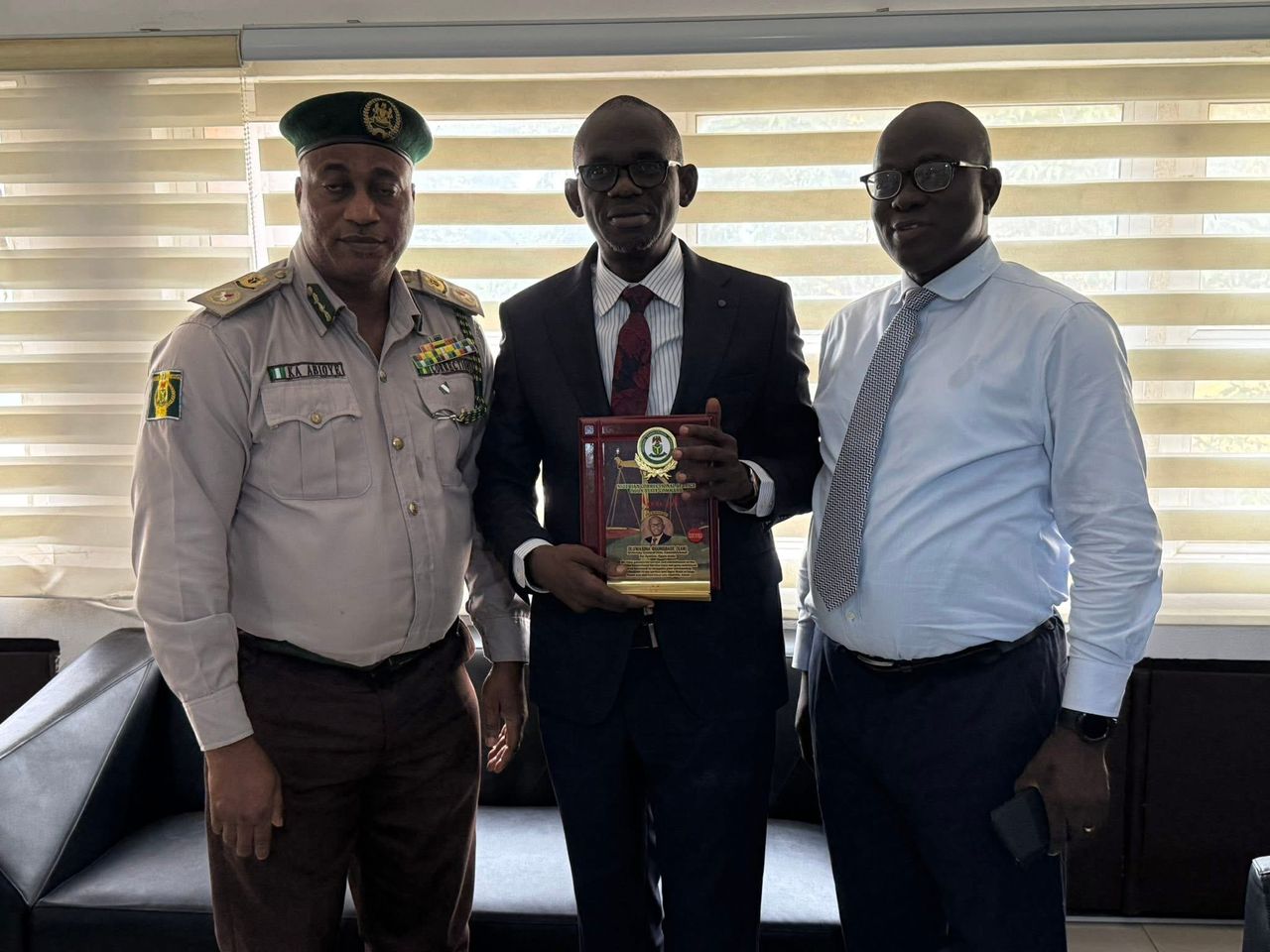
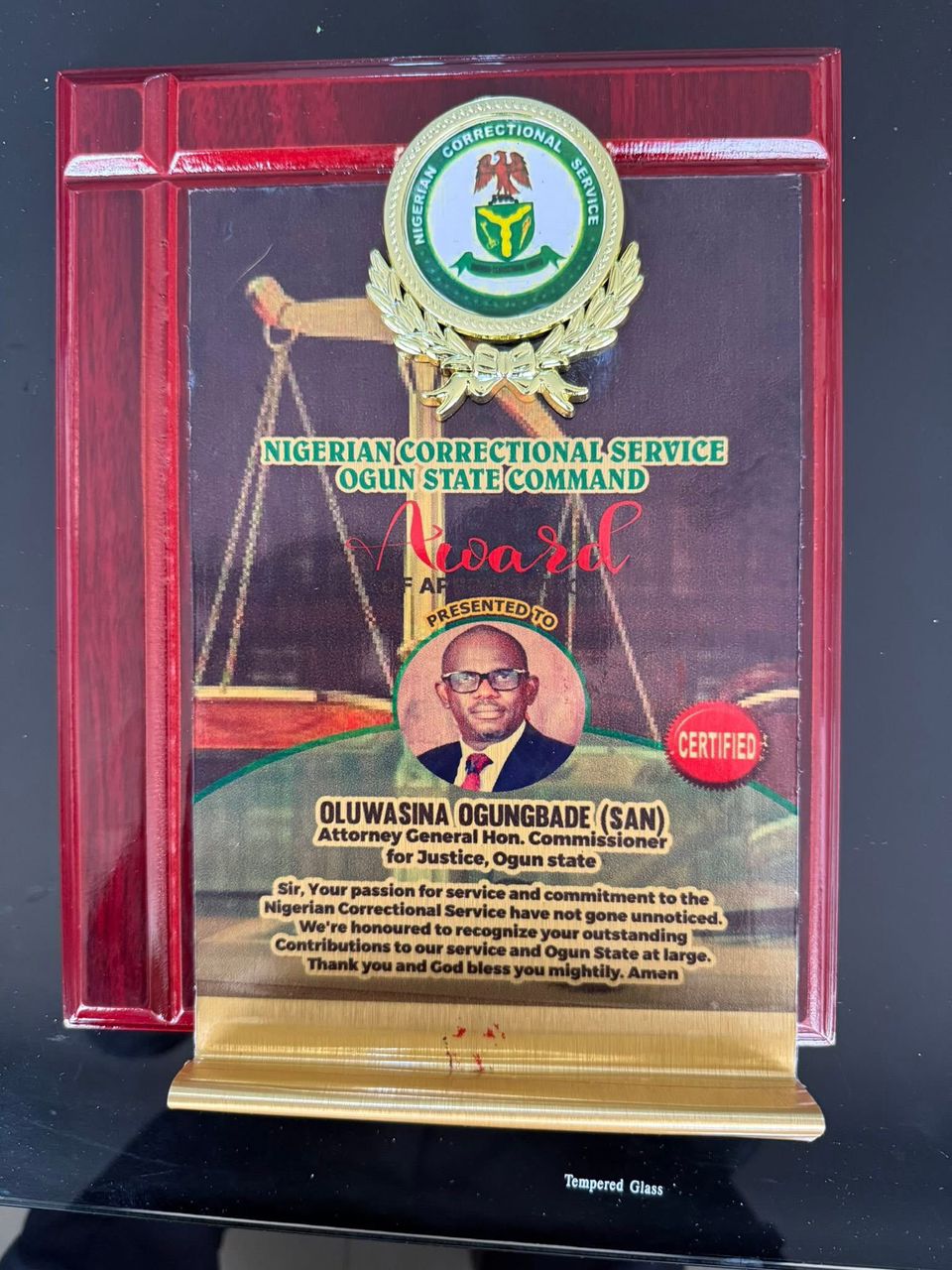
Today, the Ogun State Commissioner for Justice and Attorney General, Oluwasina Ogungbade (SAN), received a delegation from the Nigerian Correctional Service, led by the State Controller, Mr. K.A. Abioye. The visit was not merely ceremonial. It was a formal recognition of Ogun’s sustained and structured efforts in decongesting correctional centres and restoring dignity to those society often forgets.
Since 2023, Governor Dapo Abiodun has exercised his constitutional powers of clemency with both restraint and resolve. In 2024 alone, 45 death sentences were commuted to life imprisonment. Another 41 inmates received full amnesty during the Democracy Day celebrations. These were not hollow gestures. They were measured acts of justice, premised on remorse, rehabilitation, and the promise of reintegration.
Working in alignment with the judiciary, especially Chief Judge Mosunmola Dipeolu, the state has sustained quarterly jail delivery exercises. Between October and December 2024, several inmates, many long trapped in the purgatory of pre-trial detention, were released after proper legal reviews. These releases weren’t political favours. They were proof of a system trying, at last, to work.
Under Ogungbade’s leadership, the Ministry of Justice has embraced a hands-on, people-first approach. Justice teams have conducted physical inspections of correctional facilities, engaging directly with inmates, cell by cell. These visits have exposed long-standing infrastructural and procedural lapses, but more importantly, they’ve revealed human potential, men and women still capable of rebuilding their lives, if given the chance.
What is most compelling is Ogun’s inter-agency coordination. The executive, the judiciary, and the correctional authorities are operating in visible synergy, each reinforcing the other’s mandate. In a country where institutional silos and turf wars often stall reform, this harmony is as rare as it is admirable.
And the results are tangible. Inmates who have completed vocational training or earned academic certificates behind bars are now being released into society not as ex-convicts, but as equipped citizens. They emerge with second chances and new identities. This is what rehabilitation should look like, not just punishment served, but potential restored.
Commendably, at this point in time when overcrowded prisons, backlogged courts, and underfunded correctional systems remain a national disgrace, Ogun is modeling what responsible, forward-thinking governance can achieve. With clear laws, compassionate implementation, and a vision anchored in continuity, not convenience, the state is redrawing the map of Nigerian justice.
This isn’t political theatre. There’s no ribbon-cutting or media fanfare. The true success is quieter: it is the sound of prison doors opening, not for escape, but for reintegration.
This should not only serve as praise but as provocation. If Ogun can build a justice system that frees the worthy and restores the broken, (quietly, steadily, without noise or scandal) what excuse do others have? Why must liberty remain a luxury for the well-connected, while the poor and voiceless languish forgotten in cells without verdicts?
The problem is not will, it is structure. The obstacle isn’t absence of empathy, it is the absence of systems that work. Ogun is not just opening prison gates. It is opening futures; deliberately, lawfully, and one redeemed life at a time.
Folorunso Fatai Adisa is a writer, communication specialist, and media scholar. He holds a Master’s degree in Media and Communication from the University of Strathclyde, Glasgow. He writes from the United Kingdom.



Leave a Reply