

By Maduabuchi Nmeribeh/Katsina
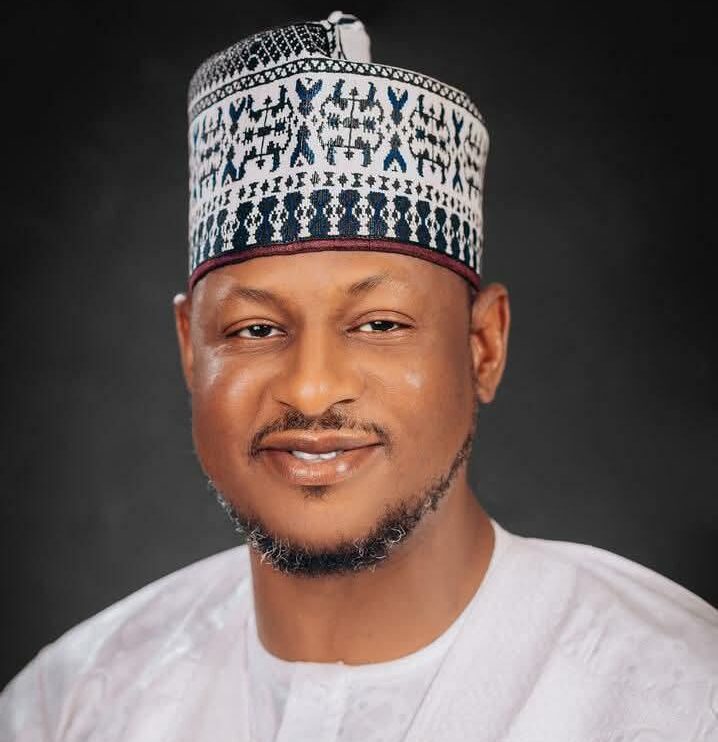
The Dean, Faculty of Administration, Ahmadu Bello University, Zaria, Prof. Muhammad Kabir Isa, has extolled the leadership qualities of Katsina state Governor, Dikko Umaru Radda, particularly commending his efforts towards ensuring digital literacy for the Katsina youths.
Prof. Isa projected that, based on the facts on the ground, over 60 per cent of Katsina youths would be digitally literate by 2027.
Speaking at a special public lecture organised by the Coalition of Academics for Katsina State Development in Katsina, Prof. Isa presented an assessment of Governor Radda’s achievements, which bring dividends of democracy to the residents of Katsina.
The University Don commended Governor Radda for his transformative leadership style and the remarkable progress being achieved in the state.
The event, which commemorated the second anniversary of Governor Radda’s administration, brought together academics, public officials, and development practitioners to evaluate the state’s governance progress under the theme: “Planning as a Panacea for Good Governance: The Dikko Radda Administration in Two Years.”
Prof. Isa emphasised that, “the administration’s strength lies in its planning culture—driven by data, strategic vision, and community input.”
The University Don added that, “effective leadership is not trial-and-error, but the result of deliberate, informed choices. Since May 2023, the Governor Radda administration has consistently prioritised competence, citizen welfare, and institutional reform. Governance anchored in strategic planning naturally yields results that are both sustainable and inclusive.”
In the education sector, Prof. Isa stressed that “no meaningful development occurs without deliberate investment in human capital. The state’s quiet revolution in education offers a compelling example of evidence-based governance in action.”
The Professor revealed that an impressive 75 new secondary schools have been constructed across the state, including 15 strategically located mega schools in urban and semi-urban centres.
He noted that these institutions, “are not ordinary buildings—they include modern science labs, ICT suites, perimeter security, and dormitories.”
Prof. Isa further clarified that the placement of these schools was not politically motivated, but based on geospatial gap analysis, targeting communities that had previously been neglected.
He said that through the transformative AGILE programme, more than 100,000 girls now have access to secondary education, with the government covering tuition, transportation, uniforms, and hygiene materials.
“This initiative has drastically reduced the dropout rate in rural areas,” he added.
The Professor revealed that 7,325 teachers were recruited and strategically deployed based on a teacher-gap index, insisting that, “this wasn’t a political exercise but a rational distribution informed by data—placing the right teachers where they are most needed.”
He added that the Governor Radda-led administration is also constructing Smart Secondary Schools across the three Senatorial Districts to ensure access to quality education by children with special needs and those from humble backgrounds.
Prof. Isa further disclosed that in higher education, over N640 million has been distributed in bursaries to students in tertiary institutions.
On the healthcare development initiative, Prof. Isa added that 41 Katsina students have been sponsored to study medicine abroad.
He also spoke about the launch of the Smart Classroom Pilot Programme, featuring digital whiteboards, tablets, and e-learning tools.
He also projected that by 2027, at least 60 per cent of Katsina youths aged 16–30 will be digitally literate—a forward-thinking goal that aligns with global trends.
Addressing the healthcare sector, Prof. Isa emphasised that when Governor Radda assumed office, he did not merely inherit a government—he inherited a broken health system in urgent need of revival.
He reaffirmed the Governor’s belief that a healthy population is not a luxury, but the bedrock of every serious developmental effort.
The Professor stressed that over 30 Primary Healthcare Centres (PHCs) have already been upgraded into full-fledged Community Health Centres.
“These facilities now run on solar energy, stock essential drugs, and are staffed with trained health professionals,” he declared.
In furtherance of this, Prof. Isa outlined the launch of the Katsina Micro Health Insurance Scheme (KMHIS) in 2024, describing it as a landmark programme offering subsidised healthcare coverage to low-income households, informal sector workers, and rural dwellers.
He announced the launch of the Future Doctors Scholarship Programme and revealed that the 2025 capital budget includes plans for a State College of Nursing and Midwifery.
Speaking on agricultural revolution and economic transformation, Prof. Isa acknowledged that over 80 per cent of Katsina’s population depends directly on agriculture for their livelihoods.
Prof. Isa emphasised that the Radda administration understands that “prosperity must begin with the farmer.”
He particularly quoted Governor Radda as often saying: “We cannot build the future of agriculture with cutlasses and hoes.”
The Professor highlighted the widespread mechanisation programme, explaining how the state procured and distributed hundreds of tractors and harrows, not as handouts, but under cooperative-based leasing schemes.
He commended the introduction of the Katsina Farmer Registration and Verification System (K-FARMS), noting that “the system removes ghost beneficiaries from the equation and targets real farmers who actually till the land.”
Prof. Isa described the introduction of solar-powered irrigation systems in over 60 farming clusters as “a quiet revolution that starts with water and ends in wealth.”
In his concluding remarks, Prof. Isa reiterated that, “what Katsina state demonstrates is not merely good governance, but a governance culture rooted in planning, foresight, and accountability.”
He, however, called on “other sub-national governments to study Katsina’s model and adapt similar strategies rooted in context and data.
“Democracy must deliver. And for it to do so, leaders must lead with vision, with discipline, and above all, with a sincere commitment to the people they serve.”


Leave a Reply