


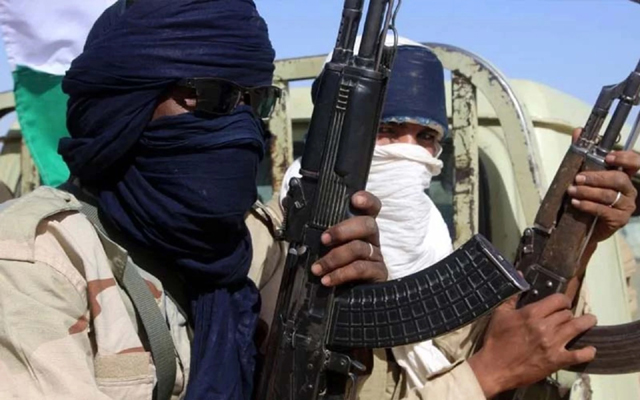
The case of the Fulani in different parts of the country, laying claim to a common identity and occupational standing as a basis for citizenship and freedom of movement calls for a special tact. Their demand to have the right to criss-cross state and regional boundaries as all Nigerians should have it, is uncontroversial. To insist on not belonging to a determinate state and having no formal accommodation of property laws across the states, is controversial. Although it is beyond the frame of this discussion, as it is more fully discussed elsewhere, the implication for regionalism of having an ethnic group, in the midst of many, seeking vehement cross-boundary capacity while others are being scattered and disordered away from settled contiguity, raises serious questions. It amounts to a deliberate dis-establishment of some nationalities as has happened since herdsmen upgraded from sticks to Kalashnikovs, virtually announcing the irrelevance of constituted authority.
One rational solution, generally proposed, is for herdsmen to build ranches in states with which they share cultural empathy. This would allow for a grand industry centred on meat processing and dairy products, the making of leather-ware, handbags and shoes, and sundry confectioneries. The assumption is that only in an area where the herdsmen have cultural empathy would they be able to sustain such an industry. To remove the itinerant factor that has yielded a grating effect leading to inter-ethnic and inter-religious violence, is an answer that needs to be engaged.
In the same way that a Fulani cultural geography can be contemplated, an Ekiti rationale could be imagined for the Ekiti in the North to be in the same state with the Ekiti in the South; the Osun in the North to be in the same state with the Osun in the South. The North/South divide can then be squelched for good and be effectively removed from the illogics of Nigerian politics. In the same manner, it is to be expected that the Nupe and Gbagyi persuasion, as geography and culture, can be figured before thinking of a regionalist framework that can accommodate them. Before regionalism overwhelms the picture, it is important that the long repressed necessity for ethnically homogenous people to be in the same state be given a formal threshing across the country. It calls for meticulous re-demarcation of local governments and state boundaries.
By the way, I have used the examples of Nupe and Gbagyi because these are states that are yet to be created and which would be forever muzzled into silence unless there is a conscious effort to resist the ethnocide buried not just in unitarism across the country but within the regionalist framework. At any rate, before presuming to know more than what the people want for themselves, one good ground for dissenting from regionalism is provided by the case of the Gbagyi people. They have been so badly done in by majority group gerrymandering from colonial times that there ought to be a national movement to free them from internal colonialism. As it happened, the Gbagyi defeated a British imperial expedition and thereafter had their putative capital Gusoro marked for punitive pacification/demolition. All modern amenities including schools were denied the people for a long time. The establishment of Kaduna as a capital had taken a swipe of their territory and seven decades later, the movement of the national capital to the centre of the country, Abuja, took another swipe off their territory. They have been scattered across five states although, being contiguous, they ought all to be in one state of their own. Who is so threatened by the putative solidarity of the Gbagyi that they don’t want to see them together in a state of their own?
The same question can be asked for the Idoma, the Kanuri, and even for supposedly homogenous majority groups like the Igbo, the Yoruba and the Hausa. After seven decades of supposedly detribalized fun-fooling with creation of unviable states, it was time to properly delineate ethnic boundaries so that even ethnicity-based regionalism, as the Yoruba champions have been rooting for, does not amount to a cavalier dissolution of cohesion of its constituent units – the Ekiti, Ondo, Osun, Egba, Ijebu and Oyo. Nor is it such a sanguine pose to discount the cultural distinctiveness of the Ogoja, the Tivi, and Idoma, the Urhobo, the Kanuri and the Igbo West of the Niger. Regionalism that frustrates the self-expression and self-governance of these groups, and more, may ascribe a scientific and universalistic criteria to itself but it will be just another wispy venture, changing for the sake of change. Otherwise, state creation that accommodates such groups within a positive self-expression will always prove superior to regionalism that discounts them. This is saying, in essence, that until a proper delineation of the ethnic boundaries has been done, and states created for viability, all talk about regionalism is putting the cart before the horse.
Talking about delineation of cultural boundaries, it is unseemly to let people who have no respect for the cultural distinctiveness of other Nigerians be allowed to decide for them how to celebrate their identities. This is not merely about humouring some maverick statistical prescription for state creation and regionalism; it should be made a matter of principle; that is, where the smallness of an ethnic fraction suggests no more than a local government within a state, appropriate safeguards for minding the cultural integrity of the group should be devised. The implication is to have all Nigerians live in freedom irrespective of the smallness of their group. Surely, for Nigeria to be free, all the ethnic groups and nationalities within the country must be free, not living under duress or internal colonialism even if deodorized as regionalism.
The hallowed truth is that regionalism is as indifferent to ethnic self-governance as unitarism is. This was why Governor Odumegwu Ojukwu of Eastern Nigeria won at Aburi a fight he was bound to lose at home against minority elements across Nigeria who did not accept regionalism that gave autonomy and resource control to the Eastern, Western, Northern, and Midwestern regions but did not consider that many minority ethnic groups were smarting under baneful regionalism. Across the decades, many loud-mouthed, closet unitarists masquerading as regionalists have continued like Ojukwu, to assume that once they have taken care of their own through regionalism they do not need to bother with the identity of others. Goodluck to their indifference! Fortunately for the rest of us, they can only exercise their tact with our connivance or cooperation. And, not to realize that every solution implicates all of us at the same time is actually one albatross around the neck of the current agitation for restructuring.
For that matter, once resource control is within the reach of every created state or region, the exercise of hegemony over the country by one region or a combination of states will become less disruptive of self-governance by all nationalities in the country. The truth, which bears repeating again and again, is that the overcoming of resource control, through the undue beefing up of the Exclusive Legislative List by Federal Might, has been the factor at the base of the unviability of states.
Whereas all states are obliged to make contributions to the maintenance of the federal system as a mandatory factor in the commonwealth, it was time to decide to free all comers, all states, from the veto exercised by those insisting on killing the Niger Delta instead of having a masterplan for restitution of what has been literally stolen from the area. Now that the era of oil is ending what shall we tell those who suffered biocide and all forms of civic and environmental degradation, to keep the rest of the country in lordly ease and largesse? If Nigeria will starve or combust without dependence on the wealth of the Niger Delta, then it must be a matter to be tackled without the arrogance that has so far been displayed by the internal colonialists in charge of the federal governments since the war.
Let us face it: that arrogance is evident in the ugly face of the exercise of hegemony over the whole South South that has enabled the establishment, supposedly for the benefit of the oil producing states, of Federal quangos like OMPADEC , ritually given less than a fifth of their due funding for the purpose of correcting what revenue allocation was meant to, but never addressed. The N6.04 billion due to OMPADEC suffered truncation to the point of non-payment but the creation of a Petroleum Trust Fund, enjoying a grant of N134 billion for ameliorating conditions, mainly in the North, that should have been left to normal revenue allocation/fiscal schemes, was achieved. The successor quango to OMPADEC, called Niger Delta Development Commission, NDDC, has had no better format than its predecessor. It has fallen into a majority group trick for giving the impression of taking care of wards, oil producers, that ought to, but were not allowed access to their due share of revenues. Or, allowed into the sanctum of oil-moguls and oil-bloc emperors. Putting in these terms makes one forget that it is simply wrong, in fact, evil, to dash other people’s hometowns and seaward environments to people who have no empathy for the areas. How can a country make injustice so alive and brag about it?
Otherwise, there is no reason why the poverty of the North should not have been put on the table and discussed in the same way that a proper Niger Delta Masterplan should have been roaded long ago in a formal bid to ensure that no part of Nigeria is left behind. It seems a form of brigandage was asserted as a statutory right which enabled regionalism to climb on the bonnet of progress across the country, raising militancy of one kind or another, that has remained the lowest common denominator of responses to heinous unfairness. Only too well known, for that matter, is that the Land Use Decree and the Petroleum Act remain the instruments that an unjust Federation has used to repress the regions, taking what belongs to them, without giving anything in return but punitive and grand designs at further pacification. Consequently, a schizoid culture has subsisted across our history, aimed, not at the ideal of allowing every citizen that has a unique gift to be encouraged to develop and enhance its use, but merely, decidedly, making Nigeria poorer by wrecking the advantages that one side or the other may possess. It is a case of making Nigeria poorer without making anyone else better; as if what makes a state or ethnic group unique must be destroyed in order for others to catch up or feel comfortable.
The term that best accommodates all the issues involved is resource control. It is a way of appreciating what is unique about every part of Nigeria in the sense in which the position of Lagos as a national harbour and former capital, deserves to be continually upgraded as a national strategy. groundnut pyramids, when it comes back, ought to be granted leverages as national assets. Talking about a national asset does not imply control by the federal government. It is to draw attention to the rationale for all of us to provide protection and coverage for them in the scheme of things. The core concern is that the state that bears a good or a gift should mind it but make requisite contributions to the federal state. I take this as uncontroversial. Every local government and every state should hold all wealth within its authority and coverage for itself on behalf of the federation, pay taxes and learn to realize that the competition between states within the country is secondary to the competition betweeen Nigerian and many foreign countries including those that are only too willing to lend us money to buy from them on terms that are, properly speaking, simply too imperialistic for discussion.
Leave a Reply