


The IPOB would now seem to have consolidated its legitimacy as the main articulator of the political sentiments of the South East. Indeed, in thanking the Senate for voting down the controversial call for restructuring, it noted that the restructuring could not benefit anyone in Nigeria. For IPOB, the Senate rejection demonstrated that against Northern Senators, the IPOB remains the only legitimate voice that understood the plight of the masses and prepared to do something about it. It restated that only a referendum can resolve the issue of Biafra not restructuring as demanded by moderate forces in the Western Nigeria, pro-establishment forces in the South East and in the Middle Belt. IPOB intoned that only a referendum remains the only way the masses can decide their future in Nigeria. As Idowu Akinlotan notes, with each passing week, a show down of some sorts appears to be looming between the traditional leadership of the South East and the youthful IPOB revolutionaries for whom Biafra is more than just a romantic idea. The YOLICOM in Western Nigeria has reiterated its converging position with the IPOB in the dissolution of the Nigerian federation, even as it stated its preference for strong bilateral relations between a sovereign Republic of Oduaa and the Republic of Biafra.
The complex evolution of the Nigeria state space has also seen the rise of fierce competition between forces of Islam and Christianity for political ascendancy. The high profile role of Imams and Pastors in the protocols of the state and generally in national affairs, from governance to control of educational institutional all motivated by the imperatives of religious indoctrination is evidence of the deep intrusion and consequential undermining of the secular character of Nigerian society and state. The surreal brouhaha over the relative placings of Christian Religious Knowledge (CRK) and Islamic Religious Knowledge (IRK) in the curriculum at the secondary school level was revealing of the relative priorities of a nation that is yet to master the forging the spoke of a bicycle. It is important to highlight the distinction in the struggle on ethno-regional platforms that would appear to dominate the political dynamics and the uncivil symbolic, substantive and simultaneous fierce jousting for ascendance by Islam and Christianity. At one level, Islam and Christianity are engaged in robust engagement to dominate the totality of the social, political and spiritual space, however polluted. Indeed, the relatively dominant secular orientation in Western Nigeria and its balanced religious social construction assured President Mohammadu Buhari his electoral victory over Goodluck Jonathan. The latter, backed by an incentivized Nigerian christiandom, spared no effort to define himself as the Christian counterweight to rampaging Northern Islamists.
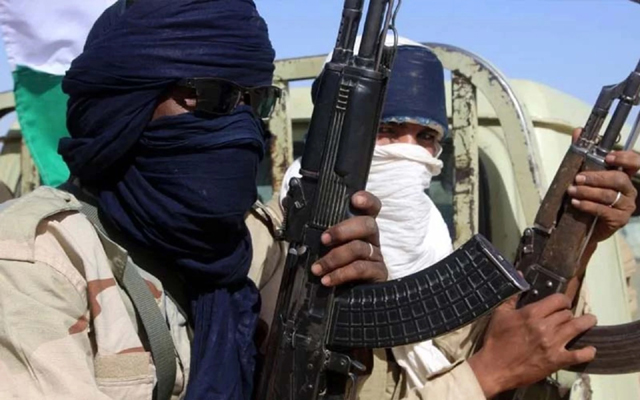
Accordingly, many had imposed a complete religious prism on the presidential election as a fight between Christianity and Islam. That fact imposed the imperative of balancing the Buhari lead ticket with a respected Christian Pentecostalist, given the numerical strength and sway of Pentecostalism in the country. Yet, still is the challenge of Boko Haram. An extremely violent but significant outlier in the scheme of things, the problem of international radical political Islam in Nigeria cannot be discounted in the fractious national equation. Any Nigerian Constitution worth its salt must fathom how best to contain the menace of this internally induced but now externally directed and funded body in Nigeria. Boko Haram is integral to the global expansionism of radical political Islam. Although highly degraded in its capacity to terrorize, the unfortunate reality is that are yet to hear the last of it. All that in the context of managing the fragile relationship between Christianity and Islam.

There is an amazing riot in the inter play of both constructive energies and deleterious impulses at work in Nigeria. At this point in Nigeria’s history, it is not certain that the overall ethical and moral fiber of the House of Senate imbues it with the kind of unassailable leverage and legitimacy to develop, or even tinker substantially the organic law for a complex country like Nigeria. It would be an grave assault on the sensibilities of 180 million Nigerians. It ultimately would be an exercise in futility. Also, against the evolved complexities of the Nigerian political landscape, the lackadaisical attitude so far exhibited that culminated in a rapid fire decision of the Senate on restructuring has raised questions about the propriety and capacity of the Legislature to meet the profound challenges of Nigeria at this time. The public admission by the Senate President that the outcome of the vote on restructuring was influenced by immediate exigencies rather than a longer term vision of the future of Nigeria is in the least an embarrassing display of a lack of sufficient depth or sophistication required in navigating the complexities of a polity of Nigeria’s caliber. His hope of a potential return to the subject in the near future reaffirms reservations on the capacity of this morally deficient Senate to be entrusted with the onerous task of Constitution making.
Meanwhile, for good reason already betrayed by the Nigerian Senate, in principle, most countries do not confer constitution writing or major amendments following epochal social and political disruptions to their Legislatures. Constitution making in essence is a grand strategy formulation for national survival, especially given the current travails of our country. Constitutionalism is itself is the deployment of the Constitution to meet the often excruciating contradictions of multi-national states with its incredible array of counter veiling interests. It is for these reasons that experts have noted that Constitutional design are a kind of metagame in which play consists of finding the best design and provisions for a written constitution that will be the rules for the game of government, and that will be most likely to optimize a balance of the utilities of justice, liberty, and security. The Constituion of India declares India a sovereign, socialist, secular, democratic republic. Importantly, it assures its citizens of justice, equality, and liberty, and, critically, endeavours to promote fraternity among them. In the throes of an existential crisis once again, Nigeria cannot afford to upend these principles. Nigeria, in spite of ourselves, must be wired for its manifest destiny.
• Ademola Araoye is a former Nigerian diplomat and a retired official of the United Nations. Currently a Visiting Professor associated with the SARCHi chair on African Diplomacy and International Relations at the University of Johannesburg, Araoye is author of critically acclaimed books including Cote d’Ivoire: The Conundrum of a Still Wretched of the Earth and Sources of Conflict in the Post-Colonial African State. He is a regular contributor to TheNEWS magazine
Leave a Reply