

By Nehru Odeh
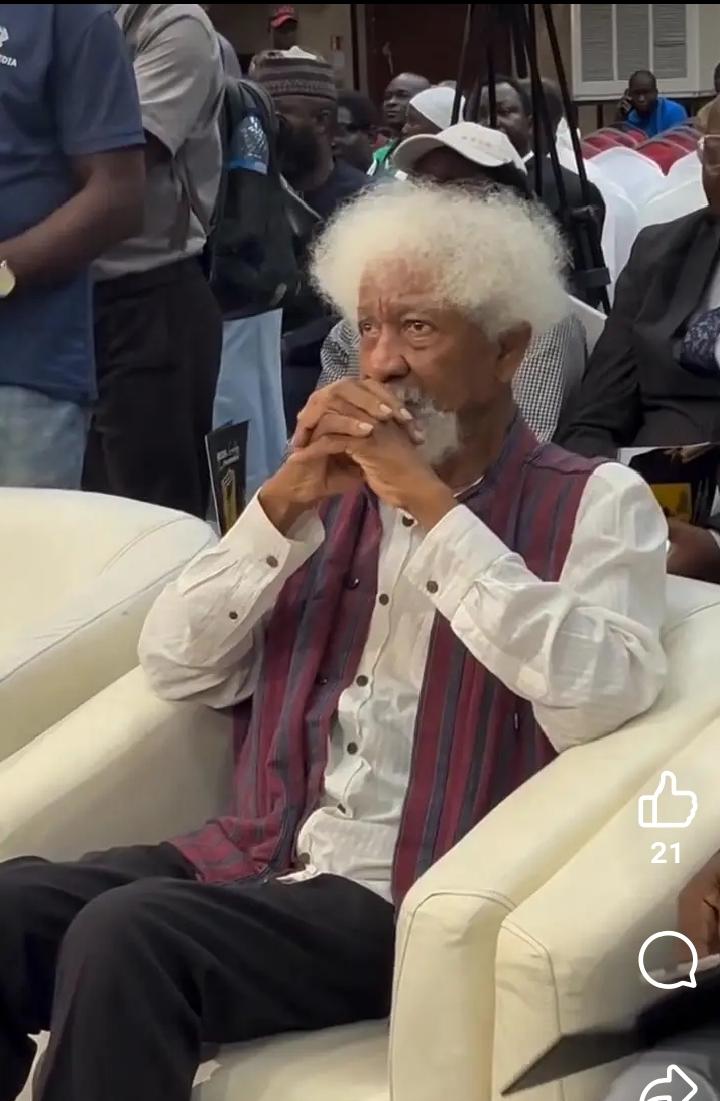
Nobel Laureate Prof. Wole Soyinka has praised Chief Ayo Opadokun’s latest book, The NADECO Story, saying that because of its veracity and the aura of authenticity it carries, it is the only instance the nation is redeemed from the reputation of permanent lying. He also recommended the book highly.
Soyinka made this known at the public presentation of the book, which was held on Wednesday at the MUSON Centre in Lagos. He also said he had once had the occasion of describing Nigeria as a republic of liars.
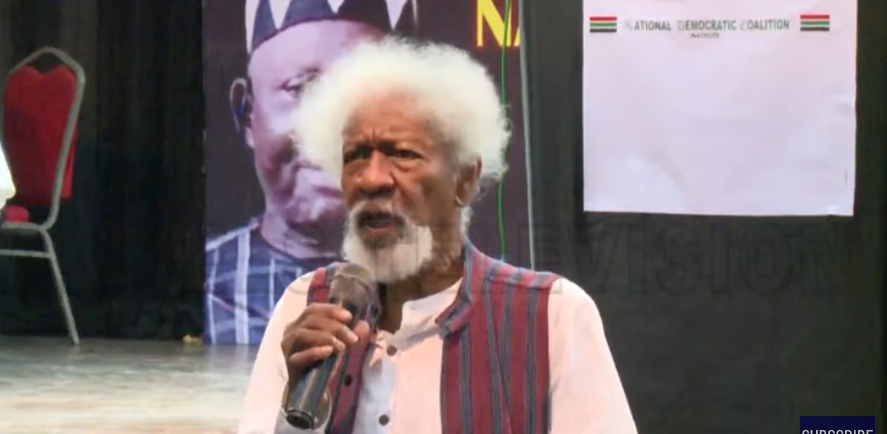
“I must congratulate Ayo for doing an unbelievably invaluable job, giving this gift, this present, to the community and to the world at large. I’ve had occasion to describe Nigeria as a republic of liars.
“This is one instance where I would say that the nation is redeemed from that reputation of permanent lying. Every page of this book, which I read carefully, rings of the truth, truth which one can testify to personally and which, in any case, without even being a participant, carries an aura of authenticity because of the way it is narrated. It’s spoken, it’s written, and it’s narrated not just from physical participation, but from documentary.
“Every page of it, I assure you, rings of truth. Ayo doesn’t pretend that this is the whole story, no, no. But he tells his part of it, what is investigated, what he had caused to act upon, and which proved its veracity by the result that followed, encounters with other people. I really am most appreciative that you gave us this document. But the rest of this story can be told.
“You see, so many things happened. If we started telling the full story of that struggle, we’d be here for the whole day, whole week, whole year. It would be one of those epic performances that we know from tradition, which goes on for days and days with music, dance, remembrances, and eulogies. It’ll never end. I hope everyone here who has any.
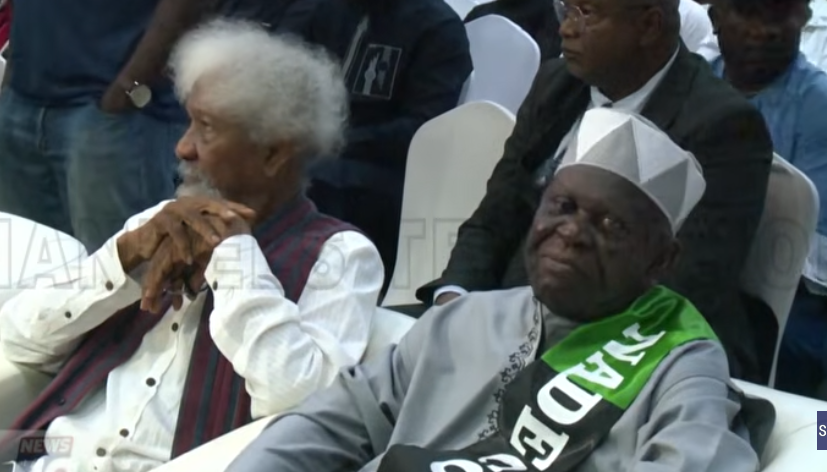
inclination to write is taking note. This is a model of history telling. I recommend it very highly,” Soyinka maintained.
The Nobel laureate also used the occasion to eulogize two notable Nigerian activists, Mr. Olisa Agbakoba, SAN, and the late Dr. Beko Ransome Kuti, for their sacrifices in the struggle for democracy in Nigeria. He particularly mentioned the iconic black eye Agbakoba “was given by the police when he was marching through the streets, asking Sani Abacha to please take his leave.” He then praised Beko for his idealism and willingness to pay the ultimate price for the enthronement of democracy in Nigeria.
“Now, this is one of those extraordinary individuals who actually, knowingly, willingly was prepared to give his life just to get rid of that monster,” he said.
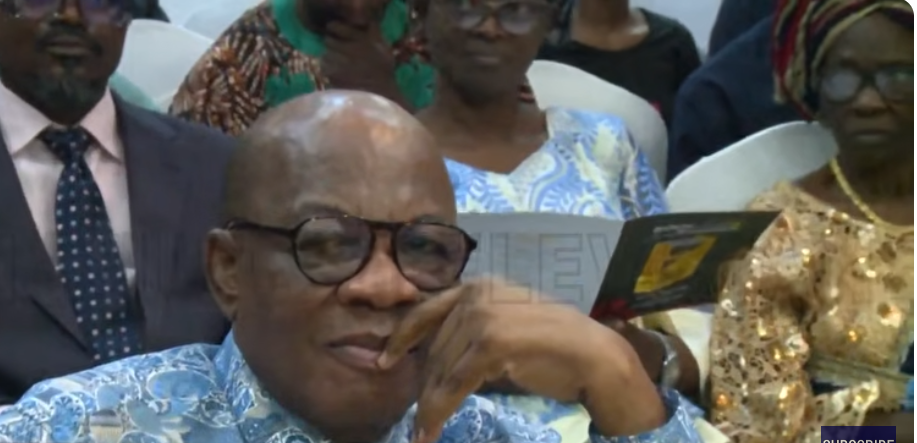
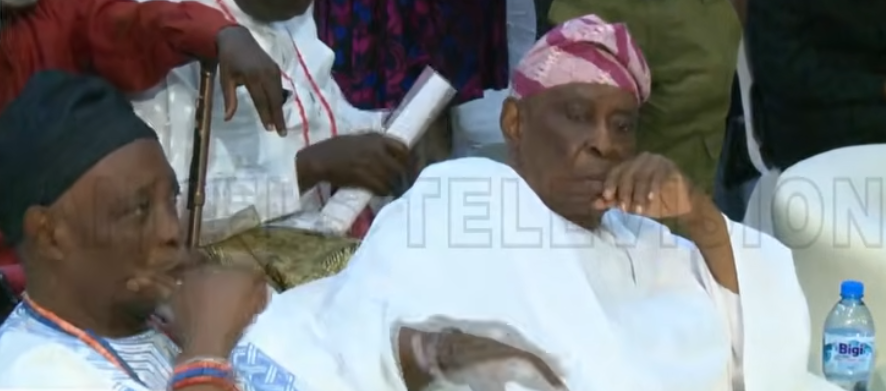
The event was a gathering of political leaders, journalists, democracy activists, academics, civil society actors, and members of Nigeria’s old pro-democracy movement.
It was also a celebration of individuals and institutions who sacrificed enormously in the struggle for democracy in Nigeria, as many of them, including media houses, civil society organizations, pro-democracy activists, and diplomats, were presented with awards in recognition of their contributions, sacrifices, and commitment.
It featured historical reflections as speakers, which included President Bola Ahmed Tinubu (who was represented by Aremo Olusegun Osoba), Ayo Opadokun, the Olubadan of Ibadan, Oba Rashidi Ladoja, and Osoba, who reflected on the sacrifices made during the struggle and called for continued defence of democratic values
Speaking on behalf of the President, Osoba, said the administration recognised the sacrifices made by NADECO members and other pro-democracy activists, noting that their actions helped preserve Nigeria’s democracy.
Tinubu also noted that the struggle against military dictatorship came with enormous personal risks, including exile, detention, harassment, and loss of livelihood.
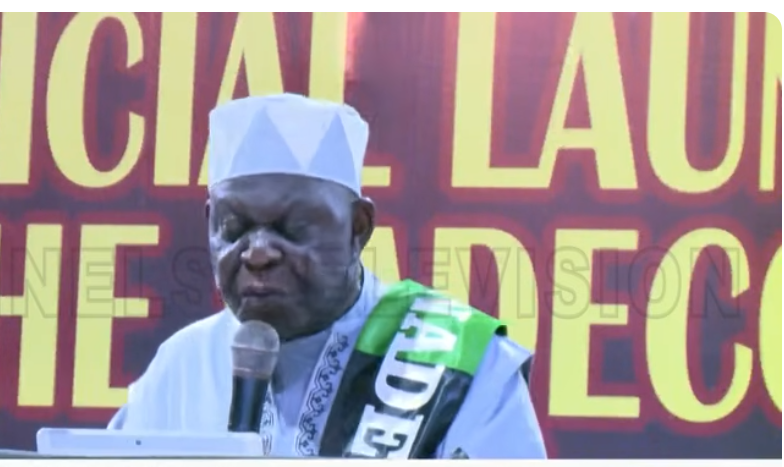
“The President has asked me to convey his deep appreciation to all those who stood firm at a very difficult period in the history of our country,” Osoba said, adding that Nigeria’s current democratic stability could not be divorced from the courage of those who resisted military rule in the 1990s.
“What you did then laid the foundation for the democracy we are all enjoying today,” he maintained.
Tinubu also recalled the internal dynamics of NADECO, noting that the coalition brought together politicians, activists, labour leaders, and intellectuals who were united by the goal of restoring democratic governance. He urged younger Nigerians to study the history of the struggle to better appreciate the country’s democratic evolution.
Chief Osoba said: “As for security, he told me to tell you that he is aware that there is a deliberate attempt to disrupt the peace of this country by people whom he knew he had offended by canceling multiple exchange rates, or by canceling oil subsidy, and those cabals who are doing round-tripping. They wish him dead, but he is determined.”
He stated further that President Tinubu is aware that some people are not pleased with him and those behind insecurity in the country are saboteurs who are not happy about the reforms his administration has embarked on since he came on board, adding that the saboteurs are doing everything to frustrate his administration and might kill him if they have their way.
Oba Ladoja, for his part, said democracy was preserved not only by those who protested publicly but also by individuals who worked quietly behind the scenes.
“People think that everybody must be on the streets. I think some of us might be in the background and do our work effectively,” he said.
Ladoja described himself as a committed democrat, noting that his political journey during the military era included participation in political processes, exile, and engagement with key figures in the pro-democracy movement.
“I am a democrat, and I will do anything to protect democracy,” he said.
The monarch recalled the turbulence of the Abacha era and how political rivalries and national struggles intersected at local and national levels.
He stressed that the June 12 crisis was not only about national leadership but also about grassroots political struggles and survival within a volatile system.
In his welcome address, the author, Opadokun, described the event as a historic milestone aimed at correcting distortions in Nigeria’s democratic history.
He said ‘The NADECO Story’ was a documentation of resistance against military rule between 1994 and 1998, capturing sacrifices made by individuals and groups who opposed dictatorship.
“This ceremony is not just about remembrance. It is about national healing, historical accuracy, and civic education,” Opadokun said.
He noted that many contributors to the struggle had been overlooked, adding that the book was an attempt to ensure that future generations understand the cost of democracy.
Between 1994 and 1998, he said, Nigeria stood at “the edge of political and moral collapse,” but was saved by the courage of activists, journalists, and international allies who resisted authoritarian rule.
“Men and women chose truth over fear and sacrifice over comfort,” he said.
Reviewing the book, Prof Sylvester Akhaine said ‘The NADECO Story’ provided a critical intervention in Nigeria’s historiography, particularly in correcting narratives around the June 12 struggle and military dictatorship.
He said many accounts of Nigeria’s political transition had been shaped by those who benefited from power, leaving gaps in historical documentation.
“The NADECO Story comes as a necessary corrective to distorted narratives,” he said.
Akhaine added that the book also highlighted structural issues in Nigeria’s political development, including federal imbalance, military interference, and elite contests for power.
He noted that the annulment of the June 12, 1993, election remained a turning point that reshaped Nigeria’s democratic journey.
The event also saw renewed appeals for national recognition of all actors in the pro-democracy movement, including lesser-known contributors whose roles, speakers said, were often overlooked.
It attracted a wide array of participants, including Dr. Olisa Agbakoba, Dr. Joe Okei-Odumakin, Dr. Labaran Maku, Prof Anthony Kila, Wahab Shittu (SAN), Mr. Kunle Ajibade, Mr. Dare Babarinsa, Dr. Ogaga Ifowodo, Sam Omatseye, Tokunbo Ajasin, Moshood Erubami, Laolu Akande, Prof Sylvester Akhaine, among others.
Leave a Reply