

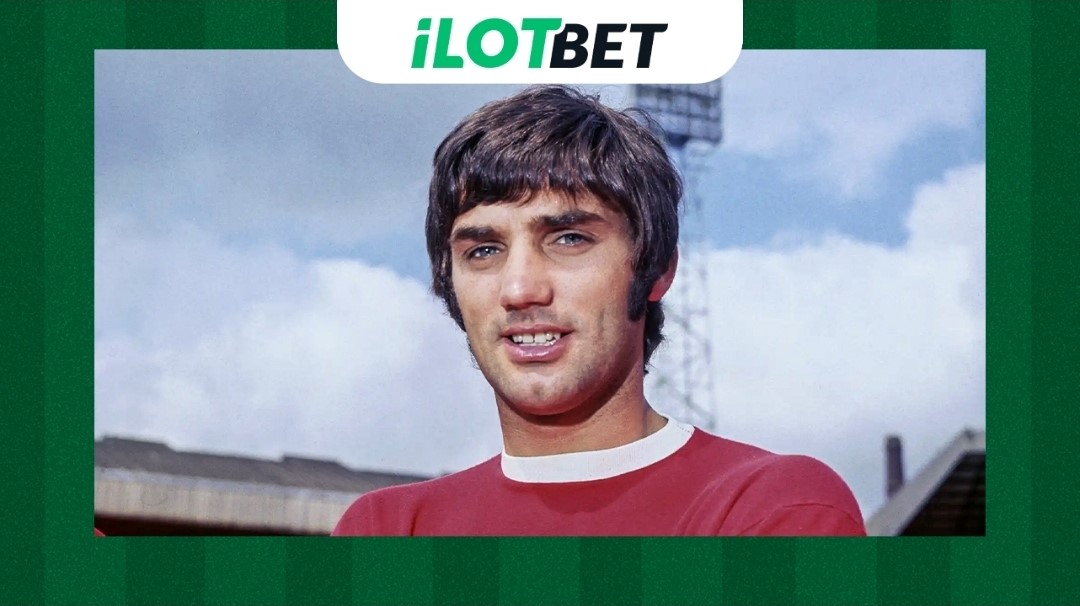
There are great footballers, there are global celebrities, and then there was George Best, a man who became both at a time when football barely understood how to handle either.
Long before social media, branding teams, and million-pound image rights, Best was already living the modern footballer’s life. Handsome, rebellious, magnetic, and outrageously talented, he transformed football from a working-class sport into popular culture theatre. In many ways, he was football’s first true rockstar.
Yet the tragedy of George Best is that his extraordinary life is remembered almost as much for what destroyed him as for what made him immortal.
The boy from Belfast who mesmerised Europe
Born in Belfast in 1946, Best was spotted as a teenager by Manchester United scout Bob Bishop, who famously sent a telegram to manager Matt Busby that simply read:
“I think I’ve found you a genius.”
It was not an exaggeration.
At his peak with Manchester United, Best played football as though gravity did not fully apply to him. He glided past defenders, changed direction effortlessly, and dribbled with an elegance that looked improvised yet devastatingly precise.
Modern football often celebrates systems, pressing structures, tactical automatisms and data-driven efficiency. Best represented the opposite: pure imagination.
He was chaos with purpose.
The performance that announced him to the world came in 1966 against Benfica in Lisbon. The 19-year-old destroyed the Portuguese giants so comprehensively in a European Cup quarter-final that the local press christened him “El Beatle” because of his looks and celebrity aura.
Two years later, he helped United become the first English club to win the European Cup, defeating Benfica 4-1 at Wembley. That same year, he won the Ballon d’Or.
For many older supporters, Best remains the greatest player in United history, even ahead of later icons because of the sheer artistry he brought to the game.
Football’s first celebrity superstar
Today’s footballers live under constant media attention, but Best experienced that pressure without the protective machinery modern stars enjoy.
He dated models, appeared in magazines, owned nightclubs, and became tabloid gold. Fans adored him not just because he won matches, but because he looked like someone larger than football itself.
In an age before the Premier League turned footballers into global brands, Best already had movie-star fame.
But fame arrived faster than football could emotionally prepare young players to survive it.
The decline nobody could stop
Alcohol slowly consumed his career.
While many footballers decline physically with age, Best’s deterioration felt painful because everyone could still see flashes of genius underneath the damage. His discipline faded, his relationship with United deteriorated, and by the age of 27, his peak years were effectively over.
That remains one of football’s greatest “what if” stories.
What if George Best had modern sports science? What if he had psychologists, welfare officers, nutritionists, and media management teams? What if someone had protected him from becoming George Best the celebrity before securing George Best the human being?
Even decades later, those questions still haunt football.
A legacy beyond trophies
Best died in 2005 at the age of 59, but his influence never disappeared.
Every generation produces technically gifted players, yet very few capture imagination the way he did. He made football feel artistic. Unpredictable. Romantic.
Statistics can measure goals and assists, but they cannot fully measure aura.
That is why George Best still matters.
Not merely because he was brilliant, but because he symbolised both the beauty and danger of football fame, a reminder that genius alone is never enough to save a person from themselves.



Leave a Reply