

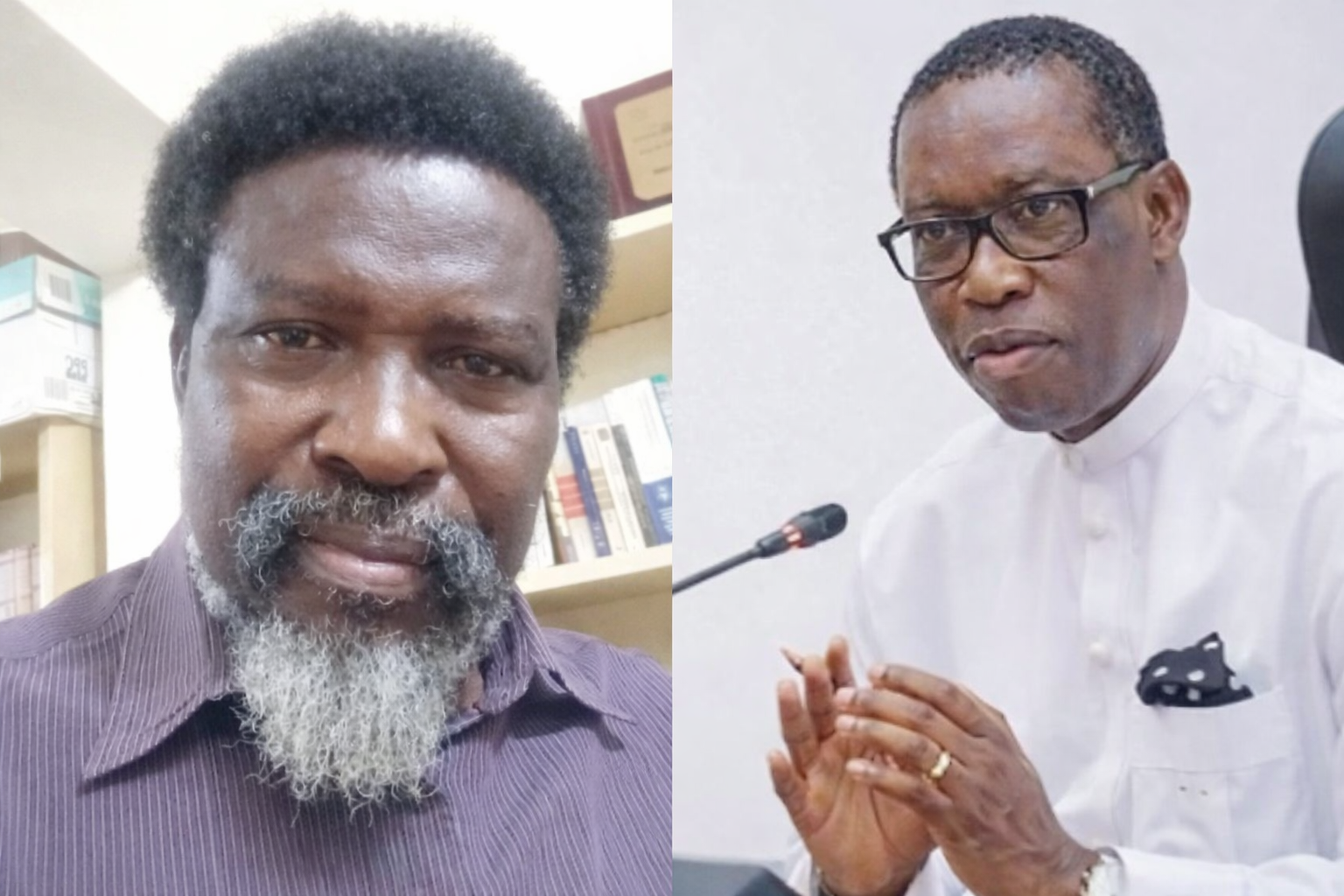
By J.G. Nkem Onyekpe
As the nation’s Fourth Republic prepares for the next round of General Elections in 2027, numerous persons are indicating interest in different positions. While some of these persons have on their own made or are making the decision to contest, others are thrown up by some interest groups. In most cases, majority of the candidates are not credible. They belong to one of these categories of candidates; pretenders, opportunists, and spoilers. One defining characteristic of these politicians, so called, has been that they emerged or are thrown up for the purpose of speculation or negotiation. They stand mostly on shaky sandy ground. They are charlatans and demagogues as is revealed in their pronouncements and actions. Without presentable credentials and evidence of fitness for any elective position they often recourse to grandstanding.
A critical feature of the political development of Nigeria has been that, with the exception of the First Republic, 1960-1966, and the Second Republic, 1979 – 1984, the political parties are not ideologically different. Thus, the difference between any two parties in the contest for power is at best the difference between Tweedledee and Tweedledum, between six and half a dozen. In the First Republic there was a clear ideological difference between, for example, the Northern People Congress, NPC, and the Northern Elements Progressive Union, NEPU. In the Second Republic, there was a clear ideological difference between the National Party of Nigeria, NPN on the one hand and the Peoples Redemption Party, PRP, and the Unity Party of Nigeria, UPN, on the other hand.
The import of the lack of ideological difference today is that, what matters most in the choice of candidates is the quality of the individual candidates contesting for the elective position. What is the orientation of the candidates? What is their purpose in seeking elective position? Therefore, for each position, for example the office of the Senator, all candidates contesting for the position must be subjected to dispassionate and rigorous scrutiny. This scrutiny should, decidedly, involve an analysis of the pedigree of the contesting candidates, their experience in politics and administration, their record of service, and what they have generally done with power in the position they have previously occupied or what they are doing with power in the position they currently occupy. In this scrutiny, the evidence on ground should speak for each contestant. From the scrutiny, the people should be able to know each candidate’s concept of leadership.
Expectedly, there is today, a groundswell of pressure for Senator Ifeanyi Arthur Okowa to return to the senate in 2027 to represent the Delta North Senatorial District. He considered the pressure as an expression of confidence in him and accepted without hesitation to contest for the office.
I would not speak disrespectfully of any other candidate for the position either in the ruling party, the All Progressive Congress, APC, to which Senator Ifeanyi Okowa belongs or in any other political party for that matter. In any case I do not know them. If the pedigree and contributions of any aspirant cannot speak for them, whether they are seeking re-election or they are emerging for the first time, I would not be the one to speak for them. A worthy pedigree and visible contributions speak loud and clear. Where they are lacking, there is nothing to speak about.
The point here, therefore, is that, if you are currently in the Senate as a representative of your Senatorial District, what do you have practically on ground? How many people and groups have you touched their lives? What have you, for example, done with the huge fiscal funds at your disposal for constituency projects in your immediate village, village-group, town, local government area, and the larger senatorial district? If your candidature is for the first time, what have you done with the position or positions you have occupied at the lower levels? If you have not occupied any position at any lower level, who and what can vouch for you that you would not sacrifice and squander the opportunity to serve, if elected, at any altar different from the people’s altar?
Needless to emphasise, having been a senator or currently being in the senate does not confer any automatic leverage, without anything or with very little at best to show as an accomplishment. The case of any new unknown candidate for the Senate is not any better. It is a candidature in obscurity and therefore, unembraceable.
Senator Ifeanyi Okowa does not belong to any of these two negative and unenviable situations. He is a consummate politician and statesman. He has served and grown vertically through the political and administrative ladder, from the secretary of Local Government, to Chairman of Local Government, to Civil Commissioner, to a Senator, a distinguished one for that matter, and to an Executive State Governor. He has been a grassroots leader and a household name in the Delta North Senatorial District, Delta State, and beyond. In terms of public service, he has been a great administrator outstanding in numerous ways and areas. In particular, as governor, he has been impactful all the way, with gargantuan legacies that have continued to speak for him and to remind whoever that has chosen to be his detractor that he has earned the trust and confidence of the people.
Senator Ifeanyi Okowa’s candidature is not a case of “the taste of the pudding is in the eating”. Because he has been tried and tasted over the years, it is a clear case of “a good product sells itself”.
In my book, Aniomaland and Politics in Delta State, Nigeria (Lagos: Lumen Impact Press, 2017, pp. 45-46), I noted that Senator Okowa emerged the flag-bearer of the then ruling party, the Peoples Democratic Party, PDP, and then the governor of Delta State in 2015, because “he had many factors going for him, most of them personal qualities and attributes”. These were:
- He is adroit, canny, and perspicacious; strategic in thoughts and planning, and tactical in actions and execution of plans;
- He is admirably broadminded and fair to all;
- He is completely deprovincialised and has an extensive network and affiliations that are strong and universal at Anioma, state and federal levels;
- His politics is inclusive rather than exclusive;
- He has an enviable pedigree as a public administrator, civil commissioner, Secretary of the State Government, a distinguished Senator of the Federal Republic of Nigeria, and the Leader of the ruling PDP in Delta North;
- He is a responsible and committed party leader with absolute loyalty to his party;
- He is a grassroots politician, and hence, he has a multitudinous following with limitless circles and concentricity of loyalty and support;
- He is resourceful;
- He has an effective campaign organisation machine; and
- He is exceedingly courteous, humane, humble, modest, and kind-hearted; traits that have made him magically charming.
Beyond these personal qualities and attributes, Senator Okowa and his campaign team and the PDP elite and leaders in the Delta North Senatorial District were able to build bridges across the Senatorial boundaries and win the support of the party’s leaderships in the Delta Central and Delta South Senatorial Districts. Within the Delta North Senatorial District, he was deservedly chosen as the governorship candidate of the ruling PDP, because he was, for want of a better expression, among all other aspirants what the eagle is among all other birds (Aniomaland and Politics in Delta State, Nigeria, p.51).
Today, Senator Okowa’s status as a great statesman and distinguished achiever has been further elevated by many indices. His landmark legacies as governor, 2015, 2023 include:
- Under his governorship, the state capital area, the Asaba – Ibusa axis witnessed drastic transformation through professional urban development planning and the appropriation of huge fiscal resources for infrastructural development.
- His impact on infrastructure in Delta State was unprecedented. New roads were constructed while old ones were rehabilitated. As his administration made road construction and rehabilitation one of its topmost priorities, he was guided by the virtues of equity and fairness. The Delta North Senatorial District was not left out. There was no part or clan of the District that did not benefit from the development of road infrastructure. It is not for nothing that the beneficiaries of his revolutionary work on transport gave him the praise- name, the Road Master. This is no propaganda, for it is visible even to the blind.
- In the health sector, many public hospitals were rehabilitated. Among the new hospitals built by his administration in the Delta North Senatorial District were the first-class specialist hospital in Asaba and the Mother and Child Hospital in Owa Alero.
- On education, apart from other numerous landmark interventions in the sector, Senator Okowa as governor left matchless footprints on higher education. He met one public university, the Delta State University, DELSU, Abraka in the state, he handed four over to his successor and the people of the state. He achieved this by upgrading the Asaba campus of the Delta State University, Anwai, Asaba and named it Dennis Osadebay University, DOU. The Collage of Education at Agbor was upgraded to a university and named the University of Delta, UNIDEH, while the Delta State Polytechnic at Ozoro was upgraded to a university and named the Southern Delta University, SOUDU This revolutionary impact of the Senator Okowa administration remains unprecedented in the annals of higher education in Africa,
- In the constitution of his cabinet and in political appointments generally, as governor Senator Okowa was guided by the principles of equity and fairness. He ensured that his administration was inclusive.
More particularly on education, as a university teacher and administrator who knows what it takes to run a university, when the decision was made to have three additional universities, I expressed concern about the sustenance of four universities in the state, but what has taken place in the three new institutions within a space of barely five years was initially unimaginable, in terms of infrastructure development, student population, and accreditation of academic programmes by the National Universities Commission, NUC.
At this juncture, I should observe that Senator Okowa was not much given to self-adulation and exhibitionism. Unlike most of his contemporaries in politics and governance, he did not appropriate fiscal resources to exhibit the projects executed by his administration. Whenever any of his contemporaries provided an amenity or utility, they would spend a huge amount of public funds to show evidence of their work. Senator Okowa was never associated with this wasteful exhibitionism. In my opinion, this was a virtue, which was an exemplification of the embrace of the Christian dictum, “By their fruits, we shall know them”.
Senator Okowa is a seasoned administrator and belongs to the breed of progressive politicians and leaders. That he has earned the loyalty of the informed elite and the support of the people is evidenced in what is now rapidly crystallising as a formidable pro-Okowa movement in the Delta North Senatorial District. But it must be recognised that in spite of his ever-growing popularity, there are, nevertheless, those who are critical of his administration as governor, his desire to return to the Senate, and the support for his candidature. These critics are a minority, indeed a tiny microscopic minority. However, it would not be right to disparage or dismiss them as mere detractors. The beauty of democracy is that, it constitutionally guarantees basic freedoms and fundamental human rights. One of these is freedom to draw attention of the government and leaders to their failures and failings.
But the critics of Senator Okowa have not been able to raise any fundamental issues against him, of course because they have none to raise. Thus, they may be honest, if naïve, critics, and, hence, they can be easily educated. They are a minority of persons, but it is important to embrace them and ensure their minds are disabused. Senator Okowa is admirably known for peace-building and inclusivity, and, hence, this should not be a difficult problem. Now, the charges against Senator Okowa.
First, some persons charge that their communities did not benefit from the provision of some specific social amenities and public utilities. These critics should know that some amenities and utilities are provided not for individual communities, but for communities that are geographically or territorially contiguous. They should also know that no administration or political leadership ever completes all they set out initially to accomplish. Intervening forces such as dwindling public fiscal resources and higher and higher costs of project execution are beyond the control of any administration. It is important to counsel that any area not provided, for example, with health care should complain less if it was provided with some other amenity. It is also important to note that where governance is a continuum, as it should be, any areas not significantly covered by an administration are usually attended to as priority areas by the next administration. I should add that, in some cases, priorities are adjusted in the process of plan or budget implementation and review. Changes are then made such that some items in the plan and budget are given more attention over and above the original appropriation, thereby affecting other items.
Where, for example, there is a sudden outbreak of an epidemic with devastating and calamitous effects on the population, the challenge in the health sector can encroach on the budget for some other sectors, for example, agriculture or transportation. Only blind politicians and critics beclouded by obscurantist partisanship would fail to appreciate the situation and enlighten the people. They would rather they embark on the bagatellisation of the pragmatism of the administration.
But let us face it, no community can say in all honesty that they did not feel the impact of the Okowa governorship of the state. If for any reason amenities and utilities were not adequately provided to any community as planned and expected, the people should not be unmindful of the appointment of some of their sons and daughters to some positions, for example, as civil commissioners, heads of ministries, departments, and agencies, special assistants, etc. If these sons and daughters so appointed did not remember their home communities or did not touch the lives of their people, the people should hold them to account for their negligence. It is also important to note that contracts for projects in communities are mostly awarded to the elite of the communities in the hope that the contractors would not fail their people. But more often than not, this local content philosophy of contract award and execution is abused by the contractors. As they fail their communities, the blame is heaped on the government.
Another charge is the reference to Senator Okowa’s invitation by the Economic and Financial Crimes Commission, EFCC. The invitation was based on mere allegation and he responded to the invitation to clear his name. This is a routine in public service and administration. Public office-holders are invited from time to time to defend the way they have applied the fiscal resources allocated to them. Bureaucrats in the ministries, departments, agencies, and parastitals are regular guests of the EFCC, so also are heads of tertiary institutions. It must be stated that there is a difference between invitation and conviction. It was the invitation of Senator Okowa that his detractors have found convenient to dishonestly present to their uninformed followers as financial impropriety. Senator Okowa was never indicted, let alone sanctioned.
There are two other charges, both to the same effect. First is that since Senator Okowa’s daughter, Hon. (Mrs) Marilyn Okowa-Daramola is representing the Ika North-East Local Government Area already in the Delta State House of Assembly and would be seeking to run for a second term, Senator Okowa himself should not at the same time aspire to represent the Delta North Senatorial District in the senate. This is an utterly uninformed position. There is nothing in the Constitution of the Federal Republic of Nigeria (as amended), the Electoral Law of the Republic (as amended), or any other statute book of the Republic for that matter that says both of them cannot seek elective offices at the different tiers in the nations legislative hierarchy. Indeed, any parent and child can contest for the same elective legislative office on the platforms of two different political parties. No constitution or electoral law anywhere the world over prohibits this.
The second charge of the same effect as the above is that Senator Okowa should not seek to return to the senate so someone else can represent the Delta North Senatorial District. The argument of these critics on this is that, Senator Okowa has been in politics and governance long enough and should therefore retire. This is not only uninformed and puerile, it is indeed worse than absolute balderdash.
As we conclude I should emphasise that the issues raised by the critics of Senator Okowa are nonissues; indeed the issues are lame and feeble illogicalities. The critics and their sponsors are simply betraying their fear that, with Senator Okowa as a candidate for the senate, every other candidate is on an exercise in futility. Aware that Senator Okowa is peerless and, hence, the natural political leader, the critics are taking the path of propaganda silily wrapped in chicanery and sophistry. Their propaganda is all but a betrayal of their fear and what can be termed failure complex.
The beauty of democracy is that it offers opportunity for all candidates in an election to test their popularity. All prospective candidates of the APC should take advantage of the primary election of the party. But as the party chooses its flagbearer members should be reasonably conscious of the fact that primary election is an intraparty activity to choose a candidate for the inter-party election from which the senator-elect would emerge.
Therefore, as the party organises its primary election to choose its flagbearer for the senate, it must be conscious enough not to choose a candidate that would be dwarfed by the candidate of any other political party.
Senator Okowa is a political giant that would dwarf the candidates of other parties in the Delta North Senatorial District. Therefore, the APC would be deeply hurting itself, nay, Delta North Senatorial District, if it fails to present Senator Okowa as its candidate for the senate.
As the upper chamber of the bi-cameral legislature, the senate is the all-important apex institution where all critical matters affecting the federating units, issues of nation-building, the nation’s international relations challenges, etc., are revolved. Then, more particularly the senate is crucial in the determination of who gets what, in terms of the allocation of fiscal revenue, distribution of social amenities and public utilities, etc. Thus, every senatorial district is expected to be represented by their best candidate at this level, the highest level of the legislature.
With all the empirical facts at my disposal as a researcher, with my vast knowledge of Delta State and the Delta North Senatorial District, and with my personal abstraction as a pure historian, I can safely conclude that Senator Ifeanyi Arthur Okowa is the best of the best statesmen and political leaders in the Delta North Senatorial District for the senate. The Delta North Senatorial District cannot afford not to present its best candidate for representation in the senate where critical issues affecting all senatorial districts are rigorously debated and decisions made with finality. The senate is, therefore, an institution where experience and track record matter most, apropos of effective representation.
No football team can afford not to field its captain in any match; none can afford to replace its captain with a member of its third eleven. In politics and governance, Senator Ifeanyi Okowa is much more than a captain; he is a captain-cum-coach. Therefore, failure to present him as the APC candidate for the senate would be utterly irrational and ultimately self-defeating.
I finally round off with a restatement of the title of my presentation, viz:
Anti-Okowa agitation as the end of wisdom.
*Professor J.G. Nkem Onyekpe, PhD, FHSN Head, Department of History & Strategic Studies,
University of Lagos, Akoka
+2348034019418
Paper presented at the 6th Biennial Public Lecture and Civic Reception in Honour of
His Excellency Senator (Dr) Ifeanyi Arthur Okowa (Immediate Past Governor of Delta State),
organised by the Enuani Democratic League (ELO) on Saturday, April 18, 2026, at
Aniogor Primary School, Ejeme Aniogor, Aniocha South LGA, Delta State
Broad Theme: Sen. Dr Ifeanyi Arthur Okowa – The Quintessential Politician and A Beacon of Hope for the Anioma Nation.
Leave a Reply