

By Emmanuel Daraloye
Our cultural heritage, values, beliefs, and traditions have been preserved through the centuries. Through the passage of time, Africans, especially the Yorubas, have been able to keep the culture alive through stories and songs. Among contemporary Nigerians who still hold on to this culture and promote it through songs and sound compositions is Toluwani Ajayi.
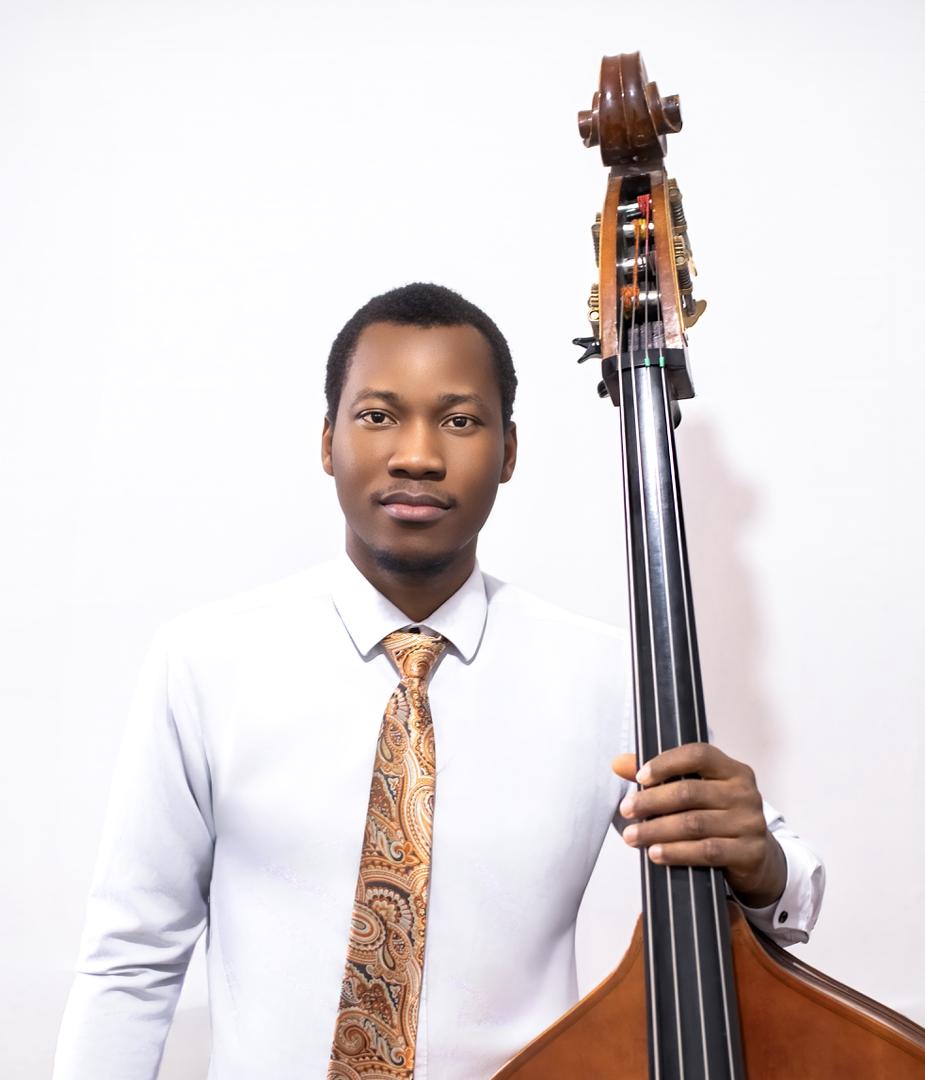
Toluwani Ajayi is a Nigerian-born, UK-based musician, composer, double bassist, arranger, and performer. An indigene of Osun state, he is one of Africa’s most sought-after double bassists in the Nigerian classical music society. With certifications in music and coaching of some world-renowned musicians like British double bassist Chi-Chi Nwanoku and German cellist and conductor Walter Michael Vollhardt. Amongst his great works is his self-produced EP composed as a musical score and recorded accordingly. “Lifestyle (Ìgbésí Ayé Ojoójúmọ́),” an Africlassical composition where classical and folk instruments meet the Yoruba language to showcase his great skill and mastery of his art. Toluwani recorded the four-piece compositions, released on March 14, 2026, promoting folktales, blending the past and the present with the Yoruba cultural values at the center.
The first piece off the EP, “Kí ni o fólè ṣe láyé tí mo wà?” seeks no permission, no plea, and no introduction. It preaches loudly the sermon of contentment in an audacious manner. While the sound of the solo double bass creates a mental picture of the message, the piece allows introspection and also teaches in a way that leaves the listener’s soul no choice but to listen. With a rhetorical question “Kí ni o fólè ṣe láyé tí mo wà?” Toluwani Ajayi asks why he would need to steal and he answers it himself with, “In this world where I live, I would rather serve as a servant.” interpreting the tone of the ancient Yoruba folktale song and its message with piano, violins, viola, cello, double bass, and other African musical instruments which are udu clay drum, shakers, wood block, agogo, and conga, Toluwani showcases a kind of determination on contentment
While this masterpiece throws one back to the days of thought-reigniting Yoruba folktales, the use of African sound instruments like the udu clay drum, conga, among others, starts at about the 1:30 mark, which is a bit too late for listeners to immerse themselves in the African tune. Also, at the 1:57 mark, the melody gets intense, which should have come up early enough to show the depth and essence of contentment, integrity, and self-discipline when it comes to money, which are values that make one faultless.
The second piece, “Wẹ̀ kí o mọ́” communicates the essence of healthy living. Its mellow nature gives this composition a sense of hygiene lesson not only for children, but for everyone. It starts with the strong beat held by the tambourine, followed by the solo double bass. Other accompaniments, like the violin and brass, kick in at the 0:14 mark. This composition, at about the 0:29 mark, seems to get resonant, as there seems to be a harmony of more woodwind instruments. There is a modulation led by the double bass and accompanied by cellos, upper strings, which could be taken as a bridge at about the 0:50 mark. There was a climax at this section where the timpani, gong, and cymbals bring out so much beauty to the passage. There is a harmonic resolution at about the 1:22 mark with the piano and the woodwind instrument carrying on with the message, “Wẹ̀ kí o mọ́ (Wash to be clean) / Gé èkọ́ọ́nọ́ rẹ, (cut your nails) / Jẹun tó dára lásìkò (eat right at the right time) / Má jẹun jù (do not overfeed).”
The third piece, “Ìyá ni wúrà,” is an evergreen, heartfelt Yoruba tribute to mothers. It originates from the saying that goes thus, “Ìyá ni wúrà, baba ni jígí” (Mother is gold, the father is mirror.) This piece is different from others. While it is so heartfelt, ]its splendor is wrapped in a highlife style. Starting with an intro using the konga, akuba drum, and the piano. The French horn and strings embellish the composition on a full scale at about the 0:10 mark, which cuts deep even into the marrow of the strongest bone of any listener. “Iya ni wúrà iyebíye (Mother is a priceless gold) / Tí a kò le fowó rà (That which cannot be bought) / Ó lóyún mi fún oṣù mẹ́sàn án (She carried me in her womb for nine months) / Ó pọ̀n mí f’ọ́dún mẹ́ta (She carried me on her back for three years) / Ìyá ni wúrà iyebíye, Tí a kò le fowó rà (Mother is a priceless gold that money cannot buy).” The 0:33 mark is capable of sending a soul to another realm as it meets the timbre of violins’ accompaniments, which carry the song alongside other accompaniments as the style changes at some intervals. The solo double bass keeps leading all till the end.
The last piece, “Rain is falling” (Òjò ń rọ̀), again takes aged listeners down the memory lanes of their childhood. The young listeners, who aren’t lucky enough to enjoy the days of moonlight and full-blown Yoruba folktales, would find much amusement as this ode can’t grow old. The solo double bass again takes the lead, and the piano chords, simple as the heart of a child, clothe the emotion. It unwraps slowly as the piece continues. At the 0:38 mark of the song, it stirs feelings in the heart of the listener as the added bass drum is steady and reverberant. The striking chords of the piano at exactly 1:10 mark followed by other keys, the welcoming intrusion of the solo double bass, and creative chords at other intervals showcase the astounding talents of the composer. The message has been, and it will still be: “Òjò ń rọ̀, ṣeré nínú ilé (It is raining, play inside the house.) / Má wọ’nú òjò, kí aṣọ rẹ kò má bàa tutù (Do not go into the rain, so that your clothes do not get wet) ki otutu ko ma baa mu e (and so that you do not catch a cold.)’’
On Lifestyle (Ìgbésí Ayè Ojoójumó), Toluwani Ajayi, through the solo double bass accompanied by other musical instruments, this tune lets the listeners experience amazing and unreal moments, the beauty of Yoruba folktales and literature in which these songs are rooted. He draws clearly the marks of cultural belonging, giving us a feeling that uplifts time. While the first two pieces may give off some imperfections, the last two have clearer sounds and more touching pieces, especially the third. Toluwani Ajayi has again shown that he’s a star the world should watch out for. Apart from his mastery, his cultural consciousness has indicated a flicker of hope for Yoruba music culture and tradition.
Toluwani Ajayi presently works closely with the East London School of classical Music and performs with the HACS Philharmonic Orchestra in the United Kingdom.



Leave a Reply