

Richard Elesho
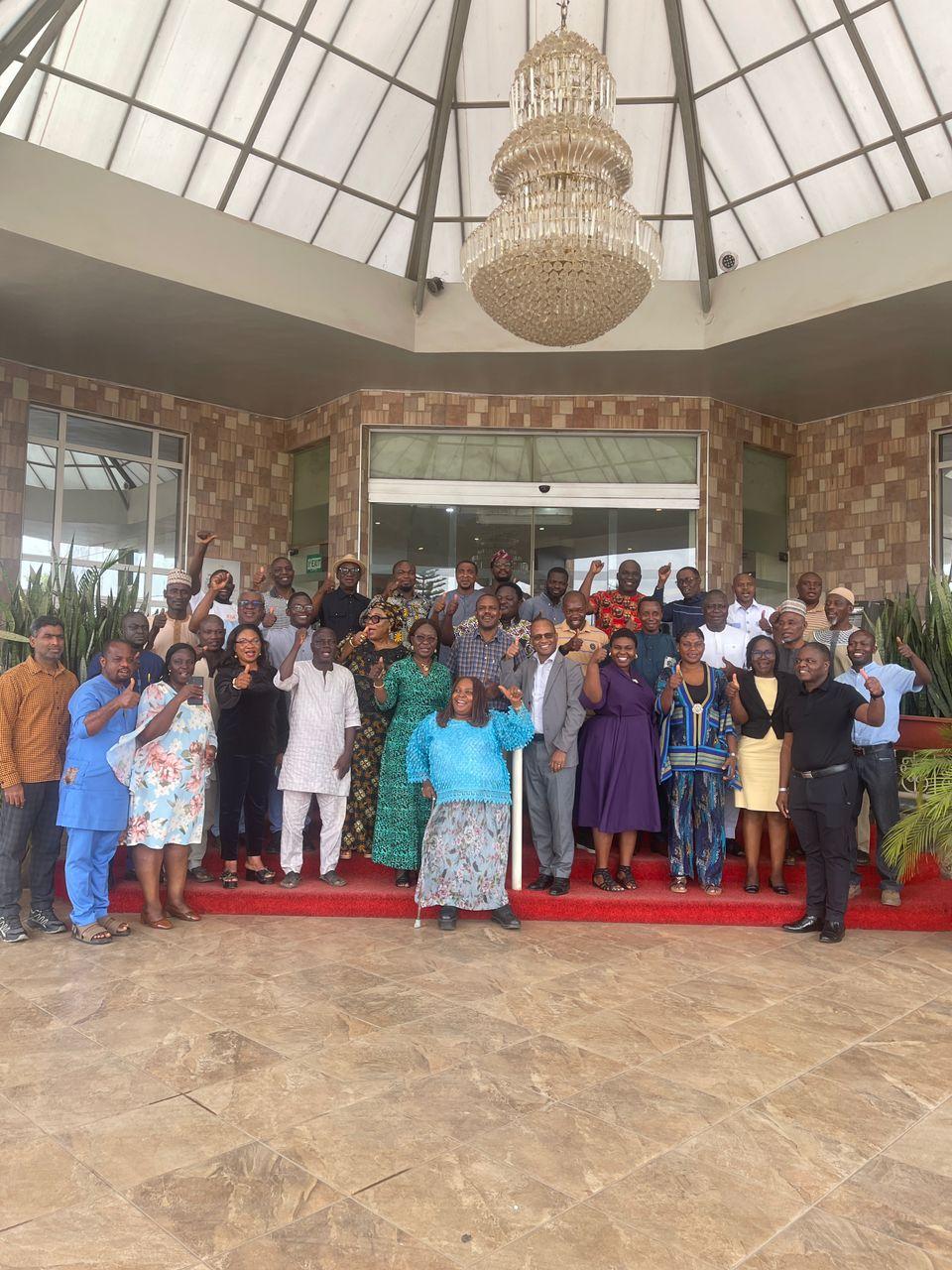
The International Institute for Tropical Agriculture (IITA) has organized a stakeholders’ forum on the way forward to define criteria for breakthrough products in yam breeding aimed at boosting varieties, processing, and marketing.
Participants observed the critical dependency on manual labour by an ageing farmer population using hoe and cutlass as major challenges with a strong call for mechanization.
During the recent engagement that took place in Abuja, stakeholders focused on defining the criteria for “Breakthrough Products” (BP) in the yam breeding program and outlining the strategic roadmap for 2025-2028.
The meeting agreed on key performance indicators for new yam varieties, including yield advantage, dry matter content, and oxidation levels.
“A significant discussion revolved around adapting breeding criteria for specific market segments, such as Amala production.
“Partners were instructed on using a new planning template to document their contributions, with a firm deadline set for submission
“The breeding program will incorporate the need for oxidation (browning) as a positive trait for the specific market segment of **Amala** flour.
“All partners are to populate the shared planning template with their individual program’s data
“Partners are required to populate their own sheets based on their current materials and progression plans for 2025-2026. document will serve as a form of “contract” between the partners and the main program (IITA).
“A multi-year plan was presented to guide partners in achieving the BP goals for 2025, 2026, 2027, and 2028.
“A professor noted that enzymatic browning (oxidation) should not be seen as entirely negative, as it is a crucial trait for products like **Amala** flour.
– This point was supported by another participant who is already promoting high-oxidation, high-dry-matter varieties for Amala.
– The team agreed to consider this and validate the Amala market segment in the product profile development.
-Partners are expected to use this framework to prepare their own roadmaps.”



Leave a Reply