

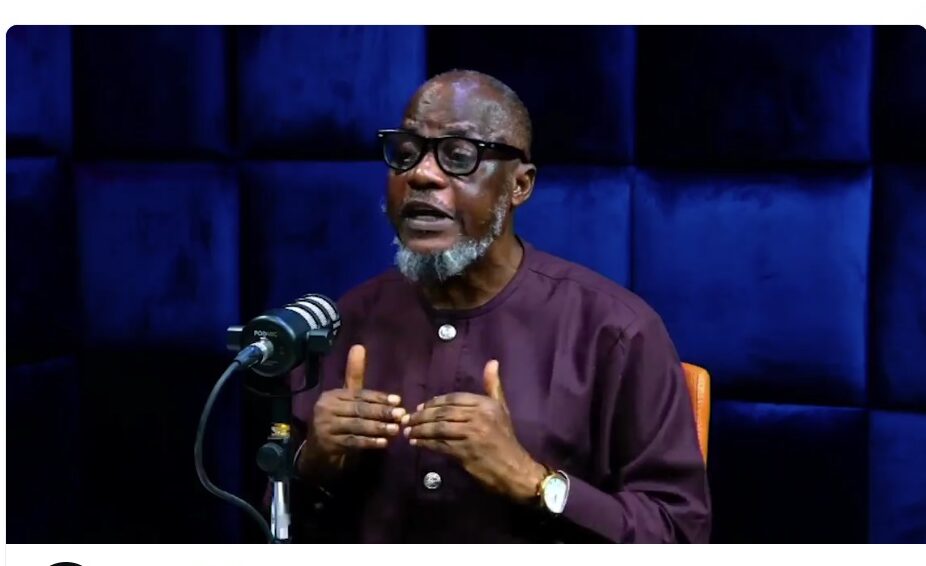
Ademola Araoye
It is in the context of this security dilemma that the violent expansionism of radical Islam across Nigeria has elicited concerns about the desirability of the constituent nations to stay in the federation. It has led to a very low perception of the Nigerian state’s legitimacy across the board. The loss of public perception of the state’s legitimacy is leading to all sorts of complications in its internal dynamics and prompting unfortunate plans to exploit its dwindling status within the state system. A scant legitimacy of the state can translate into a potential invitation to foreign intervention. Nigeria is a prime example, as many collectivities of various hues representing diverse interests within the state have openly invited the intervention of elite power in its affairs. Open denunciations of the state by its aggrieved constituent nations have severely compromised the country’s international legal sovereignty. Against the protestation of the aggrieved are those who seem to be exploiting the situation to their private and group benefit. Carefully navigating these openings, it is natural for a United States administration not averse to the use of coercion to advance American long-term interests to wade into Nigerian state affairs. It is doing this by weaponizing its recognition of the country’s international legal sovereignty. The country has been blackmailed.
Meanwhile, the current weaponization of international legal sovereignty, a critical dimension of sovereignty, has come to the fore in a new era of a slide back to classic principles of the modern state. Powerful states deploy weaponized international legal sovereignty to impose terms and conditions on weak states in exchange for continued recognition of their sovereignty. That is even more so when the state’s domestic sovereignty is being preyed on, and the internal location of power is diffused rather than monistic. Social capital, indicative of the strength of social networks, trust, and norms of reciprocity, is rather scant and characterized by bonding among the constituent nationalities rather than bridging to mitigate significant value dissonance between the diverse populations. The outcome of intra-nationality bonding instead of inter-nationality bridging has, over the past century, widened the original value dissonance between the constituent nationalities.
The publicly advertised recommendations of Congressman Riley Moore, leading members of the House Committees on Appropriations and Foreign Affairs to President Trump, affirming that Nigeria is the deadliest place to be a Christian, have been praised and denounced in the country in equal measure by vested interest groups. The Wiley report exploits the country’s internal difficulties as a launchpad to advance the strategic interests of the United States’ global hegemony. The recommendations, based on empirical facts and observations, flow from an investigative visit to the country. Key recommendations in the report include:
– Establishing a bilateral U.S.–Nigeria security agreement to protect vulnerable Christian communities and dismantle jihadist networks.
– Withholding certain U.S. funds, pending demonstrable action by the Nigerian government to stop violence against Christians.
– Implementing sanctions and visa restrictions against individuals and groups responsible for or complicit in religious persecution.
– Providing technical support to the Nigerian government to eliminate violence from armed Fulani militias.
– Demanding the repeal of Sharia and blasphemy laws
– Working with international partners, including France, Hungary, and the United Kingdom.
In essence, the conditions for the continued respect of Nigeria’s sovereignty by the United States are humiliating and assault Nigerians’ sense of worth, one of the proudest people on the surface of the Earth. The terms unilaterally impose resolution of some of the fundamental contradictions posed by the operation of two incompatible legal systems in one country: Sharia and Common law. Admittedly, the country had grappled with the cancerous ailment inflicted on society. A second critical element is the permanent locking-in of Nigeria into the orbit of the West as a proxy state. That is the implication of urging the country to cultivate and expand security cooperation with the United States, while emphasizing the importance of disengaging from Russian military equipment in favor of American systems. Whether the recommendations are approved or not by President Trump, they represent a mortal diminution of a country’s sovereignty to a bad nothingness and the transmogrification of Nigeria into a vassal state. The shameful development reflects the hollowness of a political class that has permanently prioritized noxious politics of self-aggrandizement. That treacherous class, constituted by mostly compromised with criminal dossiers with police establishments all over the globe and thus vulnerable to being blackmailed, cannot help Nigeria. With the vitiation of the capacity to resist, Nigeria’s political class must now resign itself to the shenanigans of a predatory power to impose its preferences on a matter that should have engaged our critical attention since 1960. Should President Trump accept the recommendations as predictably envisaged, the Nigerian state and its conscienceless political class would have traded the sovereignty and pride of 250 million black humanity to facilitate the continuity of their endless looting spree. Of course, the first identified recommendation to abrogate Sharia is already generating high-octane, discordant threats along the traditional fissures in Nigeria’s national life. There is already talk of sectional sovereignty should that imposition be enforced. Nigeria is in limbo.
What all this boils down to is for Nigeria to act fast to salvage whatever remains of the dignity of its 250 million people. A first step is for the political class to recognize its inexcusable historic failure. Its abdication as a class of responsibility due to its lack of will to undertake what was required to bridge the dissonances that have afflicted the polity and now erupted into a major crisis of shame and humiliation. Nigeria had confronted the monstrosity in regular, periodic fashion without the will to compromise for the country’s future, in the face of the evolving situation. The political class must accept the need for draconian initiatives to preserve whatever honor is left for the traumatized people of Nigeria. Given the country’s dire circumstances and the United States’ current moral aggression and potential escalation to kinetic force in Nigeria’s affairs, it is suggested that, to avoid a catastrophic humanitarian disaster, the execution of very bold preventive initiatives is imperative.
The bold initiative should entail the construction of a new paradigm for transparent management and resolution of conflict in the context of radically altered norms and protocols governing inter-state relations. Such a mechanism must aim at mitigating and frustrating the exploitation of seemingly intractable domestic challenges that Nigeria is confronted with, by predatory elite states’ interlopers. The platform must be adapted to the specificities of each conflict, by design. The structure must be founded on the United Nations’ historic role in maintaining global peace. The global organization has expertise in all facets of negotiated settlements, developed over time and imbued with an unrivalled global perception of its integrity, unmatched by any state or body.
Accordingly, it is proposed that:
- President Ahmed Bola Tinubu declares a state of emergency in the country to facilitate a historic attempt to neutralize the recurrent demons of the embattled state and society. Under normal circumstances, the mindless violence involved in sacking of towns and villages in the Middle Belt and increasingly in the South West, the daily hemorrhage of lives on account of the rapid expansionist agenda of a fanatical strain of Islam, the emergence of the country as a vast wasteland of terror, death, and tears as well as the mutually antagonistic inter-communal relations within the state have all crossed the threshold of mere civil criminality into the realm of orchestrated anarchy as instruments to actualize partisan political agenda are sufficient grounds for a declaration of a state of emergency;
- Release all political detainees incarcerated for separatist agitations or political causes;
- Invite the Secretary General of the United Nations, working in conjunction with elite European powers with proven integrity, but excluding Nigeria’s former colonial power and France, to oversee a national discourse of sovereign constituent units represented in the state to determine the way forward;
- Each recognized constituent nation would be responsible for the constitution of its delegation of people to the conference;
- The mandate of the conference would be unlimited in the scope, nature, and character of its processes and decisions.
- The body would transmit its decisions to the Secretary General of the United Nations, who shall be the convener of the platform.
- The Secretary General would be responsible for implementing the conference’s recommendations.
*Professor Ademola Araoye is a retired official of the United Nations and former Director of Abuja Leadership Center, a TETFUND Center of Excellence in Public Governance and Leadership at the University of Abuja. He is author of Sources of Conflict in the Post- Colonial African State (AWP, 2012).
Leave a Reply