

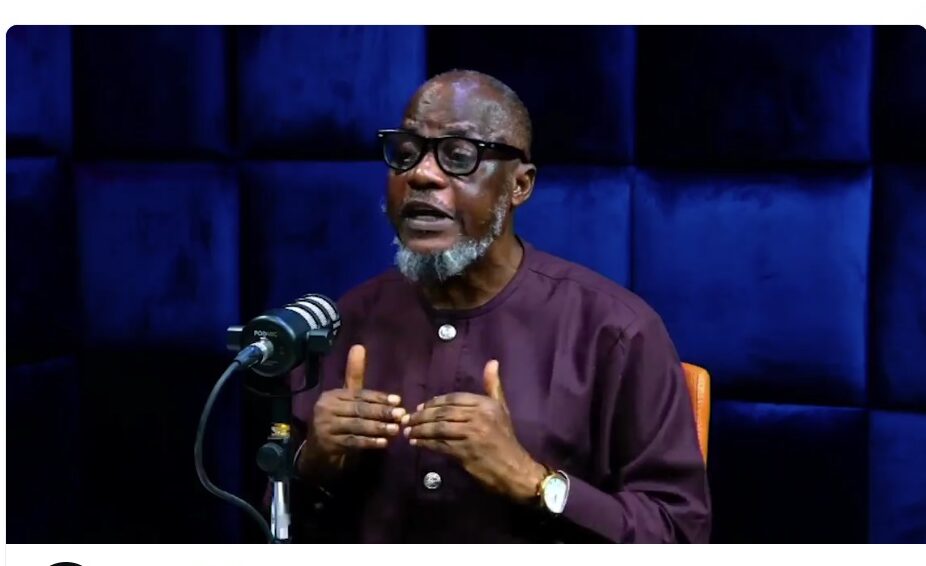
Ademola Araoye
“What laws are you making when the country is running in blood and tears…Farmers cannot go to their farms, traders cannot go to the market, and worshippers cannot go to churches or mosques. So what exactly are we doing here?”- Representative Alhassan Doguwa
Nigeria is at a historic confluence. Once to everyman and nation comes a moment to decide, so sayeth the old psalmist. Whether courageously acknowledged or conveniently dismissed as an inconvenient intrusion into the consolidated falsehood of a faux nation, Nigeria is potentially traversing a defining crossroads. The key question is whether the pretend nation is edging toward a revitalized union, and, by implication, a credible nation, or toward a cul-de-sac that would end a long nightmare. Sadly, Nigeria seems to be moving in the latter direction. That bad dream of a pretend nation was instigated by the unfortunate unilateral mercantilist-inspired January 1, 1914, amalgamation of diverse peoples. The different nations, with wide-ranging value dissonances and often clashing worldviews, were railroaded into a faux nation. Notwithstanding its mechanical antecedents, the idea of a Nigeria- the consolidated sovereign state of many peoples into the greatest black nation on Earth- raised lofty hopes and enthused many. But the human agencies for the actualization of the idea dropped the ball. A century plus after, for even the puny constituency of aberrant idealists, it is clear as daylight that the foundational falsehoods that have sustained the myth of Nigeria’s pretend statehood and nationhood are crumbling. And fast too. The enfeebled underpinnings cannot support the gargantuan edifices of lies constructed to rationalize the myth of Nigerian statehood and nationhood. In the wake of the encroaching harsh realities has been the usual bravura of a tiny political class determined to protect their beefsteak at any cost. The line of lies is no longer holding. Rather than seize the moment to conduct a thorough appraisal of the contradictions plaguing the land and their devastating consequences, the Nigerian political class feigns ignorance of the damning facts of life in this cauldron. All that mattered was the acquisition of power in the service of a very limited contractual circle of family, the ethnic group, and disposable sycophants along the tangents. Their choice of political helmspersons was to deflect reality and, in its stead, impose on the people narratives of their petty and ignominious squabbles on who, in their little universe held together by the meanest instincts and base values of any humanity, gets what from the looted commonwealth. The settlement among the ruinous political class for the fragile stability of the polity is founded on a gamble with the lives and safety of the 250 or so million souls that are trapped in this contrived kiln of desiccated human souls. Nigeria has become a wasteland of quotidian human sacrifices: blood, tears, and death. Yet, for the political class, it does not matter that “Nigeria is running in blood and tears,” as Representative Alhassan Doguwa recently put it. Now, reality dawns. Thanks to United States Congressman Riley Moore.
The modest beginnings at the domestic level of a discursive reality check informally on Nigerian statehood and nationhood have not been motivated by the political class’s good-heartedness or saintly intentions. The imperative for a check has been the consequence for Nigeria of the most unlikely developments in the norms and protocols governing inter-state relations in the reconfigured global system. The foundational principles governing interstate relations are being redefined. The redefinition has entailed accentuating the strategic interests of powerful state actors through the explicit, unilateral, coercive intrusion into the internal affairs of less powerful ones. International legal sovereignty has been vitiated. It conventionally refers to the recognition of the state as an independent entity with equal rights to other entities within the international system. It is understood that international legal sovereignty invests the state with supreme authority over its territory, population, and internal affairs. These attributes have acquired greater sanctity and are taken for granted, in particular as the international system has progressed from the modern state to the post-modern era. Such was the character of international legal sovereignty as an axiomatic principle that, paradoxically, the post-modern state began to operate by voluntarily relinquishing those attributes. The redefinition of the protocols of interstate relations has implied a regression from an evolutionary advancement to a post-realist state system to the classic modern state system, which was focused almost exclusively on the projection of power across the globe. Meanwhile, the modern state imposes a rule of force against the rule of law, a rule increasingly preferred by post-modern states. The mark of the postmodern state, most of which were based in Western Europe, was the willingness to give up elements of the state’s sovereign attributes. The United States of America, refusing to march into the progressive evolution of the postmodern state, remained essentially a classic modern state. Under the influence of its neo-conservative political elite in George W. Bush’s administration, the United States was stridently nationalistic. Added to this conservative philosophy is the belief that America is sometimes woefully unaware of what lies beyond its Eastern Seaboard. The United States remained closest to the approximation of a modern state. Noam Chomsky notes that, by fall 2002, the United States was high on the global agenda, with the declared intention of the most powerful state in history to maintain its hegemony through the threat or use of military force, the dimension of power in which it reigns supreme.
It is against this background that, in 2002, the United States Air University undertook research on the potential implosion of Nigeria, which had then been classified as a failed state. The main challenge for the report emanating from the research was how the world, particularly the United States and its Air Force, would deal with the potential global consequences of a failed state whose principal export commodity is also of vital interest to the United States. That investigation, conducted by five senior United States Air Force officers led by Christopher J. Kinnan, Colonel, USAF, was commissioned to provide “a new look at the future.” It was part of a larger study called Blue Horizons. It is germane to provide here the understandings of Nigeria that motivated the study and have impacted the United States’ evolving policy toward Nigeria. It states that:
“Nigeria, like many nations in Africa, gained independence from the United Kingdom in 1960. It is the most populous country in Africa and will have nearly 250 million people by 2030. In its relatively short modern history, Nigeria (at the time of the report in 2002) has survived five military coups as well as separatist and religious wars, is mired in an active armed insurgency, is suffering from disastrous ecological conditions in its Niger Delta region, and is fighting one of the modern world’s worst legacies of political and economic corruption. A nation with more than 350 ethnic groups, 250 languages, and three distinct religious affiliations: Christian, Islamic, and animist, Nigeria’s 135 million people today are anything but homogenous. Of Nigeria’s 36 states, 12 are Islamic and under the strong and growing influence of the Sokoto caliphate. While religious and ethnic violence are commonplace, the federal government has managed to strike a tenuous balance among the disparate religious and ethnic factions. With such demographics, Nigeria’s failure would be akin to a piece of fine china dropped on a tile floor; it would simply shatter into potentially hundreds of pieces.”
Finally, the rationale for the study is as follows: Whether Nigeria grows into a thriving, stable, and vibrant democracy or becomes a failed state, the people of the United States must be ready to support Nigeria as a fellow member of the international system.
Accordingly, the public declaration of the Trump administration regarding Nigeria’s affairs is not novel. Although it is set against the backdrop of challenging transformations in the United States and its unilaterally defined role as a hegemon in global affairs, the heightened focus on Nigeria is a response to multiple imperatives that have evolved to undermine the West in Africa. What are novel are: the context of the restructuring of the strategic template of West Africa that has entailed the loss of the preeminence of France (a historic guardian of the neo-colonial ancient regime in Africa that President Trump begrudges) in the sub region and the evolved firm toe-hold of the Sino-Russian axis in West Africa; the virulence of radical global Islam in West Africa; the decline of Nigeria since the Abacha years from its height as the preeminent voice of Africa; the emergence of a Sino-Russia axis leaning South Africa at the head of an increasingly activist engagement on the global scene with significant leverage over many radical African regimes. Most critical, though, is the entrenched falsehoods that have underpinned the operations and internal dynamics of Nigeria, the constant denials of the parlous existential realities of the country by the ruinous establishment whose narratives skirt the true challenges of value and ethical dissonance and stout contradictions in the orientations and worldviews of the constituent nations of the faux federation. It is part of the dominant falsehood on which the federation has rested, namely that it has remained a unitary state all along. These challenges are endemic to all multinational states, particularly in postcolonial universes.
A first step toward overcoming these impediments is an honest admission of the challenge’s existence. A second step is an honest attempt by all sides to transcend them. The failure to acknowledge and design a transparent mechanism to mitigate the impact of the multifarious divergence has been the gross failure of Nigeria’s state establishment. Instead, the political class has deployed the structural fault line to advance personal and parochial agendas. That is the crux of the Nigerian debacle, with the potential to bring the experiment to a halt. As I explain elsewhere, power is, of course, often an instrument to secure other tangible goods and benefits. That includes benefits for members of an ethnic group. But power may also be a benefit in itself. In the quasi-Westphalian state, as postcolonial entities are, pervasive systemic material and ideological dissonance and the search for domination by all against all lead to mutual insecurity for all. This results in incessant competition for power. Democratic practice is discounted in favour of convenient caricatures to advance exclusive partisan objectives. Everywhere, the word domination is heard. Power is equated with political control. The central concern is who the real owners of the country are and who would rule over whom. The resulting politics is a politics of exclusion. Short of eliminating ethnic diversity in the physical sense, exclusionary groups seek to impose a homogenous identity on the state and to compel the acknowledgement of their prominence. Flowing from this, the integrity and autonomy of every group are threatened by each constituent unit. The strategic choices of each group are constrained by this security dilemma facing all contending units in that political space.
To be Continued
*Professor Ademola Araoye is a retired official of the United Nations and former Director of Abuja Leadership Center, a TETFUND Center of Excellence in Public Governance and Leadership at the University of Abuja. He is author of Sources of Conflict in the Post- Colonial African State (AWP, 2012).
Leave a Reply