

Ademola Araoye
Seminal discourses at various levels of the state and society in the more engaged worlds are dissecting developments assaulting the integrity, fundamentals, and character of the increasingly fragile global order. This is with a view to designing compasses and navigational tools to guide policy in the turbulent transition to an unfolding, potentially new global regime. That regime threatens to reaffirm old problematic ideologies that had been central to the devaluation of a horrendous conflict-ridden international life from which humanity had moved away. These developments are driving the international system into a troubling, undefined destination. What is certain is that the signposts along the trajectory to both a United States imbued with fascist features and, consequently, a terrifying new world order are troubling. While Americans continue to grapple with a paralyzing national crisis across virtually all planes of state, society, and nationhood, humanity at large seeks ways to navigate the serious dislocations of the conventions and protocols that have served as guardrails for stabilizing the operations of the modern interstate system. The Trump administration has aggressively dislodged the philosophical planks of human interactions at home and abroad. Accordingly, the implications for global order of President Donald Trump’s repudiation of the foundational principles governing inter-state relations have become a staple of numerous prominent platforms across major capitals, policy caucuses, and intellectual hubs worldwide, except, of course, in Africa.
For proper context, the global system is permanently fluid and constantly in a state of precarious balance. The order is sustained by the careful operation of a mix of hard and soft protocols that ensure global stability. Coercion and Cooperation are employed in rational propositions to achieve strategic objectives without disrupting the systemic equilibrium. The stability of the system may be threatened when one or two major elite state actors defect by rejecting the system’s operative principles, especially when they impose their will on all others. Unilateralism poses a mortal danger in the evolving international system. Amid these horrific signs of the time, Africa, permanently flat-footed, is seriously unprepared, with not even a semblance of a strategic blueprint to protect itself. Beyond the irritating culture of vacuous sloganeering on global platforms, each obscure fiefdom of some old, sleepy, tottering buggy that goes for states must fend for itself. The continent has never been ready for a systemic exigency. Instead, Africa is pursuing the old nebulous interests of an antiquated, oppressive, corrupt, and ruinous elite. At its last summit, the African Union was still ludicrously howling over the payment of reparations for slavery! The demand for the payment of reparations, meanwhile, has been divisive and contentious between descendants of slavery in the diaspora and their cousins on the continent, whose ancestors are acknowledged to have connived in the historic commodification of black humanity. And that, as the world prepares the grounds for another round of direct violation of the integrity of black humanity.
As for the Nigerian state, it is burdened, like many other states on the continent, by its abysmally low legitimacy quotient and a dubious, self-serving, and badly compromised political class. Both the states and the ruling ruinous elite, characterized by scant domestic legitimacy, rely on international legal sovereignty to validate their contested, flimsy sovereign statehood and the caricatures of state governance that are pervasive across the continent. The people denounce the human agencies in the public realm as delinked from the will of the people. International legal sovereignty, which confers a semblance of recognition as a state from external sources, is conditional and thus fissiparous. It is granted and can be withdrawn, at best, by elite creators of post-colonial statehoods, when convenient. In empirical computations of the legitimacy index or quotient for statehoods, only a few African states exceed the threshold of 0.2, indicating a precarious state of potential systemic implosion. The State Legitimacy Quotient (SLQ) reflects perceptions of the congruence between statehood and its derivative policies with society’s desires and aspirations. The greater the dissonance between the state and its policies and the people’s aspirations, the lower the legitimacy quotient of the formal polity. An abysmally low state legitimacy quotient is indicative of an existential crisis of the state. Given its parlous circumstances, it is no surprise that prostrate Nigeria is being, with the consent of a minuscule population of the political class, snatched upon as a low-hanging fruit in the incursive privation of the Trump global order. A very low SLQ is an open invitation to external interference in the state’s internal affairs.
Meanwhile, the Trump phenomenon poses a global challenge. The recently concluded Munich Security Conference may be considered the ultimate summit platform for Western orations and policy formulation on the direction of the global order. The Munich Security Summit takes on additional salience in the age of a Trump United States that has brazenly defected from all the safeguards put in place to assure global stability. The conventional understandings of sovereignty have been thrown overboard perfunctorily. Sovereignty is the foundational concept that protects the autonomy of action and enables the articulation of the sacrosanct will of every people without external duress. It, in turn, bars the deployment of force, particularly by elite states against weaker sovereigns, except under certain grave conditions, including war. Multilateralism, conceived as the pivot for managing challenges integral to any interacting system of diverse and divergent interests and forces, is being ferociously assaulted. Trump significantly has a clear preference for a national society that is dominated by white racial (read Aryan) purity and governed according to a creed of white superiority. It is a throwback to the inglorious past of the United States. More alarming is the resort to the toxic underpinnings of Adolf Hitler’s Third Reich in the terrifying new world order of Trump. Against this backdrop, the emasculated rules-based international system, like in the era of the National Socialists of the Third Reich, is struggling to maintain continued relevance. In conceptual terms, Trump is forcing a global retreat from recent advances toward a more humanistic and humane post-realist global system. He is returning the world to the age of anarchy and predation as the core principles of interstate relations. Paradoxically, Europe is not spared. Trump’s explicit non-recognition of Denmark’s sovereignty over Greenland and his implied nullification of Greenland’s sovereignty to forcibly incorporate it into the United States reveal the terror in his plans. His obsession with acquiring Greenland recalls Nazi Germany’s Anschluss of Austria in 1938.
Yet, it is suggested here, notwithstanding the strong resonance of Trump’s United States tactics with the classic Nazi playbook, that the diminution of the community of states’ core operating principles did not begin with Trump. It has its roots in the powerful subterranean forces of white fascism that have always intruded in regular periodicity in the turbulence that has characterized the evolution of the United States since the Reconstruction. Neoconservative values had been conveniently embedded in the United States’ strategic blueprint for its engagement with the international system, particularly during the George W. Bush administration. Trump’s mortal sin has been his grim determination to jettison the fragile safeguards, his preference for crude verbosity over the rhetorical euphemisms of a cultivated statesman, and a riotous exploitation of existing openings that had featured within the now threatened neo-liberal order. The openings removed the safeguards against the unilateral projection of raw power by the United States worldwide. A major departure and a hallmark of Trump’s presidency is his expansive universe of predation. Trump’s aggression has not excluded Western Europe from his vicious hunting expedition. In reducing Europe to a potential prey and his explicit reservation on NATO’s preferred way forward on Europe’s self-induced tragedy, on a naïve Zelensky-led Ukraine, the hypocrisy of Western Europe is laid bare. As for Africa, its carelessness and an absolute lack of leaders genuinely committed to the welfare of its citizens are major drawbacks. The absence of a true vision for the continent by the slate of its largely toxic, expired endogenous exploiters from the age of Austrolopetecus renders it a low-hanging fruit to be snapped up as a quick snack by the rapacious Trump administration.
It is instructive to observe that fora such as the MSN, which are significantly shut to Africa and much of the world, have historically been associated with fine-tuning overarching strategic frameworks for the sustaining of the Western hegemony that emerged in the post-World War II period. More recently, barely a generation after the collapse of the Soviet Union, Western Europe has sought to consolidate its control over the entire European political space. Trump’s reluctance to subscribe to that agenda is the outcome of a rational calculus given his strategic objectives. That reluctance or indifference has been a source of tension and schism among its bewildered European partners. The Europeans have to grapple with modalities to mitigate the horrendous impact of Trump’s ambivalence or outright denial of the leadership of the pack of traditionally predatory elite Western European states. This has altered not only the fundamental axioms of Western hegemony but also the very structure of the global order. The outcomes of the highly intelligence-driven interactions on the contrived Western platforms, whose membership is limited to member states of the alliance of elite powers in the West under the leadership of the United States of America, impact the direction of the global order. Such is the depth and breadth of uncertainties and dire implications of Donald Trump’s repudiation of the fundamental underpinnings of the post-World War II order that the preeminent platforms for policy in the hegemonic West have lately been reduced to designing reactive, rather than proactive, responses to a turbulence that would seem to be beyond their understanding, grasp, and control. To be sure, this refers to the precarious state of flux of strategic policy, the institutions and structures of Western hegemony. Perversely, the oppressed of the world have something to celebrate and laugh about in their closets. The West that taught the world the idea of inhuman subjugation of other humanity, now again in 2026, 81 years after the last global carnage, faces its nemesis in a student who is prepared to demonstrate his mastery of the subject by using his teachers as experimental subjects. Neo-imperialism has fossilized the horrible logic of hegemonic control. It becomes a problem only when Europe confronts the monstrosity of its race-inclined social engineering worldwide. Africa has borne the brunt of this for far too long.
Two recently formulated mechanisms formulated under the aegis of the well-meaning international community come to mind as precursors to Trump’s undisguised hostility to weak states. Again, good intentions are rarely enough. In an earlier submission, I focused on the concept of Responsibility to Protect and the International Criminal Court. Understanding the logic behind two is critical to understanding Trump’s indignant posture toward the global system. In that earlier appreciation of the challenges, it is highlighted that the good-intentioned R2P, although couched as a humanitarian enterprise, has roots in ultra-realist political traditions and has taken many of its salient characteristics from the realism and unilateralism of the neoconservative bloc in the George W. Bush administration. “The Bush Doctrine”, as some have described the corpus of the constitutive elements of a philosophy that included the controversial policy of preventive war, that held that the United States should depose foreign regimes that represented a potential or perceived threat to the security of the United States, even if that threat were not immediate; an ostensible policy of spreading democracy around the world, especially in the Middle East, as a strategy for combating terrorism; and a willingness to pursue U.S. military interests unilaterally. The neo-conservative bloc in the Bush administration held multilateral organizations such as the United Nations in deep contempt and suspicion as they sought to pursue national strategic objectives of the US administration, unrestrained by international opinion and sensibilities. The unrestricted projection of national power was seen as the most effective means of achieving American national strategic goals, which in 2003 focused on regime change in Iraq. Neo-conservatives in the Bush administration defined national interests as extending beyond geographic security and material concerns to the spread of democratic ideology. Another strand of hardliners, categorized as “exceptionalists” – ideologues, idealists, and intellectuals- under the broad rubric of neo-conservatism, believed that America’s power and ‘rightness’ gave it both the authority and the responsibility to set the rules for the rest of the world. In short, the neo-conservatives sought to remake the world in the image of the United States and reserved the right to pursue that agenda as it suited the hegemon of the post-Cold War World. The neo-conservatives saw the world exclusively through the lens of American interests. What has been described as the Bush Doctrine essentially identifies “…the first duty of the United States Government remains what it always has been: to protect the American people and American interests. It is an enduring American principle that this duty obligates the government to anticipate and counter threats, using all elements of national power, before the threats can do grave damage. The greater the threat, the greater the risk of inaction-and the more compelling the case for taking anticipatory action to defend ourselves, even if uncertainty remains as to the time and place of the enemy’s attack. …To forestall or prevent such hostile act by our adversaries, the United States will, if necessary, act preemptively in exercising our inherent right of self–defense.”
This theory of might as right, as an underlying principle of strategic global policy, was not an invention of Donald Trump. He is thus a mere unconscionable articulator of a shameless invention of earlier neo-conservatives such as Dick Cheney and Donald Rumsfeld that had proven toxic to responsible inter-state relations. These constructs in unilateral state violence against another had validated George W. Bush’s America’s unilateral war in Iraq under pretenses proven to be embarrassingly false. It was also the springboard of Barack Obama’s incendiary intrusion, along with NATO, into Gaddafi’s Libya. Gaddafi was assassinated in the regime change agenda orchestrated by the West and preeminently under the charge of Barack Obama. The real intention was to stop the late Gaddafi’s plan to create a common African currency in the form of the African Dinar. Also, Gaddafi’s zeal for pan-Africanism and his associated plans in a strident pursuit of a continental state posed a significant threat to the West’s exploitation of Africa. In Libya, even before the last bullet had been fired, the West was lifting oil from the fields of Benghazi following its liberation from the control of the Libyan state. Incidentally, the myopic Nigerian establishment was not on board with the initiative of the African Union to save Gaddafi and his regime. Gaddafi had advised that in the face of unending, perennial intercommunal killings in Nigeria, it was best for the country to be divided. Meanwhile, the earlier unilateral military interventions of the United States provided the model of the reckless militarism of Trump in Venezuela: the same logic and the same mold of execution. The difference is in style. In all cases, the sovereignty of the states was violated by the United States under the guise of protecting the integrity of democratic practice in the victim state. The humanitarian focus of Responsibility to Protect had been used as an instrument to advance the strategic interests of a predatory elite power unilaterally. Trump’s approach in Venezuela has been consistent with the United States’ long-standing strategic blueprint in projecting force to advance American interests. It controls the narratives of self-justification of its violations of international law.
Finally, the implications for Africa are that the Trump order, if it survives, would appear indifferent to the continuity of the status quo in Africa. That is, notwithstanding a rationalization in the rhetoric of protecting certain portions of the population at risk in the state. Low State Legitimacy Quotient across the continent creates opportunities for intrusive exogenous engagement at very low fiscal and political costs to counterbalance the rapid tilt toward the Sino-Russian axis. In this, too, Trump has acquired invaluable lessons from France. In the case of the latter, a deliberate policy of fragilising the post-colonial state and using it as a ploy to deploy its military on a long-term basis in the arena has been a codified ploy. It is a vicious cycle. Rejecting the dubious help from the hegemonic elite state entraps the state in permanent instability as the spurned offer is deployed to undermine its stability. The experience of the Sahelian Confederacy (AES) states is illustrative. Sadly, though, it is exactly the kind of scenario that the discredited leadership cadre in Africa prefers. It provides the kind of alibi needed to justify the truncation of democratic practice. Trump is in good company with most of Africa’s leaders. Unfortunately, it is a process also designed to keep the continent divided.
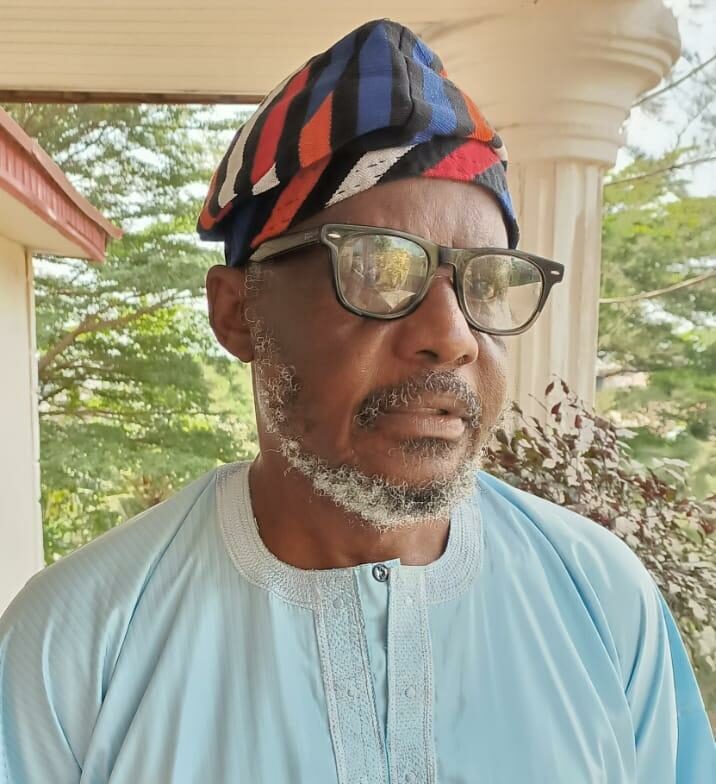
*Professor Ademola Araoye is a retired official of the United Nations and former Director of Abuja Leadership Center, a TETFUND Center of Excellence in Public Governance and Leadership at the University of Abuja. He is author of Sources of Conflict in the Post- Colonial African State (AWP, 2012).

Leave a Reply