

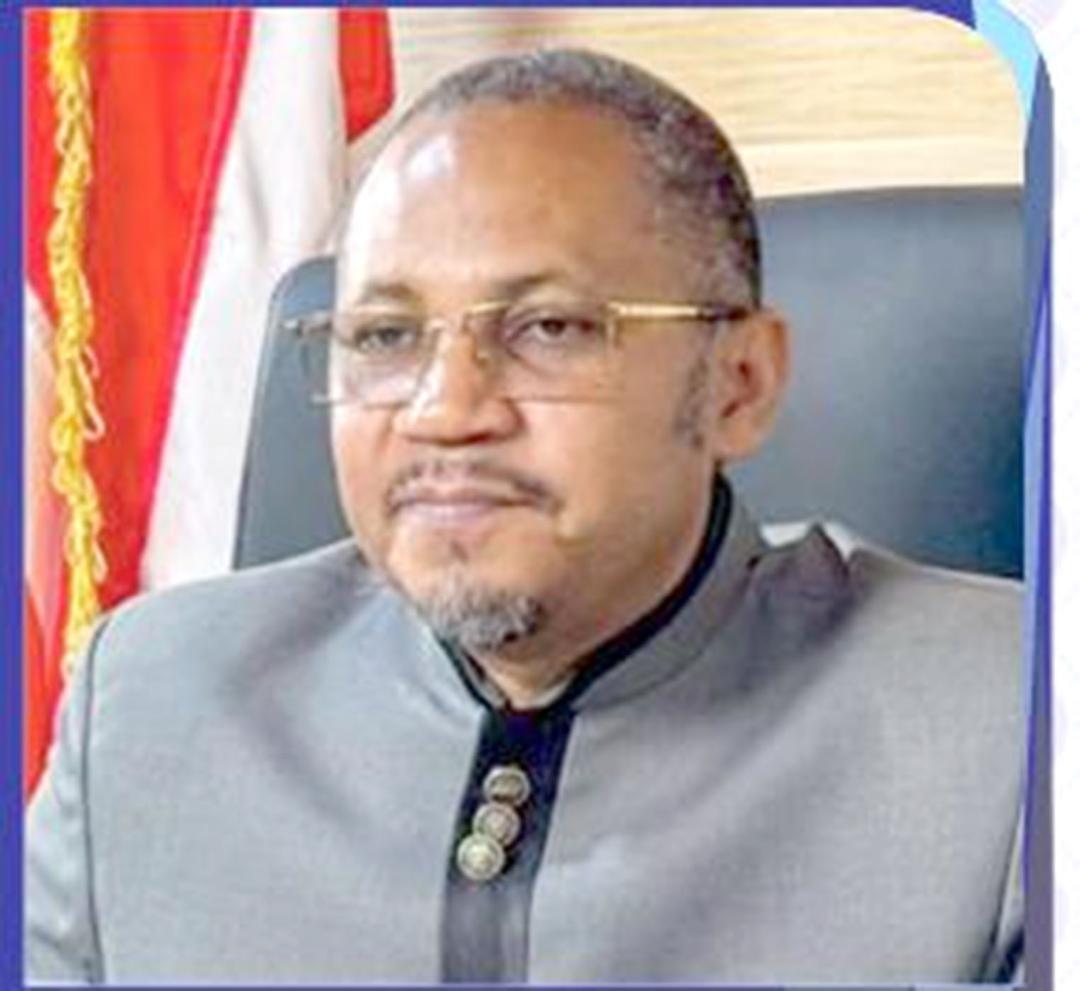
Preceding his appointment by President Joseph Boakai on February 27, 2024, Mohammed Ali, popularly known as Mo Ali, had 20 years of meritorious and dedicated work experience in both the public and private sectors. Among several offices in the public sector, he worked at the Ministry of Finance as Director, Water & Sanitation, and in several Non-Governmental Organizations in the private sector. In this interview, he spoke about the mess he met on the ground on his appointment by President Boakai, and how he has changed the mess two years after his appointment.
When you were appointed by H.E President Boakai, what did you meet on the ground, at LWSC, in terms of operations and facilities?
I assumed the mantle of the Liberia Water and Sewer Corporation as Managing Director on 27 February 2024. Upon assumption of duty, we realized that the Corporation was challenged by multiple problems, some of which entailed:
Overstaffed workforce and duplicated positions and roles: Between April and December 2023, the workforce of the Corporation grew from 375 to 669, with 124 persons employed in April 2023 alone. It will interest you to know that out of the 669 employees, with a monthly wage bill of over Three Hundred and Seventy- Five Thousand United States Dollars (US$375,000), the entity was generating around US$100,000 monthly. It will also interest you to know that not only 94 of the employees were monitoring and evaluating officers, most of whom are high school graduates, but there were also mismatches of staff qualifications and positions characterized by salary disparities.
Liabilities: The Corporation had a liability profile of over US$7 million, which involves indebtedness to the following:
Staff arears of 7 – 9 months
Retirees’ pension arrears of 29 months
Local vendors’ debts of over 29 million
Social Security withholding contributions of over US$ 1 million
We also inherited the problem of customers, including businesses, companies, government entities, and individuals or household customers, refusing to pay bills for both water and sewer services provided. This, coupled with water theft and wastage are costing the entity 70% in Non – Revenue Water.
Central Monrovia was without water supply for over ten (10) years, with nothing significantly done in the past to restore water to the City Center. Apart from water supply, we encountered testimonies of the constant spillage of feces in the major streets of Central Monrovia. The City center was without water supply for a number of notable reasons:
Central Monrovia is elevated and requires constant pumping of water from White Plains Water Treatment Plant to generate the requisite pressure to reach the city. Sadly, two major reasons hampered the constant pumping of water from White Plains:
Infrequent supply of electricity and insufficient supply of water treatment chemicals
Sewage spillage in the streets of Monrovia was due to several reasons:
Neglect – In the years preceding our administration, no cleaning and maintenance were done on the sewage system. This caused all the sewage lines to be clogged. To make this situation worse, the population began to access the manholes and use them for dumping sites for garbage, which was mainly composed of rubber and plastic materials, including old car tires and containers.
Scrap iron dealers also merchandised the city’s manhole covers, leaving them open for uncollected wastes.
Generally, the population was barely receiving water supply because the White Plains Water Treatment (WTP) operated only to supply water to selected companies and a few privileged customers.
Standalone Water Supply Systems: LWSC also operates several standalone water supply systems as part of our operational services. These standalone systems, specifically New Georgia and Soul Clinic, were operating under constrained conditions, with the Soul Clinic functioning only to serve the G-5 Bottling company and a few selected customers, while the New Georgia system was not in operation.
Outstations
LWSC has six outstations with locations in Buchanan, Grand Bassa County, Kakata, Margibi County, Sanniquellie, Nimba County, Voinjama, Lofa county and Zwedru, Grand Gedeh County, all of which were not operational when we assumed authority of the Corporation. For Zwedru outstation, it shut down completely in 2019, and we received reports on the ground about the destruction of most of its facilities. Yet the employees there were receiving salaries while they weren’t generating any income, or simply put, were not working. By 2022, Kakata and Buchanan were shut down completely, while the employees were being paid similarly to Zwedru; this posed significant financial constraints on the Corporation. In Buchanan, there were about 8 wells that were fitted with pumps. Four of the pumps, including the well heads, were stolen, and generator cables were also stolen. We were greeted with reports of the vandalizing of several other facilities, including water kiosks. In Kakata, local road construction companies destroyed most of our transmission mains, meant to service the city.
Across Liberia, the LWSC owns the following facilities, and as I have already mentioned, we did not meet all of them in a perfect operational condition, but whatever the case was, they are what we have through funding from the Government of Liberia and International Partners (AFDB, World Bank, UNICEF, USAID, etc) The facilities include the following:
Central office, Fiamah compound (sewer plant), Water Treatment Plant (WTP), New Georgia Estate, Soul Clinic, Caldwell Booster, Newport Street Booster, GSA Road in land Booster, Fish Market Gantry, Ducor Reservoir, GSA Rock Hill Reservoir, Kakata, Buchanan, Zwedru , Robertsport, Voinjama, Sanniquellie
What are your plans to further improve operations?
Well, I would like to first provide you with an update on what we accomplished so far, especially in response to the situations we encountered on grounds.
Debt Recovery
We have set up a debt recovery team to go after our debts. The team, which is led by our Sales and Marketing and Technical Services divisions, is robust and intentional as all monies out there are significant to the attainment of our operational goals and objectives. We are also naming and shaming huge debtors while commending customers who have been outstanding with their obligations to us. We are resolved on this exercise, that’s why customers with huge arrears have been disconnected, and we will continue to do so.
Water Supply to Central Monrovia
As part of our first 100-day deliverable as the government, water has successfully been restored to Central Monrovia, and this is the first time in over 10 years. This was possible through the repair of the City Reservoir and addressing the issue of power outage by the Liberia Electricity Corporation (LEC). Key to note about the Central Monrovia’s water restoration is the improvement in the service delivery of the Liberia National Fire Service (LNFS). We also rehabilitated other areas and procured new fire hydrants for the entire City. These fire hydrants provide significant support to the country’s response to fire incidents through the LNFS.
We have also resumed water supply to other communities, including Thinkers Village, as far as Rock Church, which is in close vicinity to Camp Kesselly, Rehab Community, and other areas along Liberia’s International Airport highway.
Water Trucking Service
Another component of our service to the population is water trucking. This is a service that was not in existence when we got to the Corporation, but today, as we speak, we have resumed full water trucking service. This service is essential because it is not every business or household is connected to our network, this is where the water trucking comes in.
Constant Sewage spillage in Central Monrovia
We have commenced the rapid cleaning and rodding of sewage lines in Monrovia. So, since April 28, 2024, we began this exercise, and this is something that we do consistently to keep our city healthier for our people. One major challenge we had as a Corporation in cleaning our sewage lines and even connecting additional people to our network was the fact that several structures were built on the public utility.
Outstations and Sub offices
For our outstations, we have been able to rehabilitate a significant number of them, including Caldwell, Soul Clinic, Air Fish Market, GSA Rock Hill, and Fiamah. All services carried out at our Central Office in Monrovia can now be received at our sub-offices. For the outstations, specifically Zwedru, Greenville, and Pleebo, rehabilitation and construction are ongoing, while in Sanniquellie, Nimba County, our private operator is collaborating with the local authority to run the system at an efficient level. In Robertsport and Voinjama, we provided technical and material support to the private operator for the operations of the respective water systems, all intended to make them reliable.
Another major work that is in progress and will be a big accomplishment is the replacement of the Corporation’s biggest transmission pipeline.
Additionally, we have been successful in addressing irregular water distribution, ensuring a consistent supply to Monrovia, Paynesville, and other connected communities in Montserrado County.
What key areas will foreign investment tap in, to further boost operations at LWSC?
As part of immediate and future plans to boost our operations, we are serious about forging a strong public-private partnership both at home and abroad. As you know, the private sector is the engine of growth. It is in this context that our Strategic Plan for 2025-2029 provides for the participation of private investors in our development initiatives.
How do you see LWSC’s immediate future under your watch?
‘ Our immediate future, under my watch, is bright. We’ve commenced lots of reforms, as enshrined in our 5-year strategic plan.
Leave a Reply