

By Sylvester Ojoobanikan
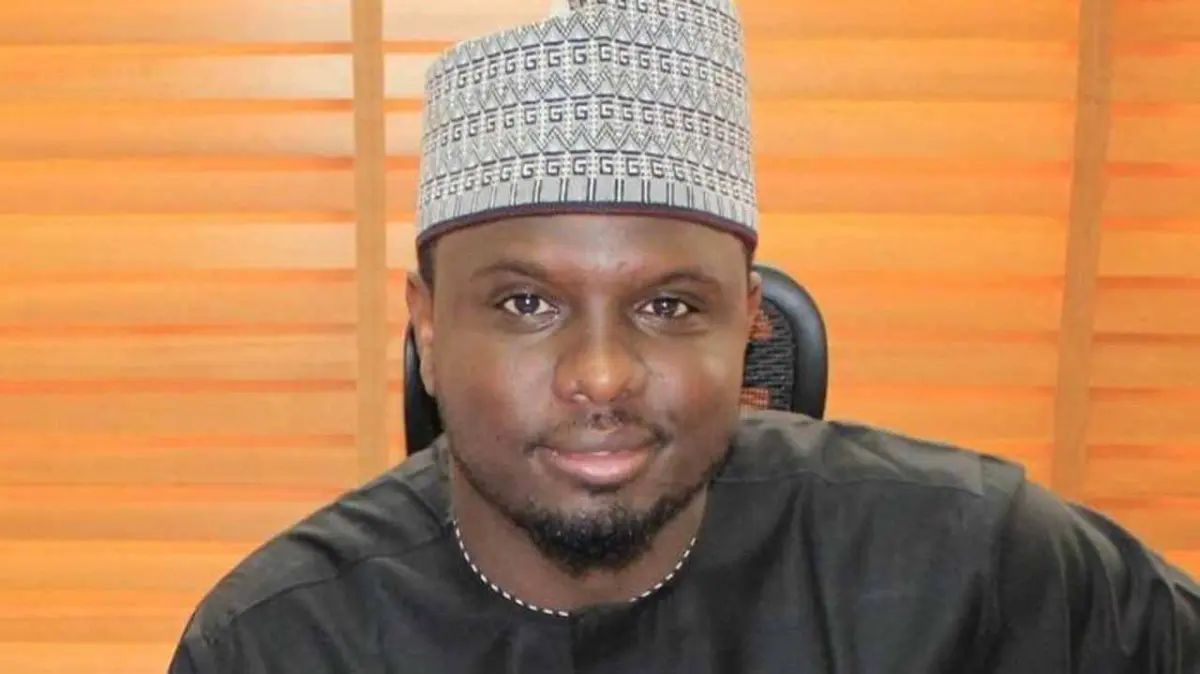
President Muhammadu Buhari, in December 2019, appointed Ahmad Salihijo, an engineer, as the Managing Director of the Rural Electrification Agency (REA), a Federal Government agency responsible for electrifying unserved and underserved communities under the supervision of the Federal Ministry of Power. This followed the appointment of the then occupant of the office, Mrs Damilola Ogunbiyi, as the Chief Executive Officer of Sustainable Energy for All and Special Representative of the United Nations Secretary-General for Sustainable Energy for All, as well as Co-Chair of UN-Energy.
Salihijo, a graduate of Electrical/Electronic Engineering with master’s degrees in Development Studies and Project Planning, came prepared. From the outset, he hit the ground running. Under his leadership, the REA, within one year, provided electricity access that resulted in 99,000 connections, impacted over 450,000 people, created more than 5,000 jobs, and successfully secured $550 million in funding for electrification projects across the country.
While Salihijo was busy fulfilling his mandate, certain officials under his watch committed acts of grand larceny using subterranean tactics. The scrutiny that followed in 2023 lumped everyone together, much like a combine harvester sweeping through a field of wheat, rice, or corn. In other words, since the buck stops at his desk, he, alongside the Executive Management, was suspended indefinitely due to “concerns about significant weaknesses in some government systems, operations, and financial controls.”
Consequently, government agencies in charge of the probe widened their investigation into procurement systems, payment processes, approval procedures, and the release of funds through government financial platforms.
One of the actions that ultimately helped to clear Salihijo was the red flag he raised months before his suspension. He had condemned what he described as “irregular disbursement patterns” and alerted relevant authorities to unusual activity linked to payments processed through the Government Integrated Financial Management Information System (GIFMIS).
As a result, “the REA Executive Management initiated internal accountability processes, and officials concerned within the finance and accounts department were queried and immediately suspended.” The Executive Management followed public service rules, leading to a recommendation by the Senior Staff Committee (SSC) for the dismissal of the culprits. This recommendation was forwarded to the supervisory ministry for ratification at the time the indefinite suspension of the former Managing Director and Executive Management was announced.
Beyond the internal probe initiated when Salihijo frowned at certain sharp practices, another investigation commenced between August and September 2023. Law enforcement agencies invited and interrogated REA officials to “scrutinise payment records, procurement documentation, and internal control processes connected to rural electrification projects nationwide.”
When the investigating agencies concluded their work, they uncovered, in a manner of speaking, a rotten sepulchre teeming with maggots, snakes, and rodents. The primary culprits behind the unauthorised withdrawals from government coffers, according to investigators, “were the former Director of Finance, the former Director of Human Resources, and some senior accounts staff.” These individuals, it was submitted, “executed payments without the necessary approvals or audit clearances, effectively bypassing the authority of the former Managing Director, Ahmad Salihijo, and the Executive Management.”
With case files completed, legal actions were instituted against the suspects. These developments were widely reported by the media in mid-2024, when several REA officials were dragged to court “over alleged fraud linked to unauthorised payment processing.” The prosecution, in particular, “centred on the former Director of Finance, the former Director of Human Resources, and senior accounts officers.”
When the accused officials were arraigned before the Federal High Court in Abuja under multiple charge numbers, the courts ordered arrests, arraignments, remand, and asset forfeiture proceedings against the indicted officials.
Here lies the crux of the matter: investigators stated that the disputed payments “were processed without the approval or authorisation of the Managing Director and without mandatory internal audit clearance, in breach of established financial regulations.”
Fast forward to this year, when law enforcement agencies obtained interim forfeiture orders over properties linked to the proceeds of the alleged fraud, following applications granted by the Federal High Court in Abuja. The assets were traced to “funds diverted through compromised payment processes and routed via personal and proxy accounts controlled by indicted officials.”
This is why Salihijo is regarded as clean as a whistle. In all the court documents relating to the prosecution, forfeiture proceedings, and court orders arising from the REA investigations, the former Managing Director, Ahmad Salihijo, and the Executive Management team were neither listed as defendants nor named on any charge sheets issued by law enforcement agencies.
In other words, based on all court evidence examined by journalists, neither Engr. Ahmad Salihijo, former Managing Director of the Rural Electrification Agency, nor Engr. Barka Sajou, former Executive Director, Technical Services, was linked to criminality or sleaze. The probe lasted nearly two years before the courts became involved. Instead, the evidence shows that at various times, several other REA officials faced prosecution for alleged fraud, criminal conspiracy, and diversion of public funds.
The internal and external investigations, as well as the various court rulings on the REA matter, illustrate how officials can exploit systemic loopholes to perpetrate sleaze without the knowledge or approval of agency leadership. As one analyst lamented: “This situation highlights the long-standing weaknesses in internal financial control frameworks across public institutions in Nigeria. As the public continues to demand accountability, the need for comprehensive reforms in governance and financial oversight has never been more urgent.”
Leave a Reply