

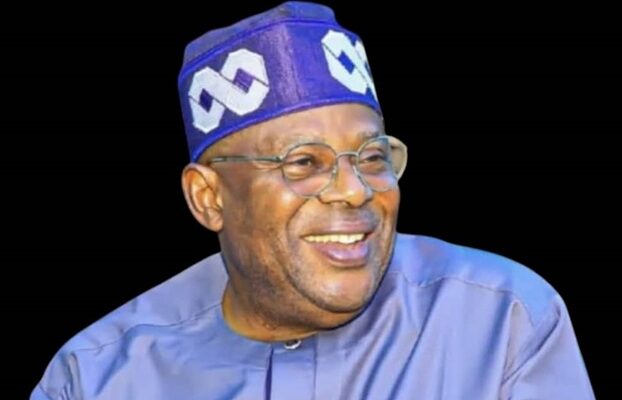
James Abiodun Faleke at 66, Leader Kogi Cannot Ignore,
Richard Elesho
His first political outing and homecoming were like a tsunami that redefined the Kogi political landscape in unprecedented fashion. It was a homecoming reminiscent of Thomas Hardy’s epic novel, The Return of the Native. The reception was awesome.
Before the 2015 electoral cycle, James Abiodun Faleke was a little-known political figure in Kogi, his home state—just another story of success in a foreign land. In fact, not many people knew the Lagos lawmaker had his roots in the North Central. But he came home big in 2015 when the late Prince Abubakar Audu, a former governor of the state, headhunted him to be his running mate on the All Progressives Congress (APC) gubernatorial ticket. By every standard, Audu was a tasteful politician who chose another man of colour as his partner on what he described as a “rescue mission.”
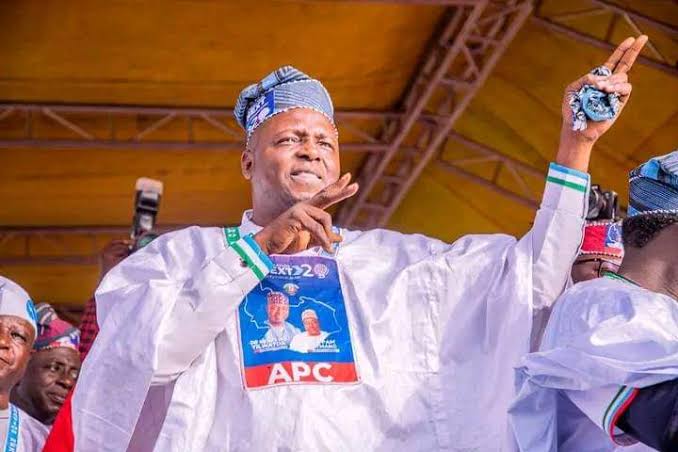
The duo elevated electioneering campaigns into an appealing spectacle as they mounted a well-decorated, open-roof luxury automobile, striking the right chord with the electorate. Their caravan, the first of its kind on Kogi soil, held people spellbound as it snaked around campaign grounds scavenging for votes. It was the cynosure of all eyes, and in no time, Faleke—who acquired a new cognomen, “ATM”—became the rallying point of the party in Kogi West and Central, while Audu manned the East.
Faleke’s style was engaging, interpersonal, and focused. He set up one-on-one meetings with individuals and groups from other parties, including their leaders, with the aim of wooing them to his side. It was a measure that worked. One after the other, people began dumping the Peoples Democratic Party (PDP), under whose platform the then-incumbent governor, Idris Ichalla Wada, was seeking re-election. Among those who dumped the umbrella for the broom were 15 serving local government chairmen and vice chairmen, several councillors, and other appointees.
The PDP’s loss was only a matter of time. It was no surprise, then, that Wada suffered a bloody nose, with the APC candidate beating him by more than 41,000 votes in the November 21 election.
Not a few analysts partly credited Faleke for the APC’s turnaround performance. Indeed, Audu had twice lost his bid for re-election with various running mates under the All Nigeria Peoples Party (ANPP) and the Action Congress of Nigeria (ACN). However, Audu’s sudden death while the results were being compiled posed a permanent clog in the wheel of his victory. It was unprecedented, and the APC, in an unexpected decision, overlooked Faleke and went to the archives to award the votes to Yahaya Bello, who had emerged as the first runner-up in the primary election that produced Audu. A series of legal fireworks to test the party’s decision ensued and eventually terminated at the Supreme Court in favour of Bello.
While the legitimacy battle of the administration raged in the courts, Faleke—who had turned down an offer to deputise Bello—returned to his legislative work in Lagos, maintaining a mature, quiet mien about his denial at home. In spite of his taciturnity, the lawmaker made a statement through his carriage.
Faleke’s legislative imprints at the House of Representatives stand out in bold relief as Chairman of the Finance Committee. He provides oversight for public finance and initiates legislative reforms to ensure fiscal discipline, probity, and accountability. In his Ikeja Federal Constituency, his ubiquitous presence, landmark projects, and empowerment schemes are, like the MTN payoff, “Everywhere you go.” He has overseen the asphalt laying and tarring of nearly all Ikeja roads and streets, while empowering a large army of youths and the elderly. His “Korope bus” transport scheme—numbering over a thousand vehicles—was designed to help young, able-bodied unemployed people build economically secure futures. This is in addition to securing jobs and other economic opportunities for his constituents.
How time flies. It is now more than a decade since the traumatic drama of those days in Kogi, and all eyes are once again on Faleke to continue the battle from where Audu left off.
At the centre of the matter is the quest for a Kogi governor of Okun extraction. Since the state was created about 35 years ago—precisely on August 27, 1991—no Okun person has been elected governor. Of its three main ethnic blocs, the Igala, through Audu, Ibrahim Idris, and Wada, has ruled for 18 years, while the Ebira, through Bello and the incumbent, Usman Ododo, has ruled for 10 years and still counting. This does not include the four years when the late Alhaji Adamu Attah was governor of Kwara State. Except for the interim six-week hiatus when former Speaker Clarence Olafemi was acting governor, the Okun have remained in solitary abeyance from the number one office.
Many see Faleke as the surest route to fulfilling the long-standing Okun dream. The reasons are not far-fetched. He has a network of friends and supporters from his brief but impactful joint candidacy with Audu. More importantly, his ties outside the state pitch him as the perfect man for the job. Faleke’s unassailable links to President Bola Tinubu—under whom he cut his political teeth—and other APC power brokers are too strong to be ignored. He served as Secretary of the APC Presidential Campaign Council (PCC) in 2023, and the president has repeatedly acknowledged his loyalty, value, and sterling qualities.
The graduate of Purchasing and Supply has been under pressure from across all corners of Kogi State to throw his hat into the ring for the 2027 gubernatorial contest. Numerous social media platforms and groups have been created by his ever-widening and eager supporters to whet his appetite for the race. His assumed interest in Lugard House—or lack thereof—has dominated public discourse in the state. While his supporters argue that his leadership is what Kogi needs at this time, his critics counter that he is a national asset who should not encumber himself with local politics. It may be safe to posit that, for now, the fear of JAF is the beginning of wisdom in the Confluence State.
Faleke, a native of Ekinrin Adde in Ijumu Local Government Area of Kogi State and a product of Kaduna Polytechnic, began his political career in 2003 when then-Lagos governor Bola Tinubu appointed him Executive Secretary of the newly created Ojodu Local Council Development Area (LCDA). From there, he was elected chairman of the council. Based on his result-oriented performance—anchored on humility, honesty, and accountability—he was elected to the House of Representatives. Owing to his experience, team spirit, and attention to detail, many refer to him as the “Legislator-General.”
Born on December 25, 1959, the quintessential politician turns 66 this season. As a typical omoluabi, will he heed the people’s call?
Time will tell. For now, happy birthday to the Legislator-General—the one without borders.
Leave a Reply