

By Reno Omokri
I do not know why, but several Nnamdi Kanu supporters have descended on my social media profiles demanding that I justify why the Nigerian state prosecuted their leader, with many claiming that agitation for secession is not illegal.
I am not an official of the state, but I am a loyal and patriotic citizen who can tell you that peaceful agitation for secession is not a crime, but starting and or joining a violent separatist group is.
That is why the Basque separatist movement, Euskadi Ta Askatasuna, is banned, whereas the Scottish separatist group, Scottish Independence Movement, is not. Because the former uses violence while the latter employs persuasion.
And then his supporters, who also often belong to the Obidient movement, ask me what is so special about Nigeria that it cannot be divided?
Well, I will tell them why, since they asked.
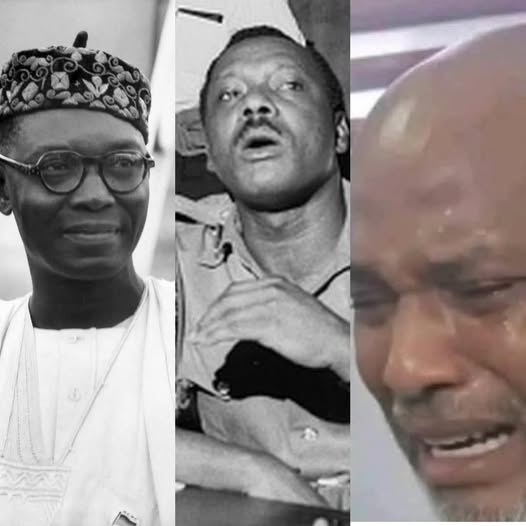
On multiple occasions in pre-independent Nigeria, Chief Obafemi Awolowo mooted the idea of a secession clause to his colleagues from the Eastern and Northern Regions. Sir Ahmadu Bello did not oppose it, but those from Eastern Nigeria did.
In 1954, during the Lagos Constitutional Conference, Chief Awolowo almost tearfully begged the council to accept a secession clause on the grounds that some groups in the Nigerian project may find his progressive ideas incompatible with their culture, but Nnamdi Azikiwe rejected it, galvanising a majority of the conference attendees to kill the idea.
After this was rejected, Chief Awolowo again wrote to the then-Governor-General of Nigeria, Sir John Stuart Macpherson, who again rejected the clause because the majority, led by Nnamdi Azikiwe, did not support it. Obviously, it was also not endorsed by the British, who did not want any present or future secession of their colony.
Because of Nnamdi Azikiwe, section 86 was inserted into our constitution, with the proviso that any region that seceded would be guilty of treason.
Nnamdi Azikiwe wrote about this in an essay published by the New Nigerian Newspapers in 1975. Other papers and Mr Azikiwe himself (before his death) have since republished it.
In fact, a year before Awolowo tried to get a secession clause into the Constitution, Nnamdi Azikiwe had threatened Northern Nigeria with what would have amounted to war if they tried to secede from Nigeria at a speech he gave on Monday, May 12, 1953. Please find below a quote from that speech:
“It may lead to economic nationalism in the Eastern Region, which can pursue a policy of blockade of the North, by refusing it access to the sea, over and under the River Niger, except upon payment of tolls.”
It was because of our constitutional provision against secession that the Niger-Delta could not break away.
On February 23, 1966, Isaac Adaka Boro declared the secession of the Niger Delta Republic from Nigeria. After he did this, there was outrage in the Eastern Region that almost led to riots. Please go and research it. The Military Governor of the Eastern Region, Lt. Colonel Emeka Ojukwu, officially requested that the Federal Government intervene to end Boro’s secession attempt.
The then Head of State, Major General Johnson Aguiyi-Ironsi, quashed what he called the Isaac Boro mutiny, primarily using troops of Eastern Nigerian origin.
The current structure of Nigeria is, to a large extent, the handiwork of two individuals. The first is Nnamdi Azikiwe, who insisted that a clause be added to our constitution making it impossible and illegal for any of our constituent units to secede, and Major General Thomas Aguiyi-Ironsi, who promulgated the Unification of Assets Decree on 24 May 1966, which formally ended regionalism in Nigeria and created a unitary system of government.
So, in answer to the IPOB/Obidient horde asking me these questions, I believe you now know who to blame.
One Nnamdi should blame the other Nnamdi!
Leave a Reply