

By Nehru Odeh
Prof. Ebun Clark is indeed an all-round art connoisseur, and she wears that hat with pride and dignity. Though a trained theatre artist, she is also an accomplished academic, researcher, author, and scholar. Her scholarly work, Ogunde: The Making of the Nigerian Theatre, is part of the canon of theatre studies in Africa.
Still, this Professor of English and wife of the renowned Nigerian writer, scholar, playwright, and poet, Professor J. P. Clark, known for her erudition and brilliance, has just proved she is one of the foremost art collectors in Nigeria.
A former Director of the Centre for Cultural Studies, University of Lagos, she has been collecting art for over six decades. She has now decided to showcase some of the art prints she has collected over sixty years in an exhibition that has been described as second to none in Lagos.
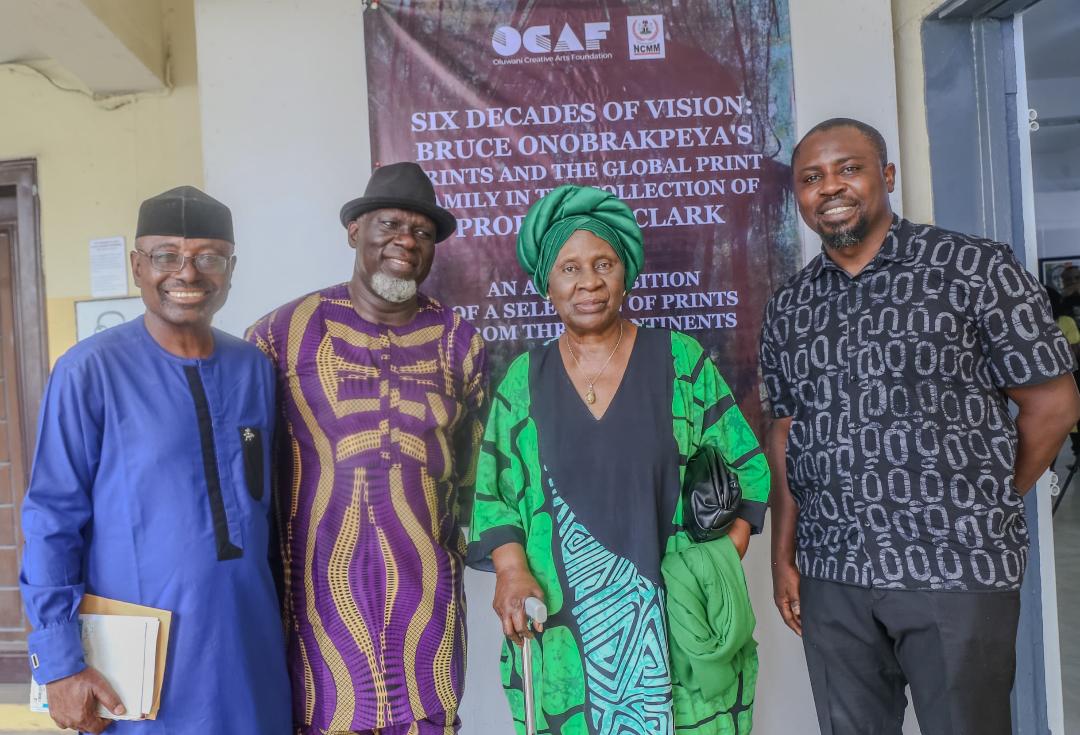
Themed Six Decades of Vision: Bruce Onobrakpeya’s Prints and the Global Prints Family in the Collection of Prof. Ebun Clark, the landmark exhibition celebrates Ebun Clark’s six-decade collecting journey. It also showcases the artistic excellence of Nigeria’s foremost master printmaker, Prof. Bruce Onobrakpeya, alongside notable members of the global printmaking family from the United States, Britain, and France.
The show was organized by Oluwani Art Foundation in collaboration with the National Commission for Museums and Monuments between 19 and 23 October 2025 at the National Museum, Onikan, Lagos.
The curators of the exhibition were Moses Ohiomokhare and Dr. Mudiare Onobrakpeya. The art prints exhibited were anchored around Prof. Bruce Onobrakpeya’s works and those of other contemporary Nigerian artists from across the globe.
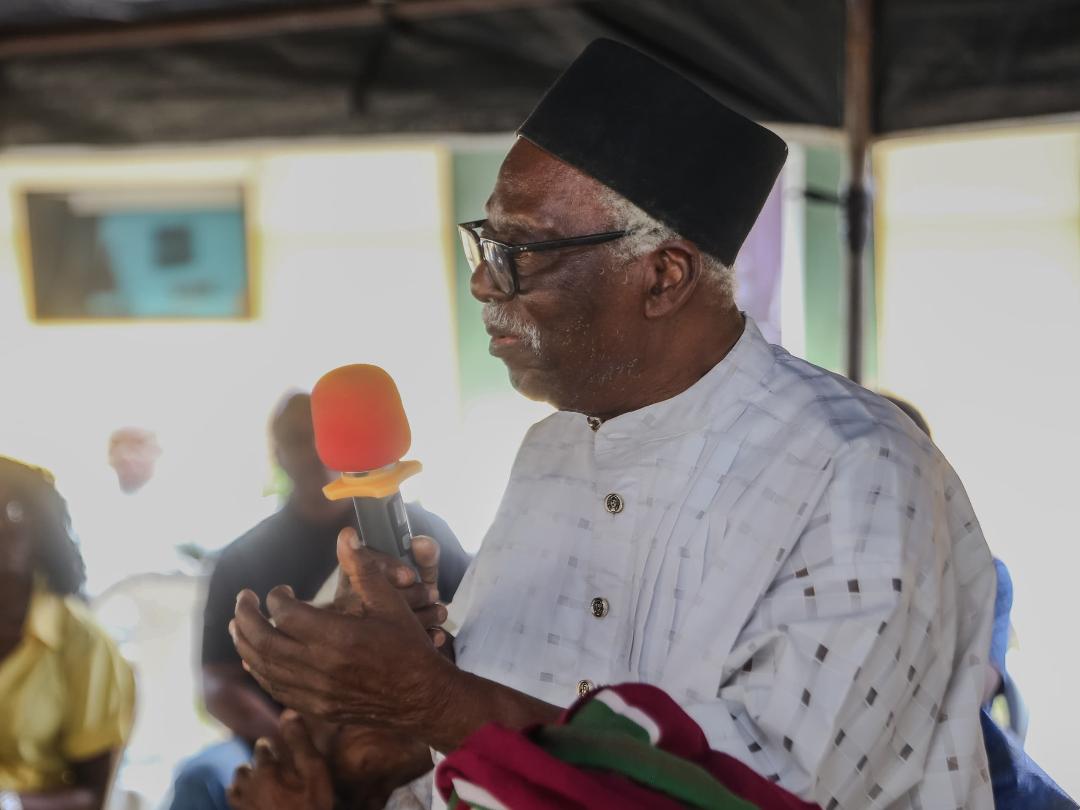
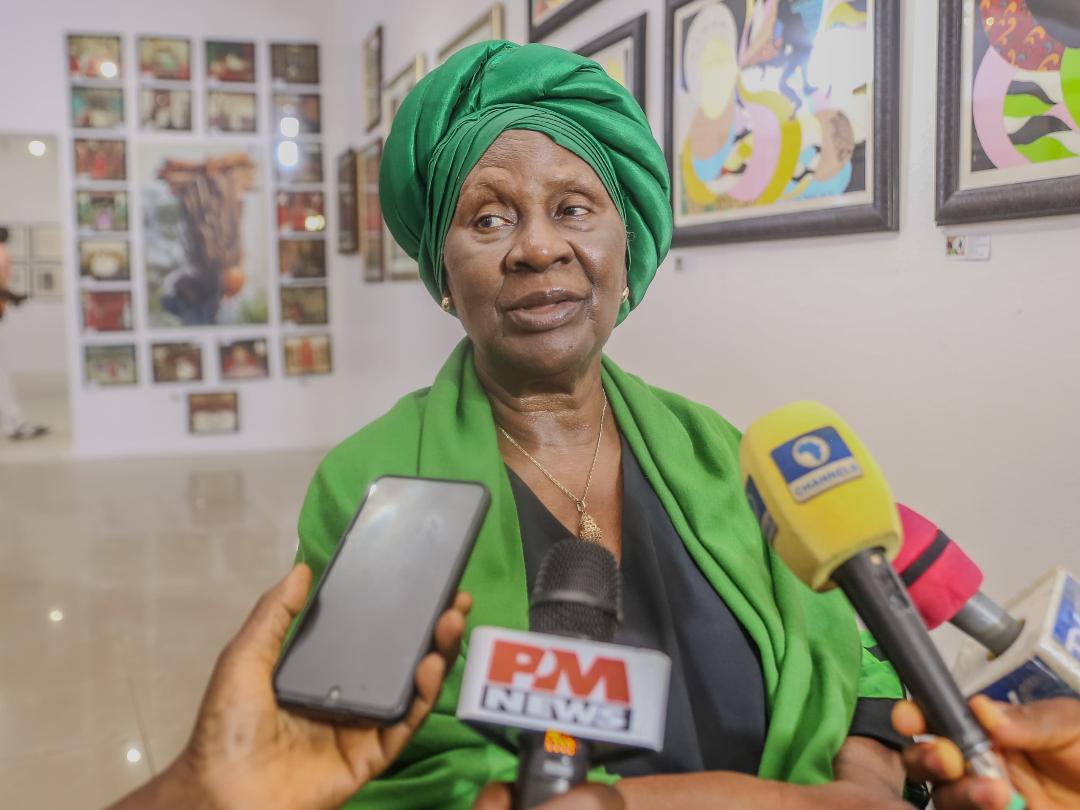
In her speech on the opening day of the exhibition, Ebun thanked the guests for attending the event. She also expressed her appreciation to the organizers, curators, sponsors, and members of her family for making it possible.
She said that though her art journey began in 1964 while she was a teacher of drama at the University of Ibadan, she actually started collecting Onobrakpeya’s works after relocating to Lagos. She and her husband, the late Prof. J. P. Clark, visited the artist—who was his friend—at his studio in Mushin, Lagos, in December 1965. According to her, she bought three prints from the artist, whom she affectionately calls Papa Bruce, at three pounds each.
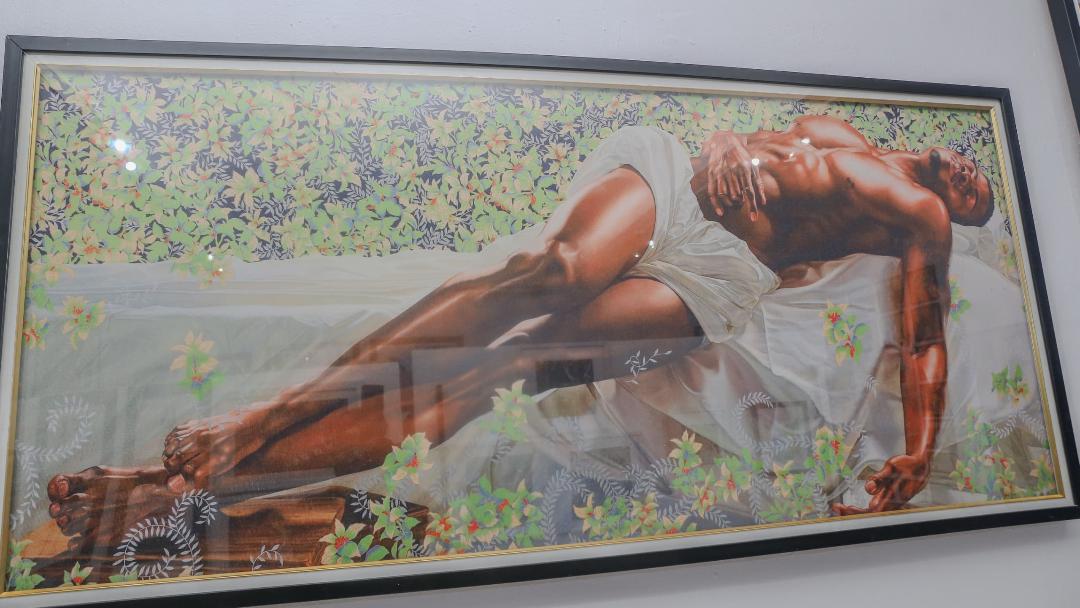
“He wasn’t a professor then. We were all very young. He went to the studio, and that’s how I started really the massive collecting that you’re going to see. This is just some selection of prints. And I want to show young collectors you don’t always have to buy paintings. Prints are also beautiful. You can see now, around you.
“And a lot of people don’t think that prints have their own complications, their own beauty. You can see it yourself. Look at the woodcut over there. Can you see the woodcut over there? That is very difficult to do. Where I cannot show it through Papa Bruce, I then provide the prints he has not provided through my collection, through another printer,” Ebun enthused.
The renowned academic also took time to stress the importance of prints. “I started with masks and antiques when I was teaching at the University of Ibadan School of Drama. And I bought masks. But when I came to Lagos, I started with prints.
“So, young collectors, it’s a very good way to start collecting. It’s a lot cheaper than paintings and sculptures. Although I hear prints are very expensive nowadays, I want you to be conscious of the different types of prints that are in existence. And I want you to be conscious of one major point: that the printer is as important as the artist. When you go to a printer to print, it’s as important as the artist.
“You don’t have to be rich to collect. It depends on how well informed you are. A collector who is interested but doesn’t have the funds can stick with prints. And even design art has its own feel. There are some very well-known artists who do design art. They move from the mainstream to design art and sell it cheaper.”
When asked why she decided to exhibit the works now after collecting them for six decades, Ebun said, “Age has to do with it. I’m no longer young, and I want to share what I’ve been quietly collecting for more than 60 years, because I really started in 1964.”
She also said her interest in the arts started when she was young, adding that she is a trained theatre artist and more of a scholar than a practitioner. “So that’s why I’m not known in Nollywood. But I taught some of those in Nollywood. Then I went to the Department of English, University of Lagos. That’s where I grew my career. So I’m really a professor of English, not a professor of theatre arts,” she said with her characteristic sense of humour.
However, Onobrakpeya, the master printmaker whose prints were being showcased at the exhibition, thanked Ebun for celebrating him and his works and for giving him the confidence to move forward as an artist. “I want to say I am very grateful for this honour. The confidence of moving forward and creating over these years comes from her (Ebun) and her husband—young people in the 60s who made sure we got a university to teach in,” Onobrakpeya noted.
Onobrakpeya also highlighted the fact that Ebun collected his art when he was still a struggling artist and wasn’t famous. “I’m grateful you gave me the confidence to move forward. Although she says she collects artists who are already known, she actually collected me when I wasn’t known at all.
“This is where I want to appeal to everybody. Please, adopt an artist. Adopt a person. Make that artist grow. When the artist grows, the growth and the fame touch everybody. And it touches the country. I want to thank everyone here. I want to thank the organizers of this exhibition. I am grateful to the sponsors. I am grateful to the artists who continue to work on the arts,” Onobrakpeya said.
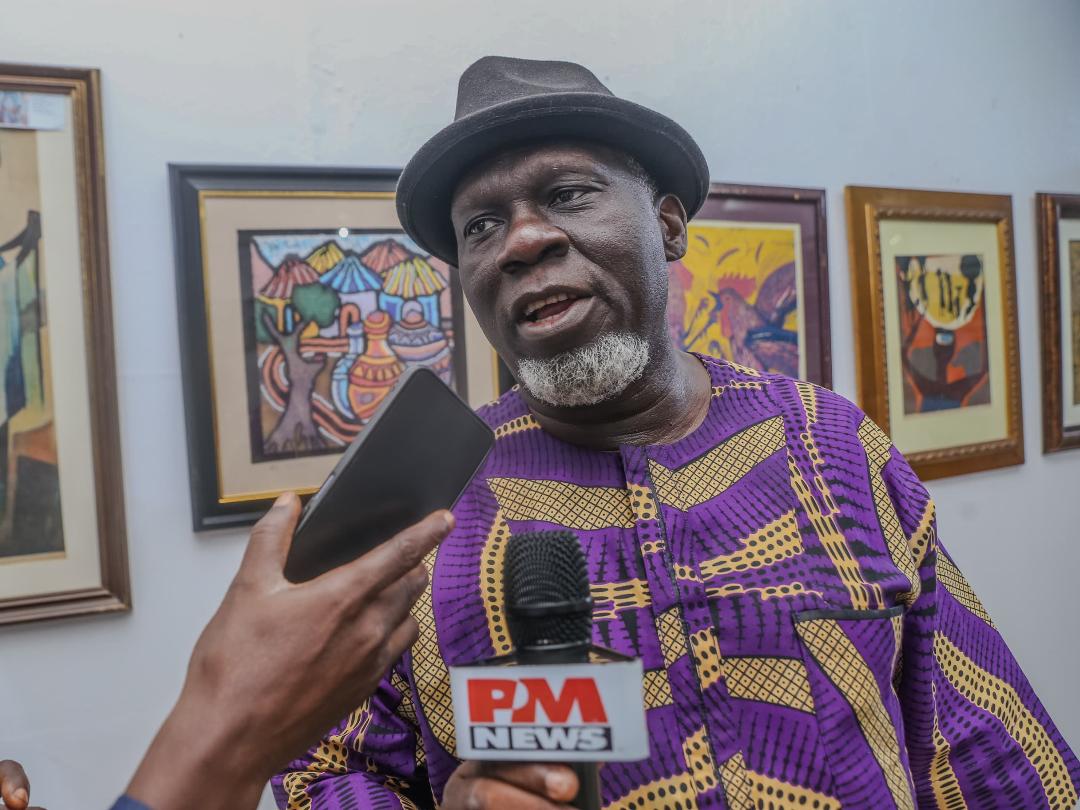
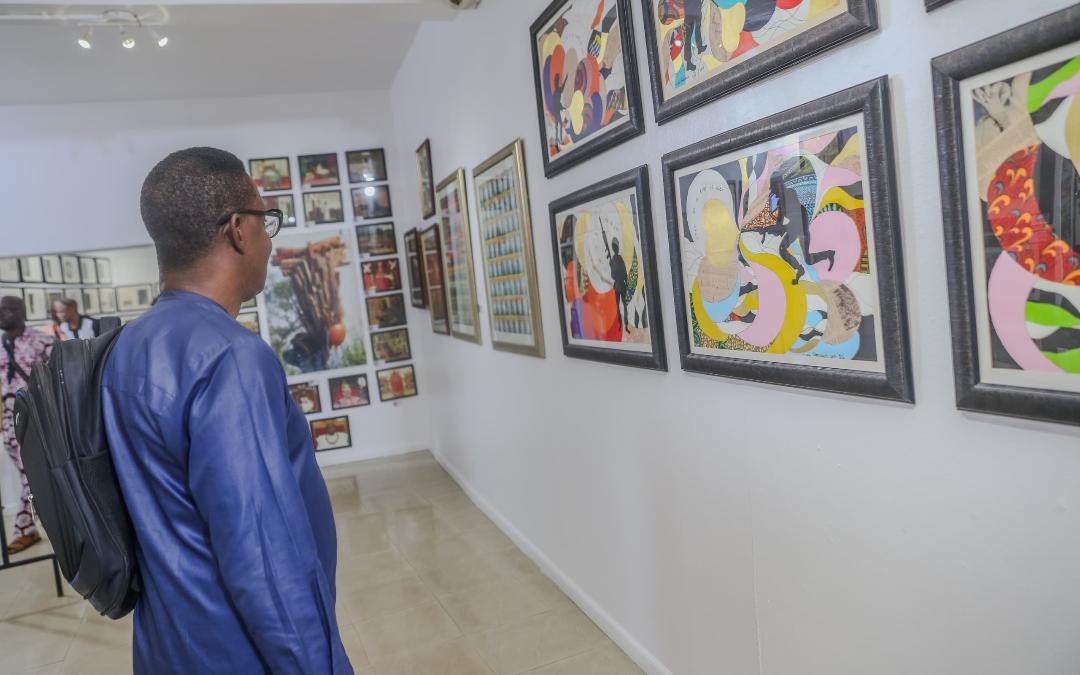
Moses Ohiomokhare, a co-curator of the exhibition, couldn’t hide his joy at seeing the event become a reality. “What you see here is a collection from three continents—Nigeria, Europe, and the U.S. They are works of different artists. I’m sure if you look at them, there are about 105 works in here. In all sincerity, this has taken us six months. Because in the last three months, we’ve had weekly physical meetings, not to talk about the ones we do on the phone before we arrived at what you’re seeing today.
“It wasn’t easy setting up these things. It took us three nights to do all of this that you see, because each one is a masterpiece. And it’s difficult to know where to place each one, but we must place them. And so we have done that.
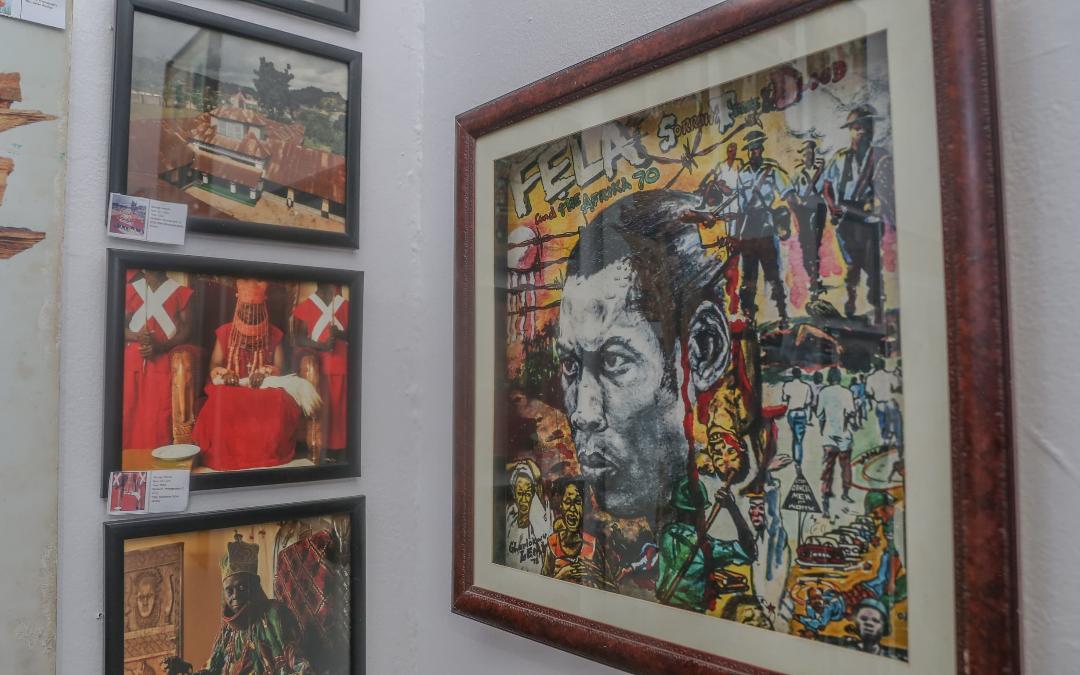
“Prof. Ebun Clark collected all these works you see in the last six decades, and she has decided to show the world what she has been able to gather. It helps to tell a story about what has happened in the last 60 years. And these are prints. It’s also to send a message to the world that prints are original works.
“Some people look at them and say, ‘Oh, photocopy.’ Some look at them and say, ‘These are not what I want. I want the original.’ But each print is an original work. So, the public must understand that. The exhibition is also for education. It’s to help people understand what prints are all about. The printmakers are here in Nigeria today, being led by Prof. Bruce Onobrakpeya.”
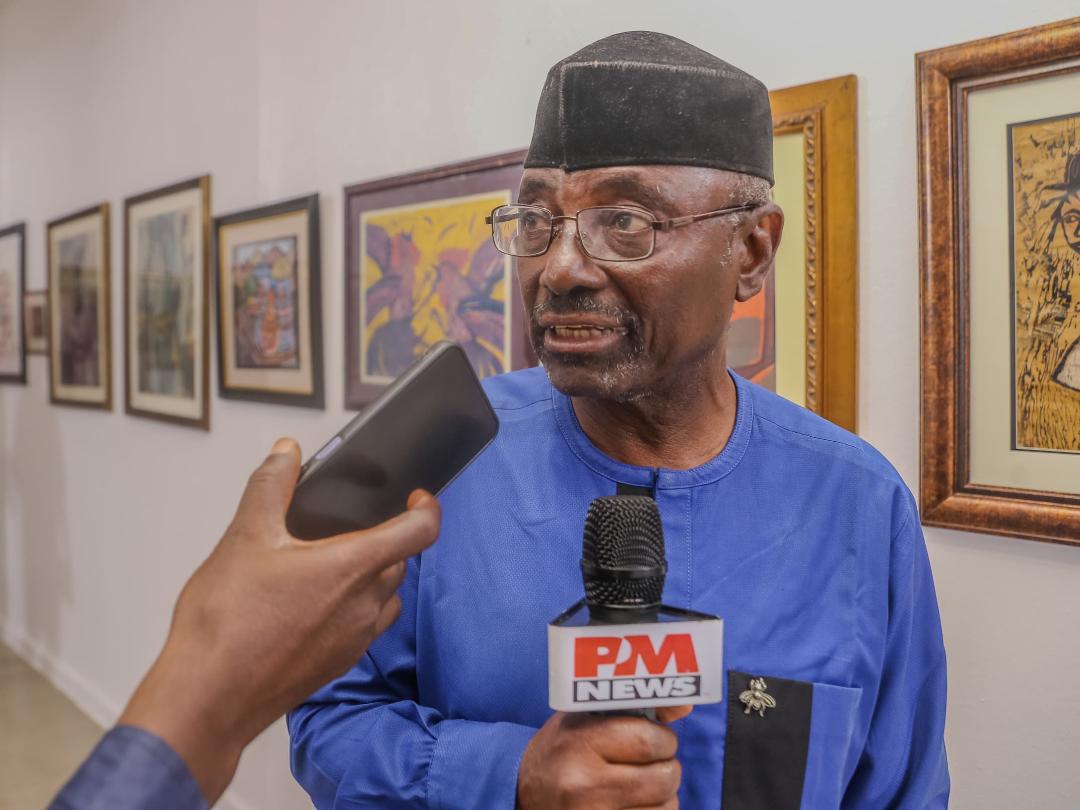
Asked why Ebun decided to showcase the prints she had collected for 60 years, Ohiomokhare said, “It gets to a point in the life of someone when you say to yourself, ‘Well, I’ve enjoyed these works myself. No one else is enjoying them other than my friends and relations.’ Showing these works is to enable the public to understand that there is so much that you probably have missed. This is the National Museum, and the National Museum is a place for monuments. And if it’s a place for monuments, these are monuments. If she’s collected them for 60 years, they are things worth showing.
“It is an opportunity for the world to see what she has collected over time. And it is for education. We are going to invite schools that have small workshops there, so that we can engage young ones and begin to open their minds towards the development of art and see how much they can also contribute to our art of today. Because art is about communication,” Ohiomokhare noted.
Asked again what made the works so special, he maintained, “Like I said, they are masterpieces. And there are stories behind each work the collector has put together. If you look at someone like Prof. Bruce Onobrakpeya, who is being celebrated today, I find that he is a great storyteller. From his works, you begin to see how he has actually elevated not only visual art but also literature and theatre. And he has done so much for that. So that’s one thing you would take away from here.”
Mudiare Onobrakpeya, artist and another co-curator of the exhibition, described it as second to none. “Prof. Ebun Clark is clearly a cultural academic, an Ogunde scholar, and I think she has followed very closely the development of modern Nigerian art, starting with people like Prof. Bruce Onobrakpeya, whom she started collecting as far back as 1965.
“In addition to that, she is an informed collector, which means that she has carefully tried to document every phase of our development since independence. And what that translates to is that a lot of very important artists are represented in this collection, which she has basically put together over the last 60 years. But of course, it’s a passion of love,” Mudiare averred.
Mudiare also described the exhibition as a triumph of modern Nigerian artistic history, adding that Ebun surpassed his expectations.
“But quite clearly, she has surpassed my expectations. She is a great collector, to say the least. Collecting is like drinking champagne—you don’t acquire the taste overnight. It’s not a sprint. It’s a marathon. And over the years, her collection has fed from one another. If you notice, there’s a story here. And may I just say that this is even just one small part of her collection. Her collection is easily four, five, six times this, or even more. Now, there’s a story. She has carefully curated this story.
“And her exhibition is some kind of historical narrative of the development of Nigerian art. Every generation of Nigerian artists is represented. Every gender of Nigerian artists, male or female, is represented. And as far as I’m concerned, this collection is second to none. It’s certainly a priceless collection. I don’t think there’s anywhere in the world you will see such an extensive collection of prints.
“I want to say that it’s easy to see these works as works of masters or great artworks. But because of her eagle eye and attention, when she was collecting, some of them were not yet masters. In fact, some of them were so ordinary that nobody was looking. So she has given us a lesson in patience and endurance. The artist must wait on time to develop knowledge about his work. It doesn’t happen overnight.
“You may be greatly talented, but talent sometimes is not enough. These works need to be exposed, like they have been exposed for over 40 years. And then gradually, the beauty in them will begin to show through. The comments and narrative they have will begin to show through. And that’s the victory or the triumph of this exhibition. It is the triumph of modern Nigerian artistic history. It didn’t happen overnight,” Mudiare maintained.
Juliana Edewor-Izegbu was also full of praise for Ebun, whom she described as her very good friend, highly intellectual, and one of the foremost art collectors in Nigeria. “We both collect—that’s how we actually became friends. We discuss the arts, Nigeria, international. We debate, we argue, we just talk about art generally. And she’s, I would say, one of the foremost collectors, even though you might not know it, in Nigeria; and also one of the biggest intellectuals when it comes to art history and African art.
“It’s an amazing collection. I will tell you this because I am just returning from London. I went to see the Tate Modern’s Nigerian Modernism, which was an amazing show. But I’m not exaggerating—this show, in particular, surpasses my experience because it took us right from the start, the very beginning of art, to the present. Moreover, it’s introducing us to the print world, which is just as vital as the actual originals.
“My takeaway is phenomenal, which, of course, you are seeing prints from the very beginning to present-day art in Nigeria through the print world. So I must say thank you to Professor Ebun Clark, an amazing and intellectually intelligent collector of the arts. You must see her actual collection—nothing to do with prints. It’s very expansive,” Edewor-Izegbu said.
And as guests took a walk around the exhibition, they could not but affirm that not only did the prints tell the story of modern Nigerian art, the experience was indeed surreal and unforgettable.
Leave a Reply