

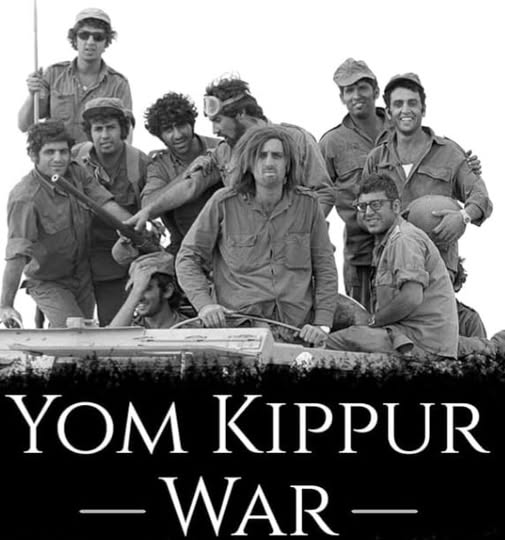
On the 6th day of October 1973, the silence of Yom Kippur was shattered by fire. As Israel prayed and fasted, Egyptian artillery opened up along the Suez Canal, while Syrian armor surged across the Golan Heights. The attack was sudden, coordinated, and devastating. Israeli soldiers, summoned straight from synagogues, rushed half-prepared into battle. Within hours, positions thought impregnable collapsed. The Bar Lev Line along the canal crumbled, and on the northern front, Syrian tanks pushed deep into the Golan. For the first time since its birth, the State of Israel stood on the brink of annihilation.
The roots of this moment reached back to 1948. When Israel declared independence, its Arab neighbors launched a war to strangle the newborn state. Instead, Israel not only survived but expanded its territory, a humiliation that scarred Arab pride. Nineteen years later, in the Six-Day War of 1967, Israel crushed Egypt, Syria, and Jordan in less than a week, seizing the Sinai, Gaza, the West Bank, and the Golan Heights. What Arabs remembered as al-Naksa—the “setback”—Israel celebrated as proof of strength. But Egypt’s Anwar Sadat and Syria’s Hafez al-
Assad saw only unfinished business. Honor demanded revenge, and land demanded liberation.
The war began as a masterstroke of deception. Sadat prepared his army with Soviet arms and bold new tactics, concealing his intent until the holiest day in the Jewish calendar. Egyptian infantry stormed across the Suez under a barrage of missiles that neutralized Israel’s air force and tanks. On the Golan, Syrian divisions nearly broke through to the Galilee. For days, panic gripped Israel. Prime Minister Golda Meir later confessed she believed the nation itself was at risk of being overrun. America airlifted weapons in desperation, while Israel mobilized every last reserve, summoning fathers, sons, and brothers to defend the homeland.
Then the tide turned. Israeli counterattacks on the Golan stemmed the Syrian advance, and by the second week, Syrian forces were pushed back almost to Damascus. In the Sinai, General Ariel Sharon led a daring crossing of the Suez Canal, encircling Egypt’s vaunted Third Army. From humiliation, Israel clawed its way to triumph—bloodied but unbroken. By the time the ceasefire came, Israeli troops stood on Egyptian soil in Africa and within artillery range of the Syrian capital.
The cost was staggering: more than 2,600 Israelis killed, alongside tens of thousands of Egyptians and Syrians. Israel had prevailed, but the price of victory was the shattering of illusion. No longer could the nation believe in its own invulnerability; the war proved that even a single day of complacency could bring it to the brink of destruction. For Arabs, the war was no decisive triumph, yet it restored a sense of honor, showing that Israel could bleed and falter.
For Israel, the knowledge that survival had been preserved only by desperate sacrifice and American resupply was a searing reminder of how narrow the margin of safety truly was, surrounded as it was by hostile neighbors.
The political aftershocks were just as profound. In Israel, the trauma of October 1973 forced Prime Minister Golda Meir from office, as the nation demanded accountability for the blindness that left it so exposed. In Egypt, Anwar Sadat, having tasted both the pride of crossing the canal and the agony of seeing his army trapped, turned to diplomacy. He sought peace with Israel, and at Camp David he would secure the return of Sinai.
Yet in doing so, Sadat broke with the will of much of the Arab world, where peace was seen as betrayal. In 1981, the price was exacted: on a reviewing stand in Cairo, soldiers turned their rifles on the president who had made peace, gunning him down before his nation.
The lessons were learned: Israel must remain forever hyper-vigilant, and any Arab leader better be careful before seeking peace with the Jewish state. The Yom Kippur War had ended on the battlefield, but its political reverberations reshaped the Middle East to this day.
*Story published by Pivotal Historical Moments fan



Leave a Reply