

Abdullahi Hamza
You are taught to see Christianity as a European export, a colonial artifact carried south on the hulls of ships and the pages of foreign bibles. This is a deep historical blindness. The truth is, before Christianity ever crowned a Frankish king or convened a council in Rome, it had already put down deep, unshakable roots in African soil, where it developed a character so resilient it would outlast empires.
This story begins not with missionaries, but with minds. The theological bedrock of all Christendom was poured by African theologians. Tertullian of Carthage, a lawyer turned polemicist, first coined the term Trinitas—Trinity—giving the world the language to articulate God’s threefold nature. Origen of Alexandria, perhaps the most prolific intellectual of the early church, established a school of scriptural interpretation that married Greek philosophy with Hebrew scripture on a scale never before attempted. And Athanasius, the fiery bishop of Alexandria, defended the doctrine of Christ’s divinity against the entire Roman world, ensuring the core of Christian belief remained intact. These were not peripheral figures; they were the architects of orthodoxy itself.
But the most enduring testament to African Christianity is its monastic revolution. In the deserts of Egypt, a radical movement began not with scholars, but with fugitives. St. Anthony the Great, an illiterate Coptic farmer, fled to the desert to pursue God in solitude, inadvertently founding Christian monasticism. His disciples, Pachomius and others, organised these solitaries into the first monastic communities, creating a rule of life that would eventually structure religious orders from Ireland to Tibet. The desert, far from being a barren wasteland, became a laboratory of the human spirit, where the disciplines of prayer, asceticism, and communal living were refined to a razor’s edge.
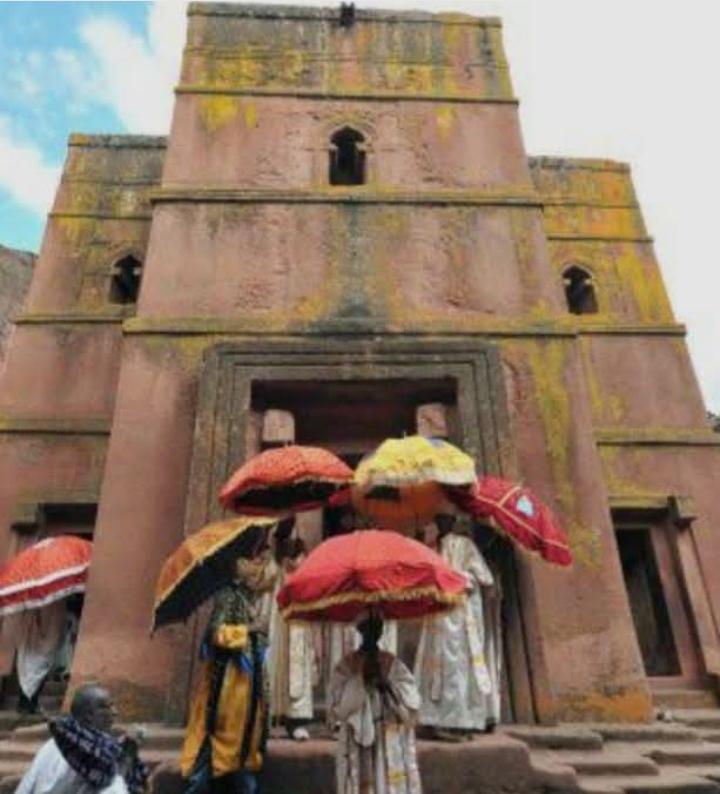
This church did not merely contribute; it thrived independently for centuries under relentless pressure. The Coptic Church of Egypt and the Ethiopian Tewahedo Orthodox Church developed rich, distinctive traditions, their own liturgies, art, and theological emphases long isolated from Rome by the rise of Islam. Their survival is a masterpiece of cultural endurance. The Ethiopian church, in particular, forged a unique identity, preserving ancient Jewish practices and claiming the legendary Ark of the Covenant within its most sacred chapel.
When you witness Christianity in Africa, do not see a borrowed faith. See a homecoming. See the return of a river to its original source. The African church was never a passive recipient; it was a foundational pillar, a creative engine, and a stubborn keeper of the flame through a thousand years of silence from the West. Its history is a powerful corrective; Christianity has never been a white man’s religion. It is a global story, and its first, most innovative chapters were written not in Latin or Greek, but in Coptic, Ge’ez, and the silent, determined resilience of the African heart.



Leave a Reply