

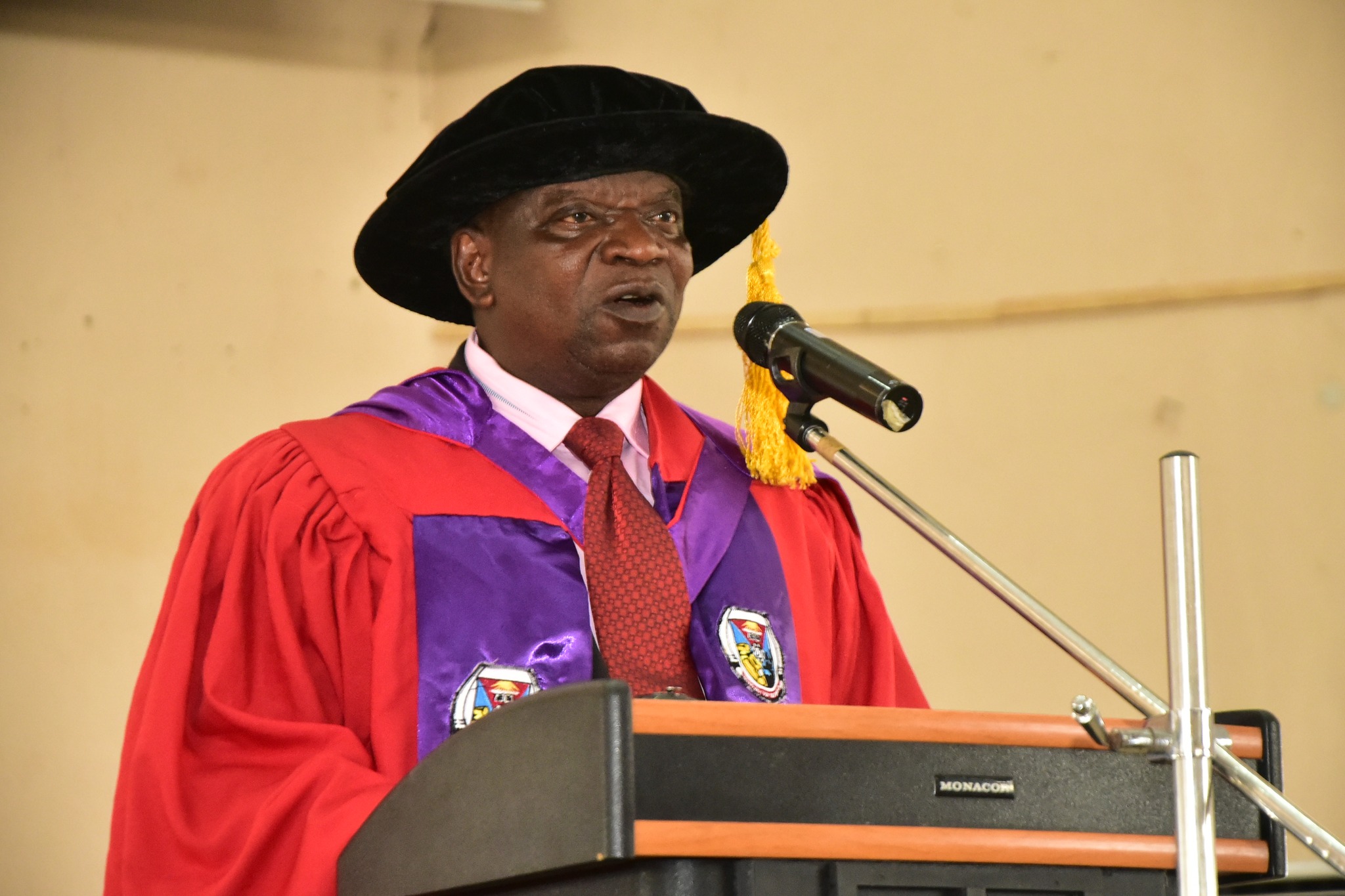
“Despite Nigeria’s vast landmass of over 900,000 square kilometres, land is becoming increasingly difficult to access and use effectively”. The problem, according to Bamidele Ogunleye, a Professor of Urban Land Use, Housing and Spatial Analysis at the Federal University of Technology, Akure, FUTA lies not in physical shortage but in poor governance, insecure tenure, weak institutions, and inequitable distribution. This paradox of abundance amid scarcity was the centre of the University’s 185th Inaugural Lecture delivered by the Professor on Tuesday, September 9, 2025, at the Obafemi Awolowo Auditorium on the topic “Land: Abundant Yet Scarce.”
Professor Ogunleye declared land the “bedrock of every modern economy” because no activity, whether agriculture, housing, commerce, or infrastructure, takes place without it, yet, in Nigeria, land has become a source of exclusion, conflict, and inefficiency. He traced this crisis to overlapping statutory and customary systems, speculative markets, compulsory land acquisitions without fair compensation, and socio-cultural restrictions that limit access—particularly for women and youth. Farmlands, he observed, are being rapidly converted into residential and industrial estates, displacing communities and threatening food security. Quoting projections from the National Bureau of Statistics and Intelpoint, he noted that Nigeria’s urban population is expected to exceed 56 percent by 2035, with an average household size of more than five persons, intensifying competition for land.
Professor Ogunleye explained that scarcity of land in Nigeria is less about physical deficiency and more about governance, accessibility, and sustainability. He cited his research on residential land value trends in Akure, which showed a consistent rise in value over 15 years, especially in low-density areas, underscoring both its wealth-creating potential and the risks of speculation. Beyond economics, he emphasized that land is also a cultural, spiritual, and communal resource. Reflecting on African philosophies, he noted that land is often regarded as a trust held for both the living and the unborn, stressing that “when land is viewed as a common, sustainability becomes a moral obligation, not just an ecological necessity.”
To reverse the trend of functional scarcity, he called for urgent reforms in land governance. His recommendations included transparent and affordable land titling, harmonization of statutory and customary tenure systems, modernization and decentralization of land administration with GIS, blockchain, and mobile mapping, inclusive land-use planning and gender-sensitive policies, fair compensation for displaced groups, and integration of climate adaptation, food security, and urban safety into policy frameworks. He also emphasized the promotion of cooperative housing, youth entrepreneurship, and fair taxation in land-based ventures. According to him, “land in Nigeria is not neutral; it embodies values, equity, and future direction. It can either perpetuate exclusion and conflict or serve as a foundation for peace and shared prosperity to erase the paradox of abundance amid scarcity as it is man-made and reversible, though it will require courage, innovation, and collective action.”
He further recommended the creation of a national land observatory to gather real-time data on land use, availability, and disputes. Such a system, he explained, would not only improve transparency but also provide a scientific basis for planning and conflict resolution. By leveraging technology and reliable data, Nigeria can avoid arbitrary acquisitions, strengthen accountability in land transactions, and prevent speculative distortions that currently worsen inequality.
He also highlighted the importance of engaging all stakeholders—government authorities, traditional leaders, civil society, and private actors—in decision-making processes to ensure policies are inclusive, context-sensitive, and sustainable. By promoting collaboration and shared responsibility, land management can better reflect both modern governance standards and local realities, fostering fairness, stability, and equitable access.
In her remarks at the Lecture , FUTA Vice Chancellor, Professor Adenike Oladiji, commended the lecturer for his depth of scholarship and practical solutions. She urged government, policymakers, and development partners to take his recommendations seriously, stressing that they offer actionable pathways to improve land governance and unlock its potential as a driver of inclusive growth. She also charged students and researchers to serve as change agents, using their knowledge and skills to champion sustainability, equity, and responsible land management for Nigeria’s future.
Professor Oladiji further emphasized that FUTA, as a leading University of technology, will continue to create platforms where pressing societal challenges are interrogated and workable solutions are proposed. She said the institution remains committed to producing knowledge and innovations that will not only address Nigeria’s immediate developmental needs but also position the nation for long-term competitiveness in the global economy.

Leave a Reply