

By Folorunso Fatai Adisa
“A child who learns in dignity grows to lead with purpose. Education is not charity, it is justice, and every classroom is a vote for the future.” — Folorunso F.A, 2025
One of the quiet tragedies of Nigeria’s development journey is how education, the very foundation of national progress, has often been sidelined. While speeches are made and summits held, the average public school child sits in a leaking classroom, with broken chairs, absent teachers, and no real hope of academic or social mobility. It is in this context of long-standing neglect that Kwara State’s latest move stands out, not just for its budgetary weight, but for the clarity of its vision.
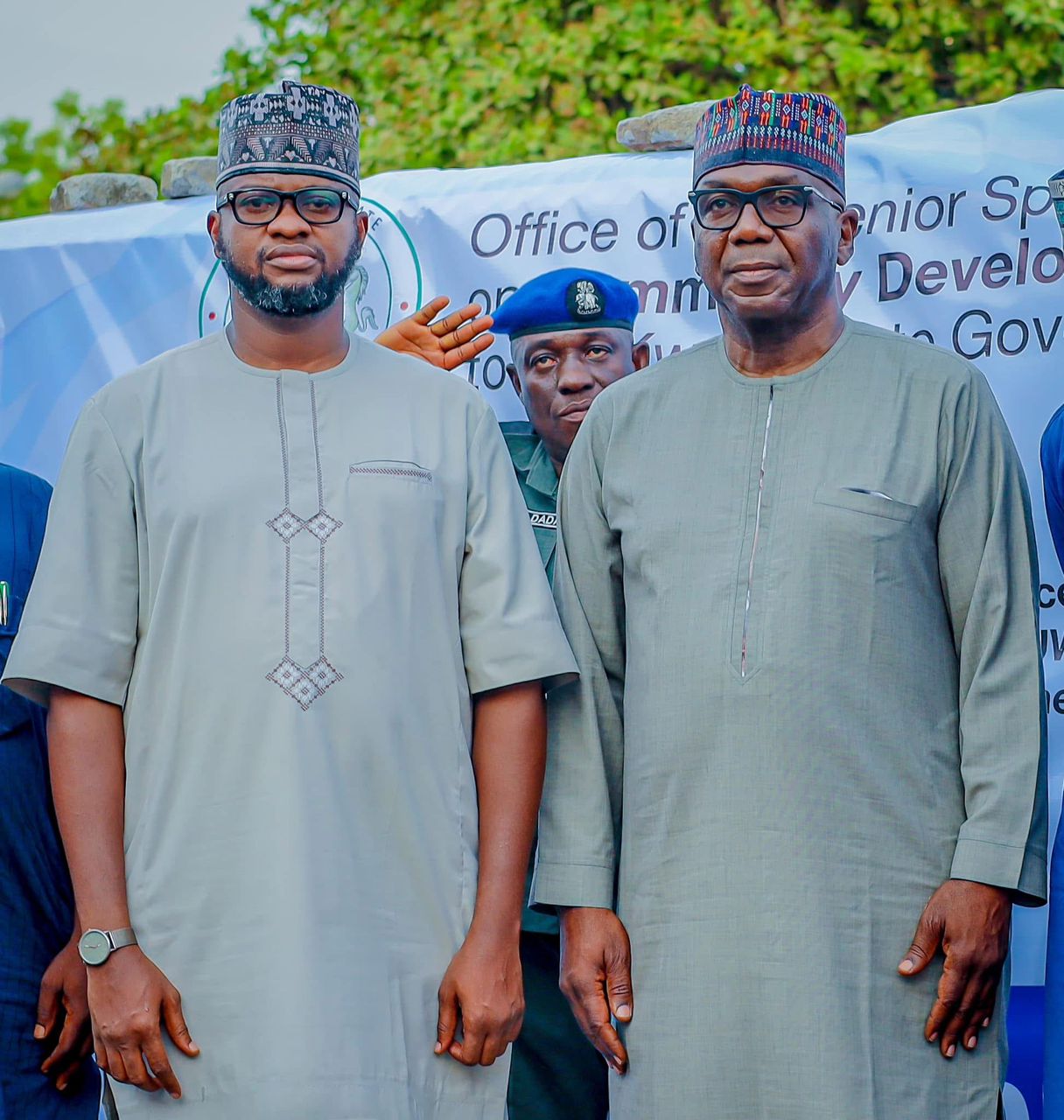
Governor AbdulRahman AbdulRazaq’s approval of ₦20 billion to revamp school infrastructure is not merely an administrative decision; it is a declaration of values. It signals a shift from the politics of palliatives to the ethics of investment. The allocation, included in the supplementary budget, reinforces the administration’s earlier commitments to education, particularly since 2020 when Kwara restructured its relationship with the Universal Basic Education Commission (UBEC) and reopened access to long-denied funding.
This is no isolated gesture. Since assuming office, the AbdulRazaq administration has renovated or rebuilt over 1,254 classrooms. The new ₦20 billion injection will now scale up those efforts, expanding laboratory facilities, modernising sanitation systems, and providing safer, more dignified spaces for children across the state. According to the Commissioner for Education and Human Capital Development, Dr. Lawal Olohungbebe, designs for the new projects are already in progress. What is being rolled out is not a future promise but a present action plan.
More compelling, however, is the administration’s approach to continuity. In a nation where projects are often abandoned the moment a new government takes office, Kwara has completed school interventions dating back to 2014. This act of political maturity is deeply significant. It suggests that for once, governance is being treated not as a personal fiefdom but as a shared civic duty, a relay race, not a one-man sprint.
Quality school infrastructure does more than create comfort. It fosters learning, motivates teachers, and restores a child’s sense of self-worth. A well-lit classroom is not just a space. it is a message. It tells a child that their future is taken seriously. It tells parents their sacrifices are seen. It reminds teachers that they are professionals, not afterthoughts. These things matter deeply in a country where dignity is often in short supply.
In purely developmental terms, Kwara’s investment has multiplier effects. It reduces dropout rates, boosts enrolment, and enhances gender parity. It contributes to health outcomes and improves community morale. But even above metrics, it does something even more vital: it restores faith. Faith in the idea that government can still work for the people. Faith in the notion that education is not just a line item in a budget, but the engine of our collective advancement.
This is why other states must pay attention. At a time when many leaders are caught in the optics of performance, building flyovers where books are needed, chasing headlines over substance, Kwara is quietly reshaping its future by investing where it matters most. In the classrooms. In the minds. In the long-term capacity of its people.
Yes, there is still work to be done. Gaps remain. But with each renovated classroom, Kwara chips away at a legacy of abandonment. It pushes back against the rot and cynicism that have defined Nigerian education policy for too long. And in doing so, it gives us a glimpse of what is possible when leadership meets purpose.
The lesson here is not just for governments. It is for all of us who believe that progress must be visible, not only in skylines and stats, but in the eyes of a child who now learns with pride, not shame. If we are to move this nation forward, then we must begin where futures are made, with teachers, with chalkboards, and with the courage to build schools that outlast election cycles.
Kwara is building more than walls. It is building futures, brick by brick, child by child. That is the legacy that outlives any election cycle.
Folorunso Fatai Adisa is a writer, communication specialist, and media scholar. He holds a Master’s degree in Media and Communication from the University of Strathclyde, Glasgow. He writes from the United Kingdom.
Leave a Reply