

By Ademola Adegbamigbe
Every genius, in the arts and sciences, has his or her own eureka moment, a burst of epiphany or what some people call period of serendipity. It is the moment when you suddenly understand something important, have a great idea, or find the answer to a problem. Albert Einstein, the German-born Jewish theoretical physicist who was best known for developing the theory of relativity; Benjamin Franklin who was most credited with discovering electricity; Michael Faraday the English physicist and chemist who contributed to the study of electromagnetism and electrochemistry and Archimedes, an Ancient Greek mathematician, physicist, engineer, astronomer, and inventor from the ancient city of Syracuse in Sicily all experienced this phenomenon.
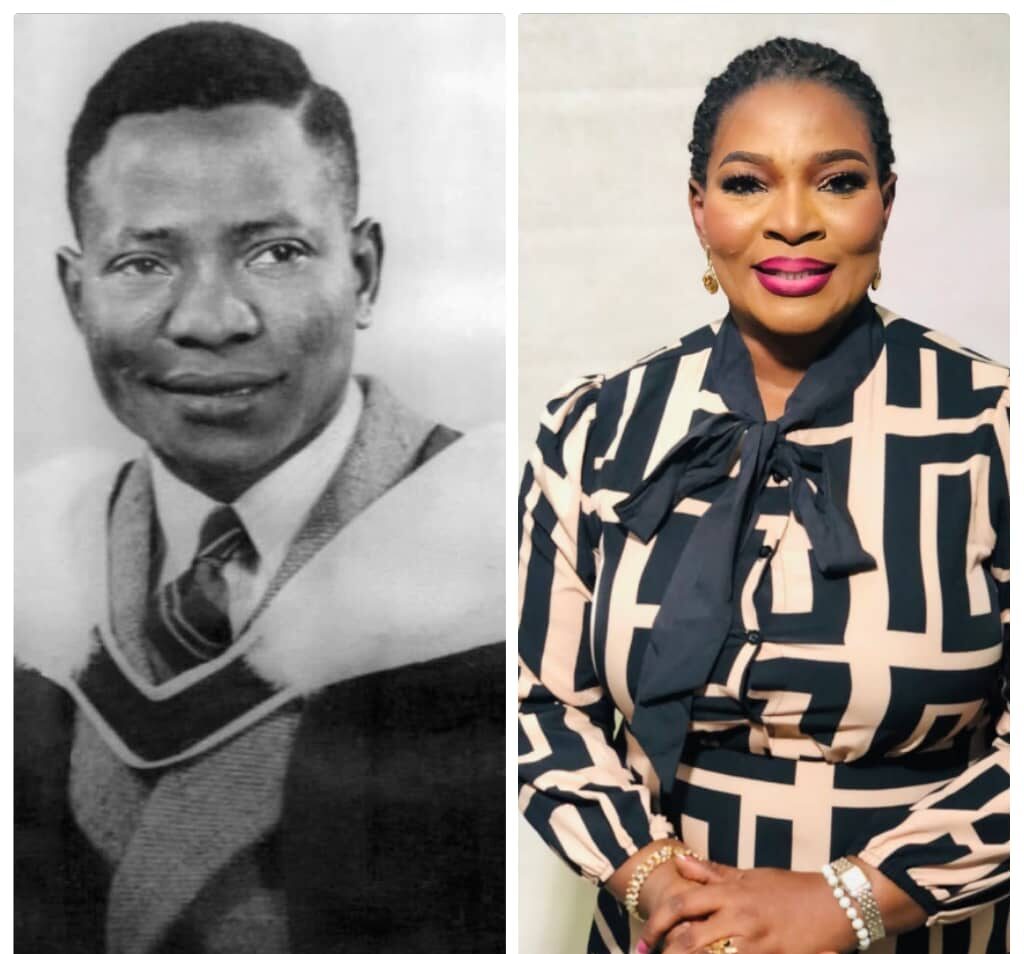
Professor Sanya Onabamiro, a Nigerian zoologist and copepodologist ( one who studies copepods, those tiny crustaceans that live in water) who researched the transmission of Guinea worm disease, found his own serendipity in a small stream in Ago Iwoye. The people of the town, according to his daughter, Miss Onabanke Onabamiro, observed that he would just stand up suddenly and leave the church every Sunday when coincidentally the Vicar was just about to preach the sermon. There was a rumour milling about him that he must be a wizard and couldn’t stand the chastening of the fire of the Holy Spirit through the Vicar’s sermons!
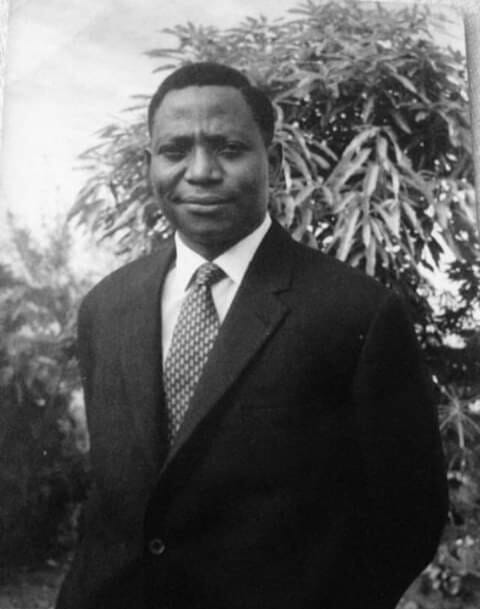
However, as his daughter narrates further, that was the same time that he had to be at the stream for crucial observations and the results of his findings were those new species of Guinea worm Dracontiasis Onabamiroi (named after him directly) and Trycocyclops Iwoyensis (named after his hometown of Ago Iwoye).
As contained in his profile provided by the family, Professor Sanya Dojo Onabamiro was born on 24 May 1913 in Ago-Iwoye, now in Ogun State. He was the only surviving child out of all the nine children by his mother. Through his mother’s zeal and efforts towards his education, he attended eight primary schools and afterwards continued with his education up to the tertiary level at the Yaba Higher College in Lagos State. He was lucky to be awarded a scholarship by the Federal Government of Nigeria, with which he travelled to England to study Zoology at the University of Manchester where he graduated with a 2:1 in 1947. He then immediately proceeded to Oxford University for his Masters in Education and thereafter obtained his PhD degree in Parasitology, the ph.D which was awarded to him by the University of London (by this time he was a research assistant under Kenneth Melamby the first Principal of the University College of Ibadan, which college was under the University of London then. UI would then go on to become an independent university in 1963).
The family record shows further that Professor Onabamiro “was the first black person to be awarded a PhD from a colonial university, and he went on to put the stamp of his name in the scientific hall of fame when he discovered new species of the guinea worm named in his honour which are the: Dracontiasis Onabamiroi (named after him directly) and Trycocyclops Iwoyensis (named after his hometown of Ago Iwoye). As an academic, there is no doubt whatsoever that he made his mark on the scientific field of study.”
“As his brilliance shone brightly, through his academic exploits, he would bear that mark of excellence on several educational roles that he undertook for his country Nigeria. He was the second Minister of Education in the old Western Region, where he helped to foster the Free Education program, was on the boards of WAEC and JAMB, was Principal of the Federal School of Art and Science in Ogoja, and until his death on the 11th of February 1985, was the Chairman implementation Committee, National Policy on Education. Professor Onabamiro together with six other full members (two were foreigners from UNESCO), and five ex-co members, had drawn up the 6-3-3-4 system of education, a curriculum which can still help shape the Nigerian Educational System for good if it is practised properly. His influence on the Nigerian educational system is highly applaudable.”
He was married to the late Mrs Mabel Folabi Onabamiro (nee Osiyemi) and had 15 children (from 4 mothers). Only nine of his children survive to this day and they are: Professor Mrs Modupe Onadeko, Mr Segun Onabamiro, Mrs Onayemi Onabamiro Adekoya, Mr Omotayo Onabamiro, Mr Ayodabo Onabamiro, Miss Enitan Onabamiro, Miss Onabanke Onabamiro, Mr Olamitunji Onabamiro and Mrs Olubukola Onabamiro Ogunkoya.
He died on the 11th of February 1985, 40 years ago.
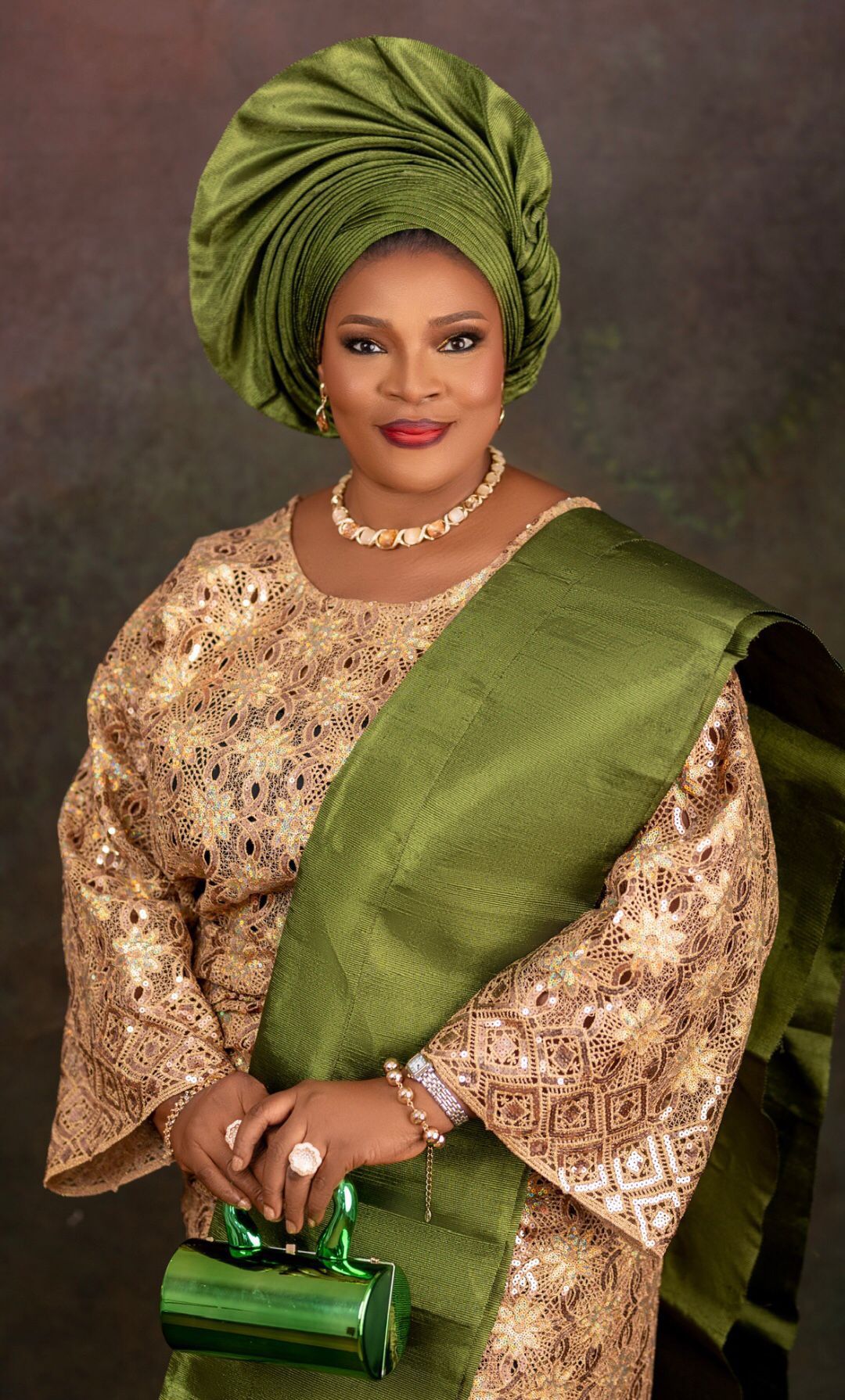
What we are doing to immortalise our father, Professor Sanya Onabamiro- Daughter, Onabanke
Miss Onabanke Onabamiro is the 12th of the 15 children of Professor Sanya Onabamiro. Born on 4 October 1967 in Ibadan at Ajike Nursing Home now the location of The Dental Center, opposite the UCH, she first attended Methodist Primary School but later changed to the Polytechnic Staff School, Ijokodo, Ibadan. She St Louis Girls’ Grammar School but changed to FGGC Sagamu. In that same pattern, she entered the Ogun State University to read English but transferred to the University of Ibadan where she graduated in Communication and Language Arts. She obtained her PGDE from the same university and has been working as an English Language/Literature teacher in Oyo State Schools for 27 years.
She is currently a Vice Principal (Academics) at St Estate High School, Basorun Akobo, Ibadan. She engages in volunteer charity work for Oyo State Schools through The Benables Charity and has raised some N9 million in the last three years through donors. She is the Executive Director and the charity was birthed unplanned due to the excruciating needs of Oyo State Schools.
In this (online) interview with Ademola Adegbamigbe, she speaks about the life and scientific exploits of her father who died 40 years ago and the plans they have lined up for his memorial.
Congratulations to your family, the academic community and Nigeria on having a trail-blazing academic like Professor Sanya Onabmiro…
Thank you very much, we were truly blessed to have had Professor Onabamiro as our patriarch.
On 11 February 2025, it will be 40 years since his passage. What are the activities you have lined up for his memorial?
What a long 40 years these have been without our beloved dad! Some activities lined up for this year’s remembrance will include the renaming of the Postgraduate School at the University of Ibadan in his honour, a public lecture and a Memorial Thanksgiving Service, although we are planning a foundation that will provide endowments prizes for a more lasting memorial.
Have you chosen a date?
The dates of these events are to be confirmed soon.
What roles is the University of Ibadan playing in the program?
The University of Ibadan is very much getting involved. I believe that it is the right time for the Nigerian academic communities to take in a fresh perspective as to how we have been doing for these past 40 years and remember the impact that Onabamiro’s golden generation had on the academic landscape of our country. Then we can see how much the standards have fallen and how much we need to reform the system.
The last time that we formally and publicly marked his remembrance in a big way was on his tenth remembrance in 1995, although we always remember him privately, so this 40th anniversary is to give not just his immediate family the opportunity of remembrance, but also some of the important academic institutions that he belonged and contributed to. The family wants the ceremony to be more academic because that is what our father would have liked.
Yes, the University of Ibadan is going to be very well involved. A few years back, the UI Senate had informed the family of the plans to honour him by renaming the Postgraduate College building in his name. However, Covid and the lockdown hindered us. So on the planned date, the ceremony at the PG School will take place followed by a public lecture.
The departments of Zoology and Education at UI are in full participation and we are also expecting a Professor of Zoology from the Lagos State University to participate in the Public lecture, after which will follow the entertainment of guests.
The following Sunday, we will be at our family church in Ago Iwoye for a Thanksgiving Service with a small reception taking place afterwards.
Professor Onabamiro was from Ago Iwoye. Is the Ogun State Government doing anything with you?
On whether the Ogun State Government will participate in this remembrance, I’m sure they will if they get the invitation. My elder sisters and brother will handle that part because they are more influential than me and they can pull crowds. Therefore, I expect to see some dignitaries on that day.
Let us do some flashback here. How did your family cope after your father’s death? Were there challenges with funding your education? That is you and your siblings.
Flashback to the day when he passed away. Wow! My dad’s death was the kind of death that you could call sudden and unexpected because he took ill quite suddenly. He was in Ibadan to see us just about six months before. He had a Commonwealth Ministers of Education meeting in the United Kingdom and he had just travelled to attend when suddenly he got ill and had to be brought back. Before you could say hi, he was gone.
We were all devastated, to say the least. I had so many enquiries that I had wanted to make from him – I like to know things and ask questions- but he was gone and took all the answers to his grave. Information like his eight siblings that died in infancy, etc. you know all the details of them, such details that he only could have told me.
On how the family coped financially after his demise, some of his children were married and already standing on their own feet financially when daddy passed away, but half of us were still young and in school. My siblings and I already lived with our mum, so nothing changed much for us. We had always liked to live with our mum but holiday with daddy, so life just continued pretty much the same. The only thing I missed was the academic drilling that Daddy used to give to us to stir up ambition in us. As his child, on daddy’s watch, you must want to scale the academic ladder and do it very well too. He insisted on that so I missed that.
Your father was a great man. Were there ways his name opened doors for you?
Anywhere an Onabamiro went, doors would just open. You will hear someone say “Are you related to Professor Onabamiro? I really wouldn’t have done it but because of his name….we can never ignore his worth in education, etc” Goodness and favour follow us through his name. I’m proud and very happy to be an Onabamiro because it’s brought blessings that I would otherwise not have got into my life. So many people still remember him and are still in awe of him 40 years later. Even today, people still turn and express admiration for him when they hear my surname, and on such occasions, I think to myself, a good name is better than gold.
Looking back now what were those virtues you learnt from him, which are still helping you today?
He served very well in whatever roles he was assigned and his contribution helped my generation as we can boast that we had quality education, it wasn’t substandard at all. The Federal Government at the time asked him to form a committee that would advise on how to get alternative funding for education. Look for alternative ways of raising money for the vast needs of education. By the time I got to the scene to become a teacher 27 years ago, these values had fallen apart, making me begin on my own to use my private money and raise donors to help support our dilapidated educational system.
If your father were to be alive today, what do you think would have been his reaction to the state of the education sector?
If my father were alive today, he would be bothered about the quality of textbooks or the lack of them at all in the classroom, he would be concerned about teachers’ training being up to scratch, the methods of teaching being obsolete and how effective the relationship between the teacher and students in the classroom is. He would certainly have been appalled by the deplorable conditions of the infrastructure and he would have been taking the government to task on these matters. He would have wanted gifted students to be given federal scholarships to school abroad (for a well-rounded education that would harness their talents better) just like he was granted these scholarships, and on his watch, we would have seen all these things happening for the better.
It can feel like a lone fish in the river of charity work around where I exist because it’s not popular yet, but more needs to be done to bring the standard back to how good and effective it used to be, thanks to the likes of Professor Onabamiro.
You were young when your father died, but were there certain things you discovered about his background when, possibly, you were going through materials in his study? For example, he changed schools seven times…
Yes, about a year ago I came into the possession of his private journal (diary) and that is where I learned more about him. His mother was a devout and very committed Christian and strongly opposed her son’s conversion to Islam as my dad wanted to be at the age of seven. His father didn’t mind and apprenticed their only surviving child to an Alfa. This is the reason I think she quickly took him from Ago Iwoye and put him under the care of her Christian family, so it may be the reason for changing schools seven times. He noted in his journal that his parents divorced but he was a mummy’s boy to boot! He called her “Mother” affectionately.
From his journal, I got a bit more information. He always wanted to get a degree, so after getting what I believe was his NCE from Wesley College, Elekuro, he was encouraged by his friend Stephen Awokoya to improve his academic credentials. You know some people just stopped at NCE, but he was ambitious and very intelligent. So he also like Awokoya went to Yaba Higher College, after which he got a job to teach at Methodist Boys’ High School, Lagos. It was his senior British teachers there at the school who observed that he was brilliant and as yet to have his brilliance harnessed. They helped him get a federal scholarship to Manchester and Oxford Universities, and that he was brilliant he proved right.
His tertiary education started at the Yaba Higher College in Lagos State after which he was awarded a scholarship by the Federal Government of Nigeria, with which he travelled to England to read Zoology at the University of Manchester. He graduated in 1947. Did he narrate to you his experience in England?
My late father was an academic genius, that type of learner with a high IQ, that was what those British teachers saw. Having been given the chance to fledge his academic wings, therefore, the rest would become history. He graduated from the University of Manchester in July 1947 with a 2:1 in Zoology and proceeded immediately to Oxford University for his Masters (in Education) in 1948. In 1949, he applied for his PhD in Parasitology at the University of London (through the University College Ibadan) and was awarded the PhD degree in November 1952, being the first person of colour to bag a PhD from a Colonial University. This and because of his various contributions especially in the area of research in Parasitology is why the University of Ibadan wants to honour him on this 40th anniversary of his passing.
With his PhD degree in Parasitology from the University of London, he proved that he was not an armchair scientist. He applied his knowledge to solving societal problems at a time when guinea worm was ravaging Africa. His Dracontiasis Onabamiroi (named after him directly) and Trycocyclops Iwoyensis (named after his hometown of Ago Iwoye) were proofs. Did he tell you how he stumbled on the findings?
My late father was the intelligent and curious type. Between our family house on Onabamiro Street and my grandparent’s houses at Idode (which was a short distance away and the family walk to), was a little stream. Daddy would normally take a stroll between both locations. On these walks, he would stop and observe the goings on in that stream over and over again and then he observed a pattern of the species in it. Unknown to the people of our village Ago Iwoye, he was on the trail of something and a big discovery was in the offing. They observed however that he would just stand up suddenly and leave the church every Sunday when coincidentally the Vicar was just about to preach the sermon, so there was a rumor milling about him that he must be a wizard and couldn’t stand the chastening of the fire of the Holy Spirit through the Vicar’s sermons. But that was the same time that he had to be at the stream for crucial observations the results of his findings being those new species of Guinea Worms (DRACUNCULUS) that he discovered. The first was named after him as DRACUNCULUS ONABAMIROI, and the other two were named in Ago Iwoye and his friend Kenneth Mellamby’s honour. No no no! He was not a wizard but a good Christian (through his mother’s loving influence) and he loved God. His role as a scientist was being birthed, that’s all. If he had been afraid of the rumour he had stayed to hear the sermon instead, he would have missed out on his big scientific discovery, which has cemented his name in the Scientific Hall of Fame.
Was the research funded by some institutions?
I can’t confirm categorically how he fully funded his research himself, which began with his PhD thesis, but he was already working at that stage of his life. All through his academic life, he was constantly corresponding with his Professors at the Manchester and London Universities. It is very likely that they too had some influence in his research.
Did he always want to be an educationist?
Daddy went on to make his impact in the field of education through various roles from being the second Minister for Education in the Western Region to his role as the Chairman of, the Implementation Committee, National Policy on Education. However, that was an afterthought. According to his journal, he wanted to go into the church first. His mother Madam Matilda Ajibola was the first woman to be baptized into the Methodist faith in our village and she ensured that he attended seven Methodist primary schools so his life had been shaped and influenced by Methodism. However, he complained in his private diary about a lot of politics going on in his church and how when he left two young children (Sister Dolapo and Sister Dupe) with his mother, and he and his wife (my stepmother) went to study abroad, donations were not raised for him to help his young family as they had often been raised for others and he noted their unkindness to his family. At some point, he decided that rather than go into the church and serve and be contending with forces there, that he felt it would be better if he went to serve his country as a Statesman, realizing that education was the key and nobody but yourself could write your destiny for you on that path, so he went for education instead. I think he made the right choice there.
In what ways do you, his family members, want to immortalise his name?
It was in his days that Nigeria still enjoyed a good standard of government-funded education. There were very few if any private schools then. Now there are so many private schools and if you want to get any decent learning for your children, you must pay through your nose. The disparity in the quality of education provided for our children in government schools versus private schools is as far apart as the North Pole to the South. He would have fought tooth and nail to bridge this wide gap and ensure that the basic education provided in government schools is something that we can at least write home about, that is good enough.
One of the ways that his legacy may be more lasting is because I his daughter am walking in exactly his academic path by raising money for schools. I’m not here as an armchair teacher but rigorously helping to raise funds. No funds, no successful delivery and implementation of education. Nobody asked me to, but because I have his genes, it’s made me a chip off the old block. Raising nine million naira in three years by a school teacher is a huge step in the right direction and I keep saying to people that I am building on my father’s legacy.
I want to use this opportunity to thank everyone who has donated to my charity Benables because they are the ones who helped get so much done, such that many Oyo State School students have benefited from the provision of free recommended textbooks and other educational resources.
Also, his family would like to contribute to this sector by giving scholarships and endowment funds to universities, especially the University of Ibadan. The needs in education today are huge, but the Onabamiro family will do the best we can.
Leave a Reply