


Do you think a Special Court should be set up to try corruption cases?
I don’t think a special court is necessary and I also know that the current CJN has said so when she was interviewed for her appointment. The practice when I was there was that we designated judges in various courts throughout the country and assigned to them corruption cases. If that system is followed to the letter, corruption cases will go on very well because if you assign corruption cases to low courts, they will argue that these courts are not superior courts of repute, then an action will be filed in the High Court and they will condemn that court that it is not a court of record, it is an inferior court and it will be upheld. So you go back to square one. I used to have a diary where I listed names of designated judges. In Benin, I asked the chief judge to give me two judges; in Ilorin, two judges and so on. I vet them to find out whether they themselves were above corruption.
Most Nigerian judges still take court records manually as against the automated court system practised in the western world. How relevant do you think this old process is?
It is very good if we stop writing laws in long hand because it can be both strenuous and time consuming. But I have been to the United States and seen where proceedings were being taken in long hand. But as soon as they finished, it was given to us. There was no electricity failure, the officers were competent, they are well trained. If we also can achieve that level, it will be better. But my fear is that in Nigeria, even as you are reading your records at home, your light will be off, workers will go on strike, there will be no petrol and diesel to seek alternatives.
What yardstick do you think should be used in appointing state’s High Court judges: seniority or merit?
Where all things are equal, if all of them have the ability, if their productivity is reasonable, then of course, seniority will be. Whenever I wanted to appoint judges, I always asked them to recommend, let’s say, two or three judges in order of seniority. But where the senior man is to be superseded, we must know the reason for it, because a lot of people lobby, a lot of people use their connections to get under promotions. For the man who has lobbied, they will say he is brilliant, he is so, so and so. That is what they call merit.
I will give you a classic example. When I was to appoint a judge to the Court of Appeal – I can mention his name, Justice Tabai, from Yenagoa, Bayelsa State – the CJ recommended two people who were junior to him for appointment. Luckily, he happened to meet a Justice of the Court of Appeal who came to me to inform that Tabai was quite good yet the CJ did not recommend him, rather he recommended two of his juniors. So when Tabai came to me, I asked him: “Are you senior to them?” He said yes. “Do you have any bad record? Anything like query?” He said no. He said he believed the CJ just wanted to sidetrack him, so I picked my phone and called the CJ. I said: “My Lord, I saw your recommendation, you have sent me two names but there is a chap called Tabai. You know I have worked in Port-Harcourt myself when you were part of that division. Why did you recognise the juniors and you blocked Tabai?” He said Tabai was on course when we were making the exercise. And then I asked him: “Does that disqualify him? OK, if that is the only reason, can you send a report on it to me?” When it came, I looked at his records and at the records of the others. I dropped the two and I appointed Tabai. Tabai is retiring this year in the Supreme Court.
The point I am trying to make is that yes, merit can have a place but whoever is being promoted or appointed on merit must be seen to stand high and above the others who are senior to him – in terms of his integrity, the quality of his judgment, his ability and determination to work hard. You have to look at them to balance the equities, but where the equities are equal, the senior should have the place.
What were your hopes when you were accepting the ICPC job? In the end, would you say those hopes were misplaced?
When I was given the appointment, I first said no to Mr. President. I had my fears. I had served government for many years. But then the President told me it was a call to duty and service to the nation, so I accepted it. I said on that day that by accepting this job, I put my life on the line, I was prepared to die, if need be. But thank God, I didn’t die. Regrettably, my security detail was shot and killed when he was coming to collect me here in Ilorin, I felt bad because it could have been me. We worked hard, we toiled day and night but I want to say that we did not achieve much considering the background issues that before we came on board, the only high profile case that was sent to the Supreme Court on corruption was the case of Chief Odofin Bello, the Commissioner of Police, who was convicted by the High Court but was later discharged and acquitted by the Supreme Court
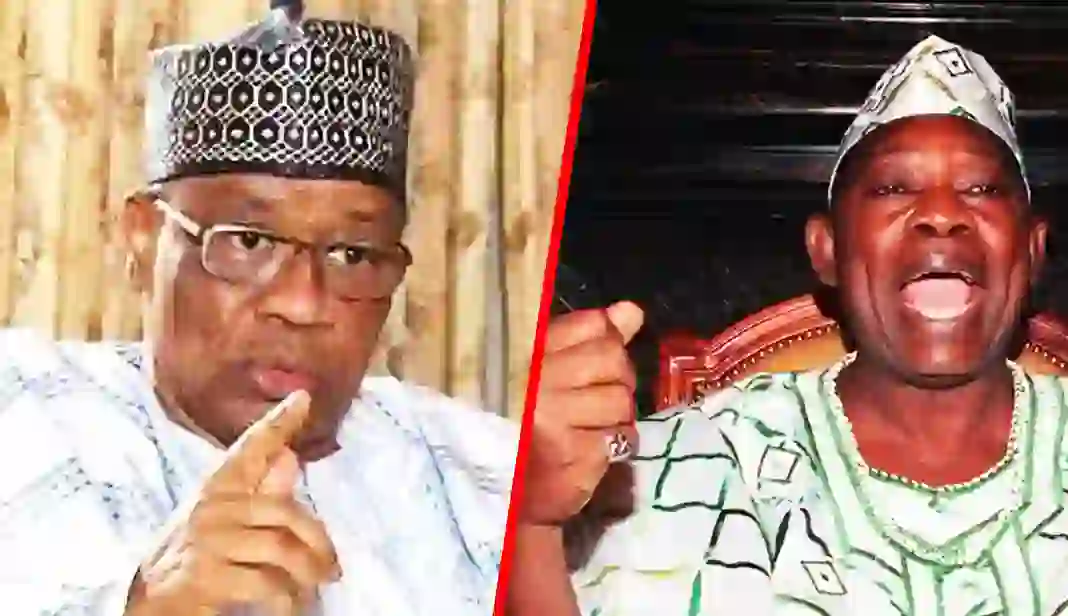
Still, in our time, we got many people arrested. They were taken to court, but whether they were discharged and acquitted or not, the fact remains that if a man like S.M Afolabi, Nwodo, Wabara and all these people can be taken to court, if the momentum had been upheld, there would have been no problem. That was at even a time when our funding was not what it should be. For me, when I was there, I believe I had the satisfaction that I acted in accordance with what I said on the day I was elected as chairman.
The former EFCC chairman, Farida Waziri, once accused the judiciary of being a bottleneck in the fight against corruption by delaying the trial and conviction of suspects. What is your view about this?
When it comes to the judiciary, it is my constituency and I don’t want to run that institution down. But there is the need for those in authority to look at the judges they have now. There was a case we arrested a gentleman and took the person to court. After we sought leave of the High Court to prosecute the gentleman – I don’t want to mention his name – we were granted leave and he was asked to be locked up so that later the matter would be taken up. When the matter came to court the following day, the gentleman applied for bail. Curiously, the same judge who granted leave for us to prosecute him, instead of deciding the application for bail, he just discharged and acquitted him when there was no application for discharge and acquittal. Was that judge acting in ignorance? Or had he an ulterior motive? Or did he claim ignorance of the law on application for bail? Instead of deciding it, he unilaterally discharged and acquitted the person. We appealed, the appeal was allowed and the gentleman was rearrested before I left the office. I don’t know what happened after that.
Number two, that judge who discharged and acquitted him should have been dealt with because on ordinary bail, even first year lawyers know that in bail application, you don’t discharge and acquit people when you have not held evidences. If you have not held evidences even if there is delay in prosecution of cases, what you do is to strike out the case so that he could be re-arrested. But to discharge and acquit when there is no evidence, I have never heard it.
Another judge also, when the case went before him, the accused who were to be arrested took a motion to the judge that he should make an order that they should not arrest them; in other words, they clamped an injunction on us. I was asked to appear in court. When I went there, I said I will argue my case myself, not ICPC. I wore a black cap, prepared for battle. The judge ran away from the case but she made an order that we should not arrest. There are a plethora of authorities which say that the police cannot be stopped from investigating cases. The ICPC has the same power as the police, so, ipso facto they could not make such an order; I choose not to think that the Judge is ignorant of those authorities.
Would you agree that the EFCC and ICPC should be merged?
When two people are operating and you say they are not doing well, when you merge them, will they do better? If the police were doing well in the investigation of crime or corruption, would there be need for ICPC in the first place or EFCC? I don’t think it is wise to merge them; what is important is strengthening the bodies – fund them adequately and get the right type of people to man them.
Since leaving the ICPC job, how has life been with you and what have you actually been involved in?
What I have been involved in is what you are inside now: you come to me, you ask me questions about the state of the nation, about the problems of the nation, on how we can move Nigeria forward. I don’t hesitate to discuss openly with you, I have friends who told me that I should stop granting press conference, I said, well, I appreciate the advice but for as long as I live, anything that will help Nigeria, I will continue to do.
Secondly, I am running an NGO, I organise lectures, symposiums, debates and MAF–Mustapha Akanbi Foundation. Then I have a charity organisation, my Islamic foundation. In my house now, there is a boy staying there, he was knocked down by a vehicle, the parents are dead, he has nobody to help him. We paid the hospital bills when he was discharged, we are keeping him until he gets better to go back home and Alhamdullilahi, we have people who have been supporting us in their own little way. I am also running a school, I have a nursery primary school, and I also have a junior secondary school. This year, we will start the senior secondary school. All these we make sure that we just put into them the little that God has given us.
Creation of new states as well as establishment of state police are current topical issues in the country. What is your take on them?
You see, apart from the fact that we will not have the wherewithal and finances, people are complaining about salary and all those things. The more states you have, the more problems you have. But if we say through state creation we are developing, if I may ask: are we really developing? I sit here now, I want to see any Kwara man as my brother, any Nigerian as my brother. I used to tell my children that I am a Nigerian father and I mean it and I can stand and count the number of people who God has used me to help.
On state police, it is not something that can be done in a rush, a careful study must be made because once you hand over such power to the governors, you may find yourself in deep waters; because at the end of the day, it can be misused, just at it happened during the time of the Native Authority Police. Do we want a Nigeria that is divided or a country that has the unity and oneness of its people as its focus? Though I’m not an advocate of a unitary system of government, my advice is that we must look into it objectively, study our people, study our situation before we come to conclusion and it is not something which they can do by legislation. What government should do is to call a referendum, where people will speak out their mind openly on this and other sundry issues.
Finally Sir, what will you like to be remembered for and what advice do you have for the upcoming generation?
I want to be remembered for the service I gave to my God and my nation, the service I gave to humanity and I pray that for whatever is left of my life, I should continue to serve God and humanity. And they should remember me, that there was a man called Mustapha Akanbi who served God and humanity and may God accept me into his glory. I am an optimist, let Nigerians not lose hope but let every one of us do what will please God to achieve whatever we want to achieve without destroying this country. We should give service; we should do everything to make sure that this blessed country of ours is great, because God has given us everything to make it great. So continue to strive in good deeds, which is my prayer for all of you.
• This interview was first published in TheNEWS hard copy in September 2012

Leave a Reply