

Afenifere Endorsement
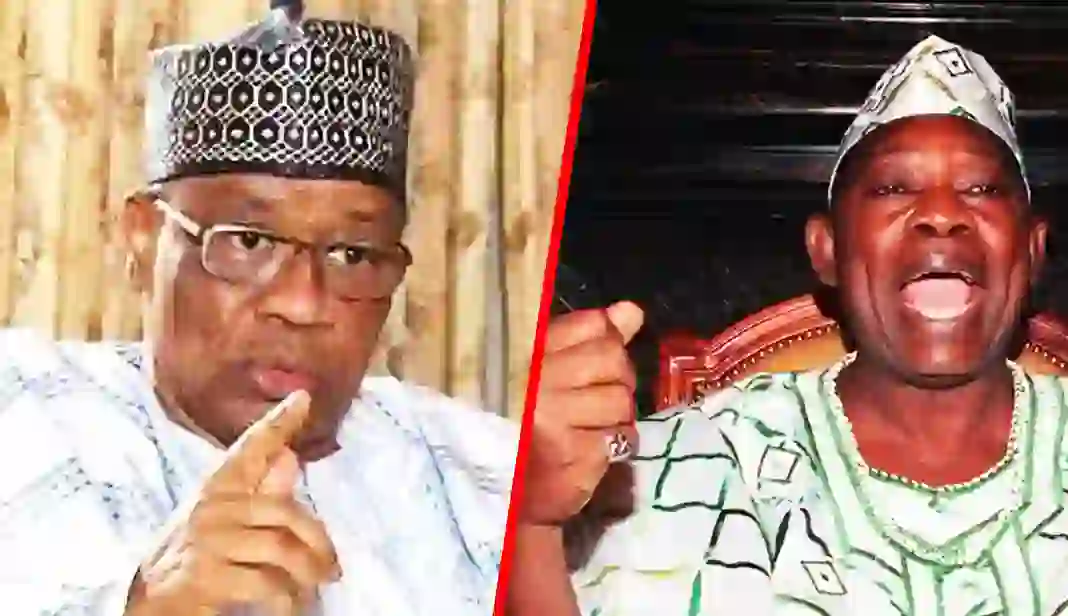
In further support of the assertions of those who claimed that the aim of the Conference was to set cats among pigeons, especially in the South West, the President had appointed Chief Femi Okurounmu, a leading member of Afenifere, the pan Yoruba social political organization, as the Chairman of the committee that drew up modalities for the organization of the conference. Though very much aware of the unstated intentions behind the convocations of the Conference, governors elected on the platform of the APC in the South West especially, grudgingly nominated delegates to the conference, so as not, in the words of an aide close to one of them, “to be left out in case of any eventuality.” The rancorous National Conference was concluded several months ago and its voluminous reports have been gathering dust in the confines of Aso Rock presidential villa.
Most of the recommendations of the National Conference will require the approval of the National Assembly as there will be need for amendments to the Constitutions for their implementation. This was one of the key arguments by those who argued that the President should have forwarded the amendments he wanted to the National Assembly as bills to be considered for inclusion in the then ongoing constitutional amendment.

Analysts argued that contrary to the argument of the Afenifere elders, the implementation of the report of the National Conference does not lie in the hands of the President, but on members of National Assembly. They also argued that the President has never demonstrated the capacity to push such difficult recommendations which will require the support of members of the National Assembly across party lines through. It’s all about baiting the South West for support by a President who is desperate to avoid a shellacking, an analyst told this magazine last week. While disassociating itself from the purported endorsement, the Ekiti State chapter of Afenifere in a statement by its chairman, Chief Ibidapo Awojolu said: “We expected to have seen the commencement of the National Conference recommendation by now. We have seen no evidence of President Jonathan ‘s plan to implement the recommendations.” Awojolu who added that the endorsement was needless argued that the Yorubas have suffered unprecedented neglect and marginalisation under the Jonathan’s administration:“There is nothing to show for the electoral support Jonathan got from the Southwest during the 2011 presidential election,” Awojolu stated.
Jonathan’s South West Problems
Analysts also said the support for Jonathan under the veneer of the National Conference is a way of getting back at Tinubu, the APC National leader, by elders who are green eyed by his emergence as a popular and influential leader in the region for selfish gains from Jonathan. Whatever the case, the truth however is that the President’s popularity is at the lowest ebb as the country heads towards the presidential election. This was unlike the situation in 2011 when many in the region voted PDP, caving in to emotion of religion and ethnicity of President Jonathan who was the flag bearer of the party. The President had won convincingly in all the States of the South West region, except Osun, though his party was only in control of one of the states then.
However, the South West people also have their own specific complaints against the Jonathan’s presidency. This includes allegations of marginalisation.
In the Ogun chapter for instance, former President Obasanjo had vowed that he would not have anything to do with the PDP, following the recognition of Buruji Kashamu, who is wanted in the United States on allegations of drug dealings as a leader of the party not only in the State, but in the South west region. Kashamu is the chief mobiliser for the President’s re-election in the region. Obasanjo’s loyalists either left or were forced out of executive positions in the chapters of the party across the South West by factions which claimed to have the support of President Jonathan while the former President also recently tore his membership card. Crises in some of the South west state chapters of PDP will seem to have somewhat simmered for now with uneasy peace prevailing among members. But the same cannot be said of Ondo State where Governor Mimiko who defected to the ruling party late last year is still engaged in the struggle for control of the structure of the party with old members, led by Olusola Oke, a former National Legal Adviser of the party.
Also, the delay in the screening of Senator Musiliu Obanikoro who was instrumental to PDP’s victory in Ekiti State as reflected in the secretly recorded audio tape by an Army Major will be of concern to the Presidency. Obanikoro, alongside Jelili Adesiyan, the Minister of Police Affairs and Adeyeye, the Minister of State for Education, have been at the vanguard of Jonathan’s campaign across the South West. Obanikoro who was a minister of state for Defence resigned to contest for the gubernatorial ticket of PDP for Lagos State. He however lost to Jimi Agbaje in controversial circumstances. He challenged the result of the gubernatorial primary in court and his re-nomination as a minister was reportedly part of the agreement reached between Vice-President Namadi Sambo and the Lagos State branch of PDP so that Obanikoro could withdraw his suit against the PDP governorship candidate.
But just as he was getting set for screening of the National Assembly, the audio recording in which the former Ambassador to Ghana was indicted as using the army to rig the June 21 Ekiti State governorship election was leaked to the media. This formed the basis of opposition to his screening and confirmation by the Senate by APC senators out of fears that returning Obanikoro to the Defence Ministry for the elections could be detrimental to their party’s chances. The three senators from Lagos as well as those from Ekiti have expressed opposition to Obanikoro’s nomination, effectively forcing the Senate President to put the screening process on hold.
Why South West is Important to Jonathan
Analysts who spoke to this magazine last week contended that though religion and ethnicity will play a significant role in determining the direction of voting in the general elections in 2015, they argued that he must repeat his feat of 2011 in the South West, which has particularly been described as the battleground in the 28 March election. The Christian majority in Adamawa, Gombe, Taraba, Plateau, Kogi, Kwara states voted as a block in their various states to give Jonathan victory in their areas in the 2011 elections while, as CPC candidate, Buhari also won massively, in the predominantly Hausa-Fulani states of Northern Nigeria, a situation that may repeat itself in 2015. President Jonathan is expected to win massively in South-South states, though the APC is also expected to put up a respectable showing in Edo and Rivers states which are under its control.
For instance, the APC presidential candidate is expected to win in North east states like Borno, Yobe and Bauchi while Adamawa is expected to be the battle ground for the two parties in the North east. North-west Nigeria made up of Kaduna, Kano Katsina, Zamfara, Jigawa, Sokoto and Kebbi states has the country’s highest voters’ population figure estimated at around 18 million. But PDP suffered a reversal of fortune in the zone with defections of governors Rabiu Kwankwaso of Kano State and Magatarkada Wamakko of Sokoto State to APC late last year. Adamu Aliero, a former minister and strongman of Kebbi State politics also recently defected to APC with his loyalists and this is also expcted to further enhance the victory of the APC presidential candidate in the state. The APC presidential candidate is also expected to be victorious in the North West states of Jigawa and Katsina and Kaduna which are still under the control of PDP.
Though Kaduna is the home state of Vice President Namadi Sambo, Buhari enjoys a huge support in the State, while Katsina is the home state of the retired General. Though he did not win any of the states in 2011, the President was able to get the 25 per cent of the votes required to avoid a run-off against Buhari, the leading contender who contested on the platform of Congress for Progressive Change with the exception of Kano.
In the North-Central, Buhari and Jonathan are expected to fight for the soul of Nassarawa, Kwara Benue, Kogi and Plateau States. To be declared the winner of a Nigeria presidential election, a candidate must not only score the highest number of number votes cast at the polls, he or she must also obtain at least one quarter of votes in 24 states which is two thirds of the states of the federation. Buhari has never won any state outside the northern region of the country since he started contesting presidential elections in 2003. In 2011 for stance, over 90 per cent of the former head of state’s 12 million votes was from states across the Northern part of the country.
But what was also true was that neither ANPP nor CPC, the two platforms he had contested on, was in control of any of the southern states then. The APC offered Buhari the chance to break this yoke in the South West. Going by the most simplistic of the calculations, Buhari who won 12 million votes in 2011 can win the 2015 elections if a significant percentage of the South-West votes can be swung in his favour by the Tinubu-led APC.

But unlike in 2011 and in spite of his increasing unpopularity in the region, Jonathan’s PDP is in control of Ondo and Ekiti States. Already, Governor Ayo Fayose of Ekiti State had demonstrated in the past few weeks that he is willing to go to any length to ensure that Buhari is not elected. Despite the huge crowd that attended the APC presidential rally when it was held in Ado Ekiti many years ago, the Governor vowed that PDP will win all the available positions in the 2015 elections.
In the same vein, Mimiko had not only been coordinating the presidential campaign of the President in the South West, he has repeatedly said the President will perform better than he did in 2011 in terms of the number of votes he will score in the region. The endorsement of the President by Afenifere can be counted as one of the successful efforts of the Ondo State Governor to sell the candidacy of President Jonathan to the people of the region.

Leave a Reply